




Jojoba oil for skin: how to use it for your skin type
- Jojoba oil for skin: yes for most skin types, including combination and oily skin, because it is a liquid wax with a dry feel, close to the wax esters in sebum.
- Starting point: 2 to 4 drops in the evening, on clean, still-damp skin, for two weeks before you adjust.
- It slows water loss but adds none: on dry skin, it complements a hydrating product without replacing it. And it does not "regulate" sebum.
- Before the first application: one drop on the inner elbow, a 48-hour wait, a virgin cold-pressed oil, and nothing in the eye itself.
You searched for "jojoba oil for skin" because a bottle is sitting in your bathroom, or because you are deciding whether to buy one.
The question behind it is always the same: is it right for my skin, how much do I use, and when. Here are answers by skin type, with quantities in drops, and a frank account of what this oil cannot do.
- Is jojoba oil good for your face?
- Is jojoba oil comedogenic?
- Jojoba oil for skin: how many drops for your skin type?
- How do you apply jojoba oil to your face, morning and evening?
- What do dermatology publications say about jojoba oil?
- Jojoba oil for skin, before and after: what to expect and how soon
- Before you start
- Which jojoba oil should you choose for your face?
Is jojoba oil good for your face?
Yes, jojoba oil suits most facial skin types, because it is not strictly an oil but a liquid wax: around 98% wax esters, according to a 2021 review in Polymers. A wax ester is a fatty acid bound to a fatty alcohol, whereas almond oil is made of triglycerides: hence the dry feel and the thin film.
What the label tells you: on an ingredients list, it appears as Simmondsia Chinensis Seed Oil. The European CosIng database lists three functions for it, emollient, skin conditioning and hair conditioning. Nothing more, and nothing medical.
The link with sebum is real, but more modest than you often read: human sebum contains roughly 26% wax esters, according to a dermato-endocrinology review, the rest being mostly triglycerides, free fatty acids and squalene. Jojoba oil resembles that fraction, which is why it feels comfortable on combination skin.
It is most useful on combination skin, on oily skin that feels tight after cleansing, on sensitive skin and on mature skin that produces less sebum. It is least useful on very oily skin with no discomfort, and it has no place on broken skin, which is a matter for your GP.
Is jojoba oil comedogenic?
Jojoba oil is rated low on the comedogenic scale, but that rating comes from a rabbit ear test run on pure ingredients, which is a poor predictor of how human skin reacts. A 2006 study in the Journal of the American Academy of Dermatology showed this: finished products containing so-called comedogenic ingredients did not form comedones on the backs of volunteers. The number on the scale matters less than the dose and your own skin.
A more useful piece of data comes from the Charité hospital in Berlin. In six volunteers, plant oils applied to the skin penetrated only the upper layers of the stratum corneum. And jojoba oil was the only one that did not reduce transepidermal water loss the way the other oils tested did. In plain terms: its film is light and barely occlusive, which is good news for pores. But jojoba oil on its own does not hydrate dry skin: it needs water underneath, from a facial mist, a water-based serum or a moisturiser.
That result also settles the sebum question. Jojoba oil resembles sebum in structure, it does not "regulate" it: no human study shows that skin produces less sebum because a similar wax has been applied to it. Cosmetic claims must rest on adequate evidence under the 2013 EU regulation, and that claim has none. So we do not make it. If your pores clog easily, test the oil on one cheek for two to four weeks before extending it to the whole face.
Jojoba oil for skin: how many drops for your skin type?
For the whole face, 2 to 4 drops of jojoba oil are enough, in the evening, on clean skin that is still slightly damp. The rest depends on your skin type, using the guide in the table below. These are cosmetic starting points to adjust over two weeks, not prescriptions.

| Skin type | Drops (whole face) | When | On what | To start | Sign to adjust |
|---|---|---|---|---|---|
| Combination | 2 to 3 | Evening | Damp skin, T-zone last | Every evening for 2 weeks | Shiny forehead on waking: go down to 2 drops and skip the T-zone |
| Oily | 1 to 2 | Evening | Damp skin, or as a rinsed-off cleanser only | 3 evenings a week | More blackheads after 4 weeks: keep it for cleansing only |
| Dry | 3 to 4 | Morning and evening | Mixed into your moisturiser, or over a facial mist | Every day | Skin still feels tight: add water (mist, water-based serum), not more oil |
| Sensitive | 1, then 2 to 3 | Evening | Damp skin, no added essential oil | 1 drop for 3 evenings, then increase | Redness or tingling: stop and go back to your usual routine |
| Mature | 3 to 4 | Evening | Damp skin, with a slow massage | Every evening | Not comfortable enough: alternate with rosehip oil every other evening |
Why these numbers. One drop covers roughly one cheek, because a liquid wax spreads quickly. Beyond 4 drops, the excess sits on the surface and shines. On dry skin, the difference comes from the water you apply before the oil, not from the dose.
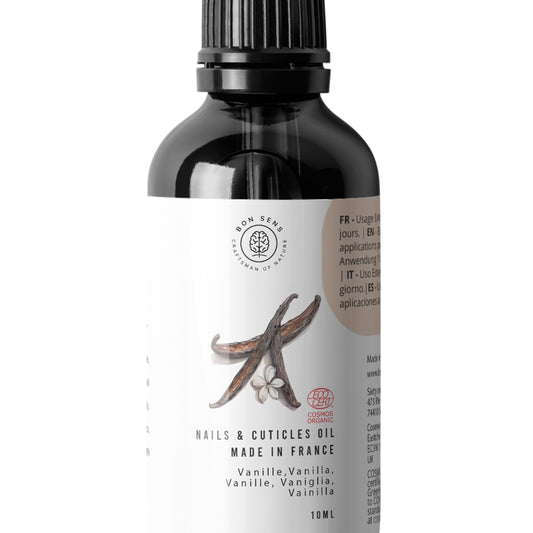
As for the bottle, at 3 drops an evening, the 100 ml Organic Jojoba Oil from Bon Sens lasts several months for the face alone.
How do you apply jojoba oil to your face, morning and evening?
Jojoba oil is applied by pressing it in with your palms on a clean, still-damp face, never by rubbing, in about thirty seconds. Dispense the drops into your palm with the pipette, warm them between your hands, then press your palms onto your cheeks, forehead and chin.

In the evening, as an oil cleanser
Put 4 to 5 drops into dry palms and massage your dry face for 30 seconds, eyelids closed, without rubbing the lashes. Add a little warm water to emulsify, then remove with a damp microfibre cloth or rinse. On oily skin or over make-up, follow with your usual gentle cleanser: that is double cleansing, and the only form worth keeping if your oily skin cannot tolerate any oil left on overnight.
In the evening, as your night-time step
After cleansing, 2 to 4 drops as per the table, on damp skin or mixed into your night cream in the palm of your hand. Wait five minutes before your head touches the pillow. Jojoba oil at night settles in with no make-up on top: it is the simplest time to start.
In the morning, under moisturiser or make-up
One or two drops only, on damp skin, then wait two to three minutes before your moisturiser or sunscreen. Jojoba oil is not a sunscreen. If your foundation slides, you have used one drop too many.
What do dermatology publications say about jojoba oil?
Dermatology publications describe jojoba oil as a well-tolerated emollient whose best-documented effects in humans are suppler skin and reduced water loss. There is no dermatologist at Bon Sens, so we read the published reviews and separate the solid from the shaky.
What is solid: indentation tests measured increased suppleness of the skin within minutes of application, lasting several hours. Human patch tests showed no allergic reaction outside hyperallergic individuals. And cold pressing is the extraction method recommended by a 2018 review in the American Journal of Clinical Dermatology.
What is not: the so-called anti-inflammatory and antimicrobial effects of jojoba come mostly from laboratory or animal studies, as the same 2021 review acknowledges. An established skin condition, whether acne, eczema or rosacea, is a matter for your GP: jojoba oil can make the skin more comfortable alongside medical care, it does not stand in for it.
Jojoba oil for skin, before and after: what to expect and how soon
We have no before-and-after photos to show you, and no testimonials, and we will not invent any. Here is what people generally notice, and what you should not expect.
From the first application, the skin feels suppler and less tight, the effect measured in the elasticity tests cited above. After two weeks, the skin texture feels more comfortable and make-up goes on more evenly. After four weeks, you know whether your T-zone shines more or less than before, and that is the moment to adjust the dose.
What not to expect: spots disappearing, wrinkles fading, "regulated" sebum. On mature skin, jojoba oil brings comfort and suppleness, nothing more. For an oil that has been studied more on mature skin, see the rosehip oil in our range.
Before you start
One drop on the inner elbow, a 48-hour wait, and you will know whether your skin tolerates jojoba oil. No redness or itching after two days: you can move to the face, on a small area first if your skin is reactive.
- Quality: a virgin, cold-pressed oil, golden in colour with a very faint smell. A colourless, odourless oil has been refined, and so stripped of its natural tocopherols, which makes it less resistant to going rancid. The full criteria are in our article on choosing a quality jojoba oil.
- Eye area: never in the eye itself. When cleansing, keep your eyelids closed. If it gets in, rinse with warm water.
- If you react: stop, and see a doctor if the signs persist. France's health safety agency ANSES reminds consumers that an adverse reaction to a cosmetic should be reported (in France, through the health ministry's portal); in 2024, 54% of the reports it received concerned skincare products.
- Pregnancy, breastfeeding, children: no known restriction specific to pure jojoba oil. Read the label and do not add essential oils to it without advice.
- Storage: bottle closed, away from light and heat. A liquid wax goes rancid slowly, but it does go rancid: respect the period-after-opening date.
Which jojoba oil should you choose for your face?
For the face, choose a virgin, cold-pressed, organic jojoba oil in a tinted bottle, with no fragrance or added essential oil. A dropper is a real advantage: it measures out single drops, where a screw cap always pours too much. The international council for jojoba sets standards of an acid value below 1 and an iodine value between 82 and 87, figures a serious seller can provide.

If you are still weighing up jojoba, black seed, castor and rosehip, the organic plant oils collection sets them side by side, with the main use of each.
FAQ
What are the downsides of jojoba oil?
Its price per millilitre is higher than almond oil, even though one drop goes a long way. Its dry feel can disappoint very dry skin. Beyond 4 drops, it shines. And it has no effect on an established skin condition.
Is it good to put oil on your face every day?
For jojoba oil, yes, in small amounts and if your skin tolerates it. Start with three evenings a week for two weeks, then move to every evening if the skin stays comfortable and is no shinier on waking.
Which oil is most effective for the face?
There is no single answer. Jojoba is the everyday choice for most skin types, including combination and sensitive skin. Rosehip oil is the most studied for mature skin, and black seed oil is often chosen by skin prone to blemishes.
Can you use the same jojoba oil on your hair?
Yes, the same bottle works for both, with different quantities and techniques. On hair, it goes on the lengths or the scalp before shampooing. We cover these uses in our article on jojoba oil for hair.