

Goat milk soap vs Aleppo soap for skin
Contents
Goat milk soap or Aleppo soap: if your skin feels tight after washing, the choice is worth a closer look. The two bars are made from different ingredients, and neither one automatically suits every skin type.
Here is what sets them apart, so you can pick the one that best matches what your skin needs.
Two bars of soap, two different sets of ingredients
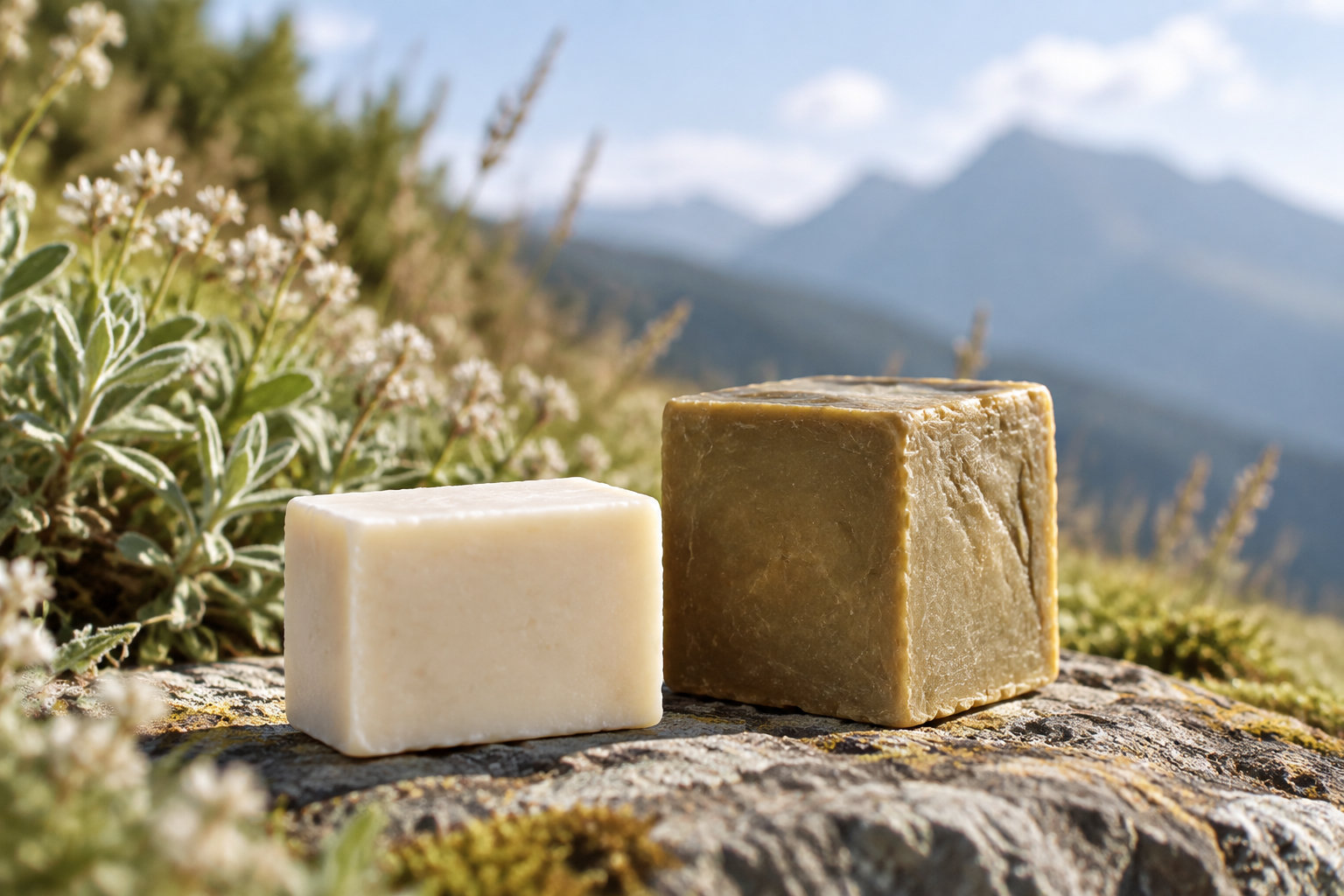
Bon Sens organic fresh goat milk soap combines plant oils with organic goat milk and is made by cold process saponification. Aleppo soap, by contrast, is based on olive oil and laurel berry oil.
| Criterion | Organic fresh goat milk soap | Aleppo soap |
|---|---|---|
| Base | Plant oils and goat milk | Olive oil and laurel berry oil |
| Method | Cold process saponification | Traditional hot process saponification |
| Fragrance | No added fragrance | Natural scent of laurel and olive |
| Usual size | 100 g | Varies by maker |
| What varies | The oils used | The percentage of laurel oil stated by the maker |
Want to compare the formulas? Read the INCI list on the label. Sodium Olivate is saponified olive oil. Goat Milk (or Caprae Lac) is goat milk. For Aleppo soap, also check the proportion of laurel berry oil.
The fresh milk comes from organic farming. However, its components do not necessarily stay active after saponification. Soap remains alkaline. The overall formula, the way the bar is made and how well your skin tolerates it matter more than any single ingredient.
The share of laurel oil varies widely from one Aleppo soap to the next. Soaps with a low laurel content are the milder choice for everyday use. The higher the percentage, the more prominent the laurel oil and the more the price tends to climb.
Goat milk soap or Aleppo soap: which skin types suit each?
Organic goat milk soap is aimed mainly at sensitive, dry or blemish-prone skin. Aleppo soap can suit normal, combination or oily skin, depending on its laurel content. But neither soap is a remedy for acne, eczema or psoriasis.
For dry skin, we favour a goat milk soap with unsaponified oils and glycerine. It can be gentler. An Aleppo soap with a low laurel content can also work. With a high percentage, your skin is more likely to feel tight.
With acne, soap can remove excess sebum, but it does nothing about the underlying causes of the condition. Gentle cleansing up to twice a day is often enough, as the American Academy of Dermatology recommends. Scrubbing hard or reaching for a harsh, stripping foam can irritate your skin further.
For eczema or psoriasis, choose a product your skin tolerates well. Going fragrance-free may limit reactions. But the alkaline pH of true soap can weaken inflamed skin. During a flare-up, ask your GP or a dermatologist for advice.
What these soaps can offer, and where they fall short
Goat milk contains lipids, proteins and lactic acid, and it is associated with a creamy, nourishing bar. We look at goat milk soap for acne-prone skin in a separate guide.
Aleppo soap generally contains olive oil, laurel berry oil, water and sodium hydroxide, which is transformed during saponification. Laurel shapes its scent, its colour and its purifying effect. It is no substitute for medical care.
Both soaps have one thing in common: like soaps in general, they are alkaline. In a study of commercially available soaps, most had a pH between 9 and 10. The surface of the skin, by contrast, is naturally acidic: its “natural” pH is estimated at 4.7 on average, which is below 5.
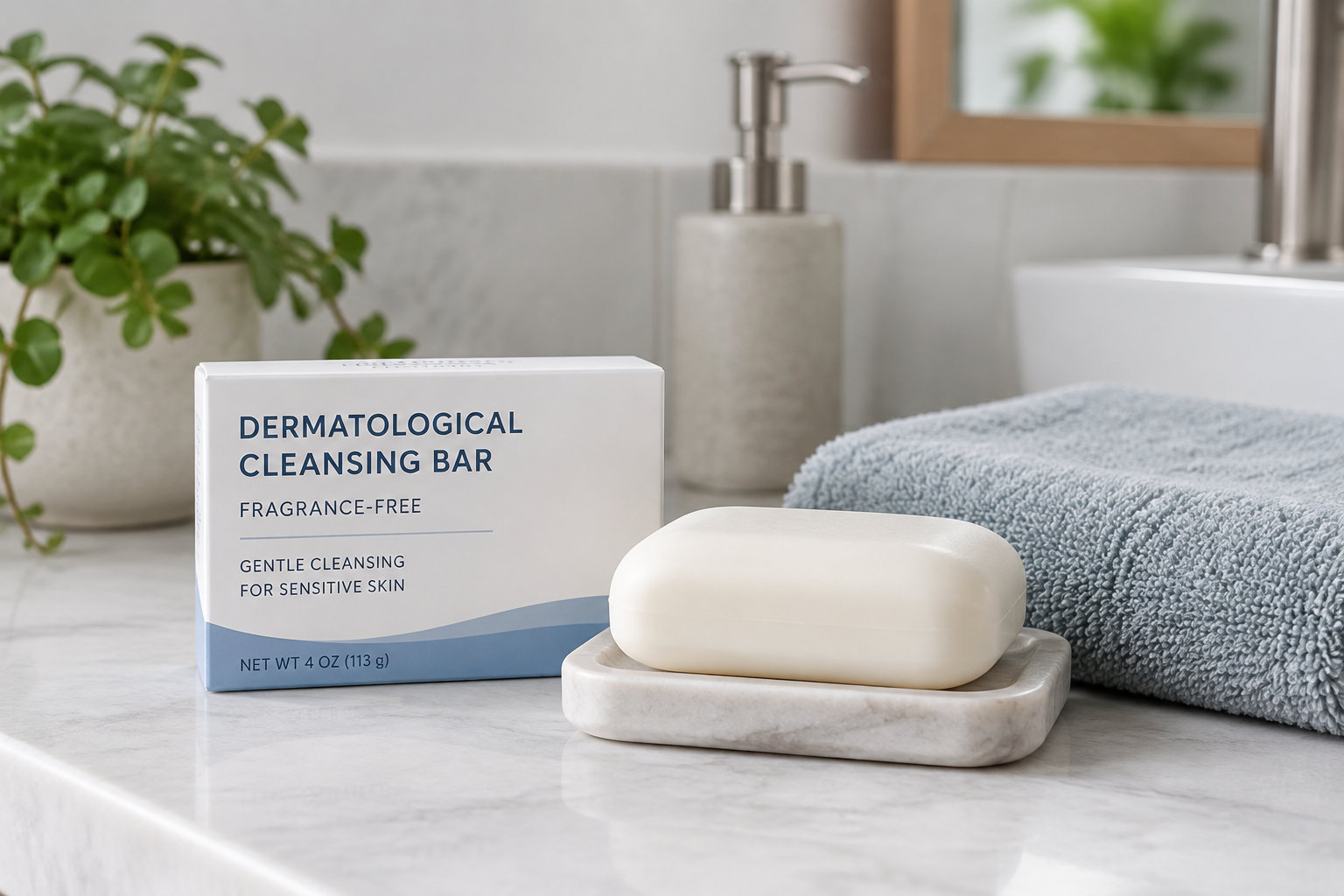
A superfatted soap keeps a share of its oils unsaponified. Washing may feel more comfortable, but the bar is still alkaline.
After washing, apply an unfragranced cream or ointment while your skin is still slightly damp. It helps hold in moisture. If you prefer a plant oil such as rosehip oil, patch test it on a small area first.
How to use and store them
Wet your skin and the soap. Work up a lather between your hands, then apply the lather without rubbing hard. Aleppo soap often lathers less than shower gel. Goat milk soap usually gives a creamier lather.
For your face, start with once a day, or every other day if your skin is dry. In the shower, there is no need to soap your whole body every time. Underarms, feet and areas that are genuinely dirty are often enough.
Rinse well, especially in skin folds. Keep it away from the eye area and mucous membranes. If you have a wound, a burn or an inflammatory flare-up, choose a gentle cleanser recommended by a professional.
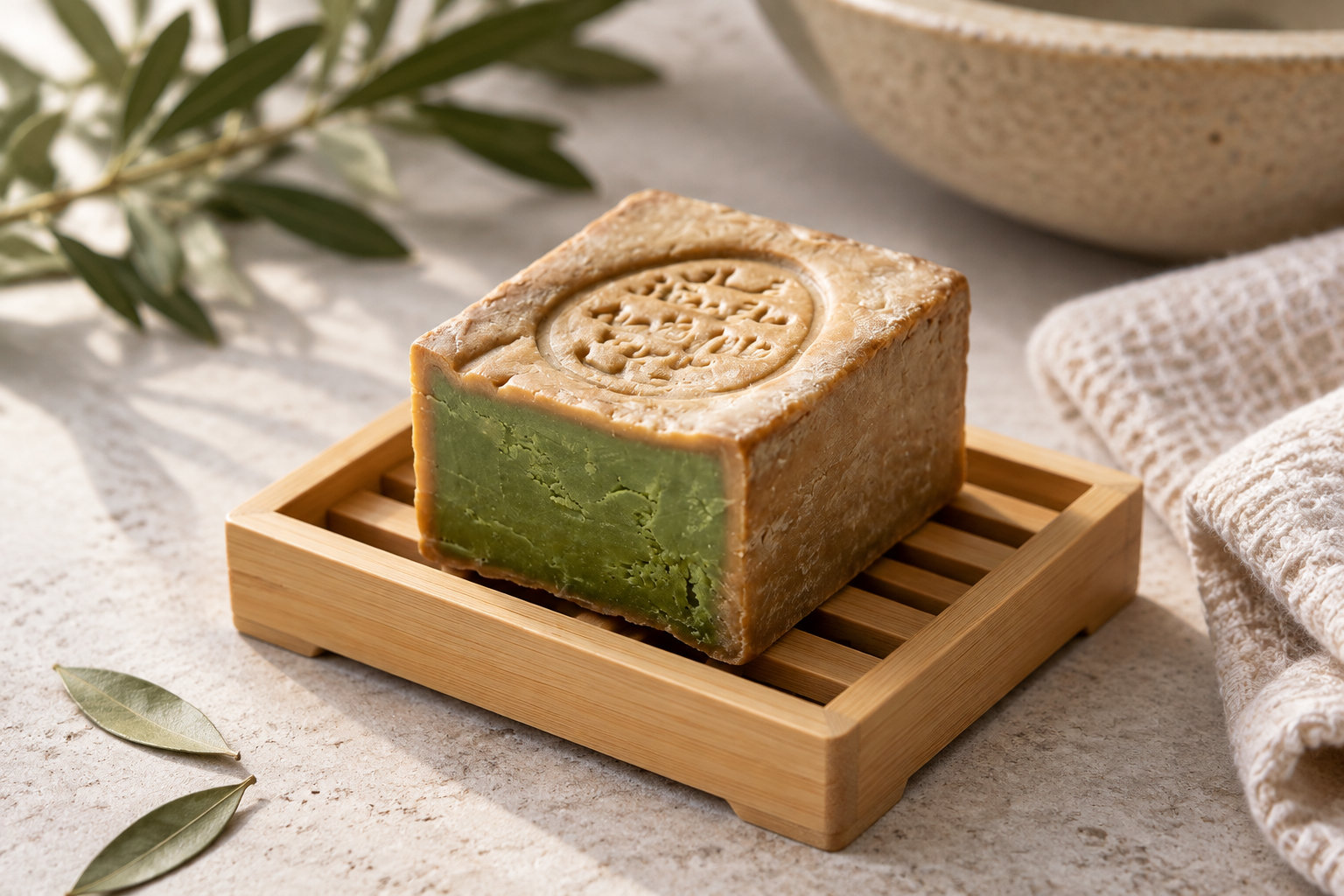
Goat milk soap vs Aleppo soap: the right choice for your priorities
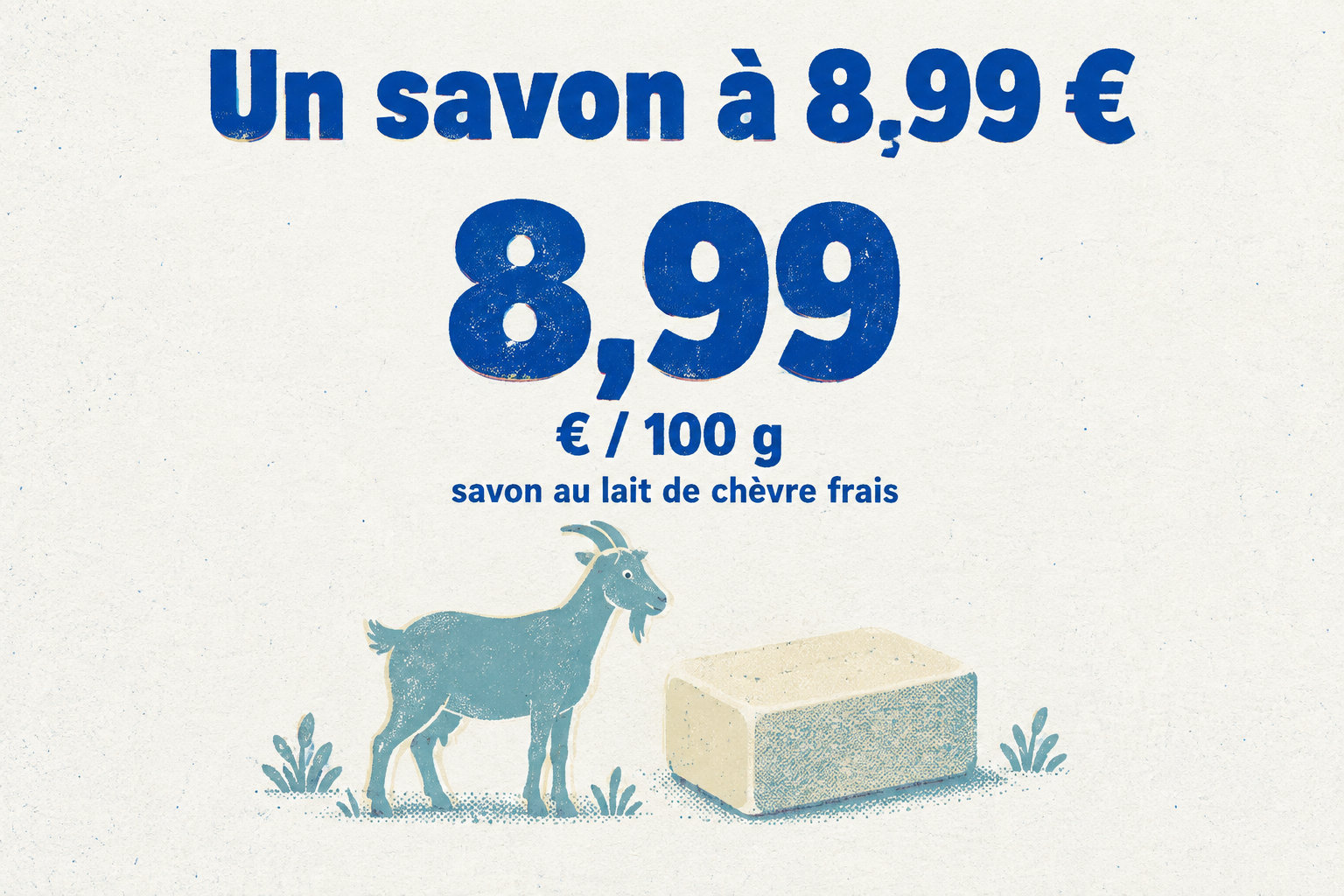
Looking for a fragrance-free goat milk soap made in France? The Bon Sens soap, made with organic fresh goat milk, ticks those boxes. It costs €8.99 for 100 g, so about €9. It is one of our products rated 100/100 on Yuka.
Prefer a short, olive oil based formula? Choose an Aleppo soap that states its laurel content. For dry skin or frequent use, a low percentage is the better bet. A high percentage suits skin that tolerates it, for occasional use.
The price of an Aleppo soap varies with the weight of the bar and its laurel content: the more laurel it contains, the higher the price tends to be. To compare, work out the price by weight: the Bon Sens soap costs €8.99 per 100 g.
- Check the INCI list
- Check the proportion of laurel oil
- Check for fragrance if your skin reacts to it
- Check the weight of the bar
Is your skin stinging, cracking or bleeding? Does it stay red despite a gentle routine? See a healthcare professional.
For dry or sensitive skin, start with an unfragranced goat milk soap or an Aleppo soap low in laurel oil. Check the INCI list, patch test it for several days on a small area and stop at the first sign of irritation. During a flare-up, opt for a syndet instead.
Frequently asked questions
Is Aleppo soap always made in Syria?
Not necessarily: the name alone does not guarantee where the soap was made. Check the origin stated on the label, along with the ingredients and the proportion of laurel oil.
Does fresh organic milk make the soap more effective?
No, fresh organic milk alone does not make a soap more effective for your skin. How comfortable it feels depends on the full formula, the pH and how often you use it, and the soap does not become a medicinal skin product.
Can a bar of soap keep for several years?
An unused bar keeps for a long time if it is stored somewhere dry, at room temperature and away from water. Once you have started it, let it dry between uses; how long it lasts also depends on how much you use.
Can you use goat milk soap if you are allergic to milk?
If you have a known allergy to goat milk, avoid this soap, as the milk in the product can sensitise some skin. If you have already reacted after trying it, ask an allergist or dermatologist for advice.
Which soap is best for very reactive skin?
An unfragranced cleanser with a pH close to that of skin, such as a soap-free dermatological bar, is generally a more cautious choice than traditional soap. If your skin is atopic or in the middle of a flare-up, ask your GP or a dermatologist for advice.