

Using citronella oil for mosquitoes this summer
Contents
Using citronella oil for mosquitoes is tempting on a summer evening. How well it works varies, though, and putting it on your skin calls for some care.
This guide sets out what citronella can realistically do, without confusing a pleasant smell with actual protection. It also covers the precautions to take on your skin and on fabrics.
Does citronella oil really keep mosquitoes away?
Yes, but not for long. The smell of citronella oil can scramble the signals that draw mosquitoes to your skin. It protects for a shorter time and less reliably than approved skin repellents, however.
Citronella-based repellents only protect against mosquitoes for about two hours, and the formula matters a great deal. Compared with DEET, citronella protects for much less time.
In a trial on volunteers' forearms, the oil diluted to 10% in a carrier oil protected for roughly 55 to 80 minutes against Aedes aegypti. Against Culex quinquefasciatus, protection lasted from about 1 hour 45 minutes to 2 hours 45 minutes, depending on the carrier oil.
The oil evaporates, and its effect fades as it does. Heat, wind, humidity, sweat and movement all speed up evaporation.
A stronger dose may make the effect last longer, but it can also irritate the skin. The formula matters too. A "fixative" slows down evaporation. Adding vanillin appears to extend the protection of citronella oil, without making it equivalent to an approved repellent.
The length of protection depends on the species and age of the mosquitoes, the temperature, the wind and the amount applied. Protection against the tiger mosquito in France may therefore be different.
What is in citronella oil?
Citronella oil comes from the leaves and other above-ground parts of grasses in the Cymbopogon genus. The oil you are most likely to find is made from Cymbopogon nardus, Ceylon citronella, or from Cymbopogon winterianus, Java citronella.
Do not mix it up with the lemongrass used in cooking. That comes mainly from Cymbopogon citratus, and its oil contains more citral and has a different make-up.
The oil is usually extracted by steam distillation. Its main components are citronellal, geraniol and citronellol, in proportions that vary from one oil to another. It can also contain citral, limonene and other compounds.
| Component | Content stated for Bon Sens oil | What we can say about it |
|---|---|---|
| Citronellal | 30 to 45% | Gives the characteristic lemony smell; studied in the laboratory for its effect on mosquitoes |
| Geraniol | 20 to 25% | A fragrance molecule, also studied on mosquitoes |
| Citronellol | 9 to 15% | Plays a part in the smell of the oil |
| Citral and limonene | Not stated | Present depending on the plant, the harvest and the extraction |
These ranges are those of our Cymbopogon winterianus oil, as stated on its product page. Another citronella oil will have a different profile: Cymbopogon winterianus often contains more citronellal, while Cymbopogon nardus can contain more geraniol and citral. Climate, harvest and storage also change the make-up of the oil.
A video shows why smell alone is no way to judge protection. In the same cage, mosquitoes approach a hand treated with citronella. They go near an area treated with a DEET repellent less often.
On the skin: the limits of citronella oil for mosquitoes
How well it works, and the risks
In France, VIDAL, the medical reference, rates citronella essential oils ineffective as repellents on the skin. Their effect is too short-lived. They can also cause allergies, irritate the skin or make it more sensitive to the sun.
Measured protection times vary from one study to another depending on the dilution, the carrier oil and the mosquito species. There is no single dose that suits everyone.
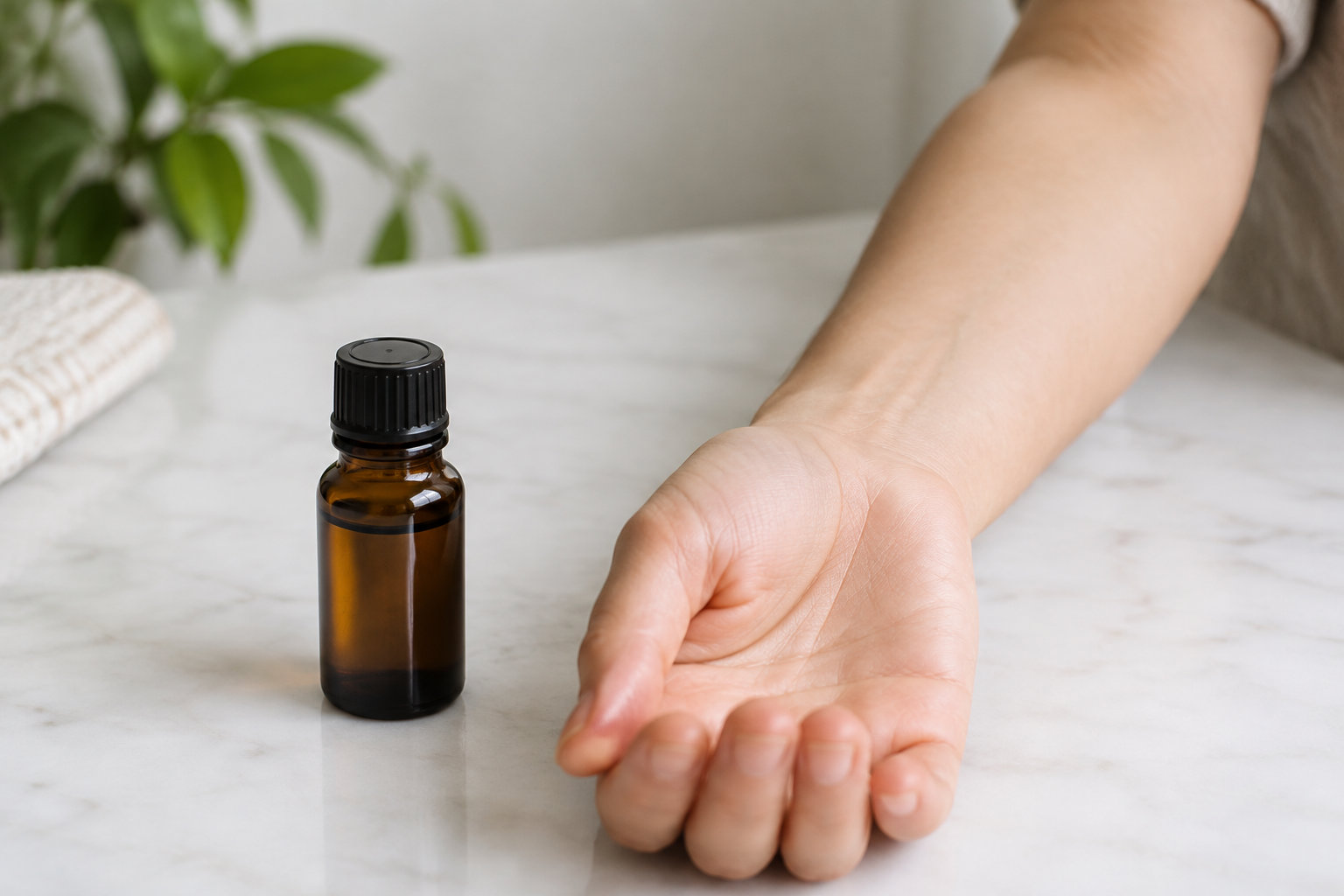
No skin dilution has been validated as both effective and well tolerated by everyone. A dose used in a study does not tell you how many drops to add to a bottle. For cosmetic use, not for mosquitoes, follow our dilution guide.
Precautions when applying
Keep it away from your face, lips, eyes and mucous membranes. Do not apply it to a cut, damaged skin or freshly shaved skin. Avoid skin folds and the area under a plaster too: prolonged contact can make irritation worse.
Children, pregnant or breastfeeding women, and anyone with reactive skin or allergies should ask a healthcare professional for advice before using these products. Young children should not handle the bottle, and nothing should be applied to them without that advice.
Your skin can become more sensitive with repeated use. A first application without any problem does not guarantee the next ones will go the same way.
If you are likely to be heavily exposed to mosquitoes, choose an approved biocidal repellent. On the label, check the active substance, its concentration, how long it lasts and the minimum age for use. Follow the instructions carefully.
If you are also wearing sun cream, apply the sun protection first, then the repellent. VIDAL advises applying sun cream at least 20 minutes before the repellent. After swimming, a shower or heavy sweating, reapply.
On clothing and fabrics
To protect yourself through your clothes, choose a fabric that has already been treated against mosquitoes and is sold for that purpose. During manufacture, the amount of repellent and the way it is released are controlled. A T-shirt sprayed with undiluted essential oil does not offer the same protection.
Sprayed oil evaporates quickly and can stain. A factory treatment, by contrast, can bind the substance into the fibre or into a coating that releases it more slowly.
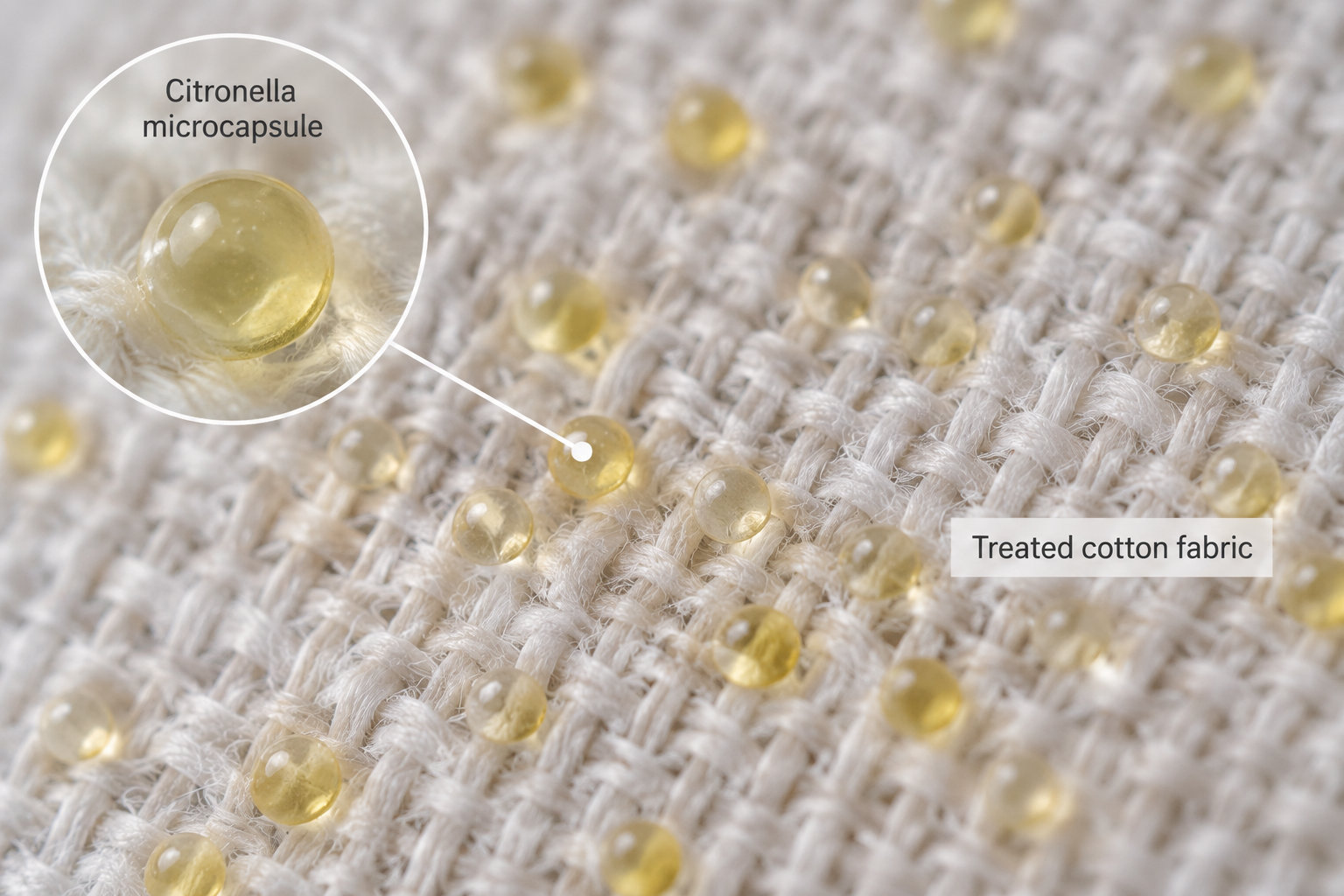
In a cotton trial, microencapsulated citronella kept a repellent effect above 90% for three weeks. The test was carried out on Aedes aegypti. The microcapsules release their contents little by little, particularly when the fabric rubs.
That result does not apply to clothing you treat at home, though. The study tested a specific method at a controlled dose. Washing, sunlight, sweat and wear can also reduce the effect.
Treated clothing does not protect your hands, neck, ankles or face. Keep using a mosquito net and apply a skin repellent to any uncovered areas.
Before spraying essential oil on clothes you are wearing, read the product instructions. The oil can damage some fabrics or leave a greasy mark. It can also stay against your skin for hours.
For an evening outdoors, wear long trousers, a loose top and socks that cover your ankles, so less skin is exposed. Light colours also make it easier to spot the tiger mosquito, which can settle on dark fabrics.
Candles, diffusers and other formats
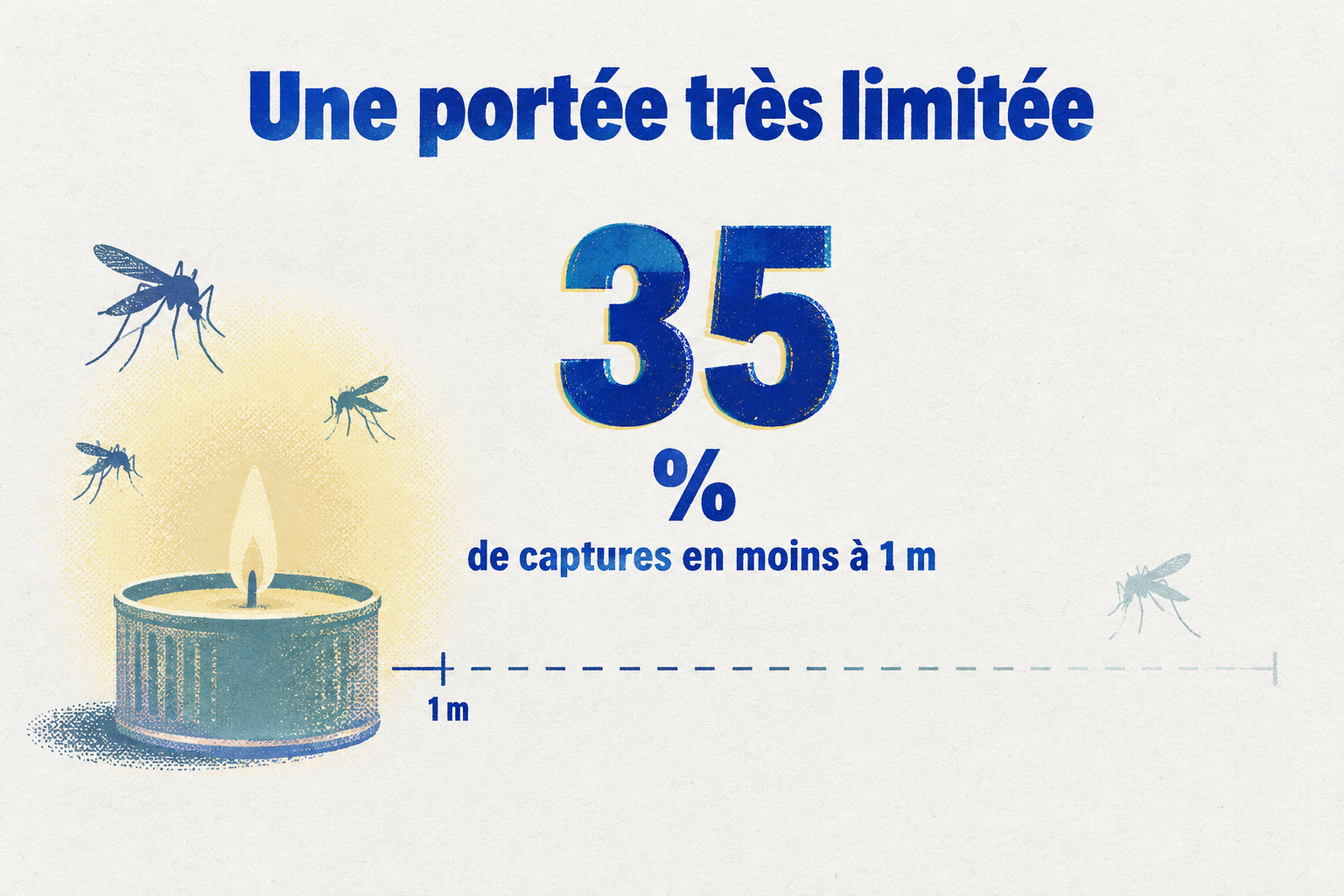
A citronella candle can keep mosquitoes away a little, but only over a small area. In an outdoor Israeli trial, a 5% candle reduced catches by about 35% at one metre. At two or three metres, the effect dropped off sharply.
A Canadian trial measured about 42% fewer bites with 3% candles. Do not count on them for real protection, though: mosquitoes still reached people sitting near the candles.
Wind carries the scent away quickly. On a draughty patio, a candle may do almost nothing. And once you move away from it, it no longer protects you.
Diffusers do not reach far either. Outdoors, citronella diffusers placed six metres from traps repelled only about 22% of female mosquitoes. The effect was clearer at three metres.
Bon Sens organic citronella essential oil

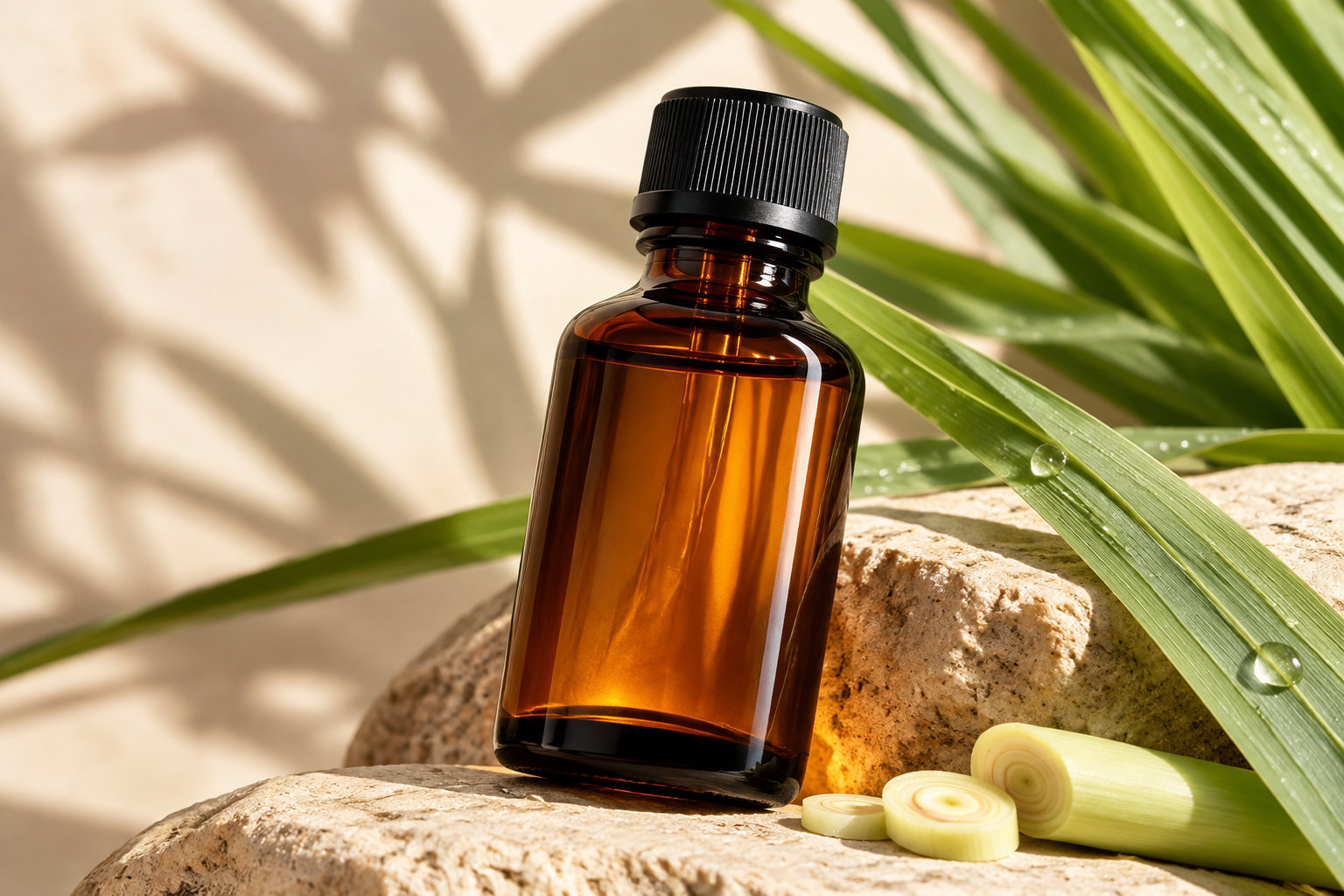
Our organic citronella oil costs €9.99 for a 50 ml bottle. It is an aromatic essential oil of Cymbopogon winterianus with a fresh, herbaceous scent, certified organic by Ecocert. It is not sold as an authorised biocidal mosquito repellent: we offer it for its scent, to be used with the usual precautions. It is part of our organic essential oils.
- The botanical name
- The volume
- The origin
- The batch number
- The allergenic components
Before you buy, check its botanical name, volume and origin (Indonesia, steam distilled). On the bottle, look at the batch number and the allergenic components as well.
Citronella contains molecules studied for their effect on mosquitoes, such as citronellal, geraniol and citronellol. Our oil has not been tested as a repellent, however, and we do not claim any length of protection for it.
In France, a product sold as a mosquito repellent falls under the rules on biocides. Both the active substance and the product must be authorised for that use.
Citronella essential oil is not one of the active substances recognised for skin repellents. An oil sold as a fragrance or aromatic product is therefore not automatically an authorised biocide against mosquitoes.
To tell the uses apart, check the label for:
- The instructions
- The warnings
- The hazard pictograms
- How long it lasts
- For a biocide, the regulatory information on use against mosquitoes
Simple ways to protect yourself this summer
Citronella repels some mosquitoes, but not every time, and its effect varies a great deal. A plain oil on the skin protects for a short time, often less than two hours.
For a short while on a sheltered patio, rely first on covering clothes and a mosquito net, with citronella as an extra. When travelling in an area where disease-carrying mosquitoes are present, or for a long evening outdoors, use an approved skin repellent and follow its instructions.
- Long trousers, a loose top and closed shoes reduce the amount of exposed skin. Where needed, sleep under a mosquito net, making sure it does not touch your skin.
- Around your home, empty saucers, buckets, toys, gutters and any other containers where water collects. The tiger mosquito can breed in very little water.
After swimming, a shower or heavy sweating, check whether you are still protected. Only reapply a product designed for the skin, as often as its label says.

For your next evening outdoors, choose an approved skin repellent now if you expect a long exposure, then follow its label. Add covering clothes and empty any containers holding standing water around your home.
Frequently asked questions
Can citronella prevent a mosquito-borne disease?
No, citronella is not enough to protect you against diseases carried by mosquitoes. In an at-risk area, wear covering clothes, use a mosquito net and choose an approved skin repellent.
Does citronella kill mosquitoes?
Citronella is mainly used to repel mosquitoes, not to kill them. Lethal effects have been seen in some experiments at specific concentrations, but that does not mean an essential oil used at home works like an insecticide.
Is a citronella plant enough in a garden?
No, a citronella plant does not create a protected zone around your patio. The amount of oil it releases naturally is too small to replace covering clothes, a mosquito net or a suitable repellent.
Can I use citronella essential oil around a dog or cat?
Be careful: a concentrated essential oil can irritate your pet's skin or mucous membranes and be dangerous if swallowed. Never apply it directly to your pet, and ask a vet for advice before diffusing any.