

Goat milk soap for acne: does it really help?
- Goat milk soap is a gentle cleanser, not a treatment for acne.
- Cold-process and superfatted, it keeps its natural glycerine and cleanses without leaving skin tight.
- Like all soap, it is alkaline: use it morning and evening, no more, and follow with a moisturiser.
- Patch test before using it on your face for the first time.
- If acne is severe, painful or persistent, see your GP or a pharmacist.
Goat milk soap for acne is often presented as the answer to spots. The reality is simpler: it is a gentle, rich cleanser that can earn a place in the routine of acne-prone skin, especially if harsh cleansers have already left it sensitive and tight.
This guide looks at what the available sources say, what this soap can bring to your face wash and what it does not do. You will also find the right way to use it and the precautions to know.
- Is goat milk soap suitable for acne-prone skin?
- Which natural ingredients pair well with goat milk soap?
- Goat milk soap for acne or a sulphate cleanser: which to choose?
- How do you use goat milk soap for acne-prone skin?
Is goat milk soap suitable for acne-prone skin?
Goat milk soap suits acne-prone skin as a gentle everyday cleanser. It cleanses without irritating and leaves skin feeling comfortable. It is not a treatment, though: it does not work like a medicine and does not replace medical advice.
For acne-prone skin, gentle and regular cleansing matters more than a powerful cleanser that strips.
Light exfoliation from lactic acid
A member of the alpha hydroxy acid (AHA) family, lactic acid loosens the bonds between dead cells on the skin's surface to smooth skin texture, without abrasive grains.
Goat milk brings lactic acid, a mild AHA. The amount left in a bar of soap has not been precisely measured. Its exfoliating effect should therefore be seen as light.
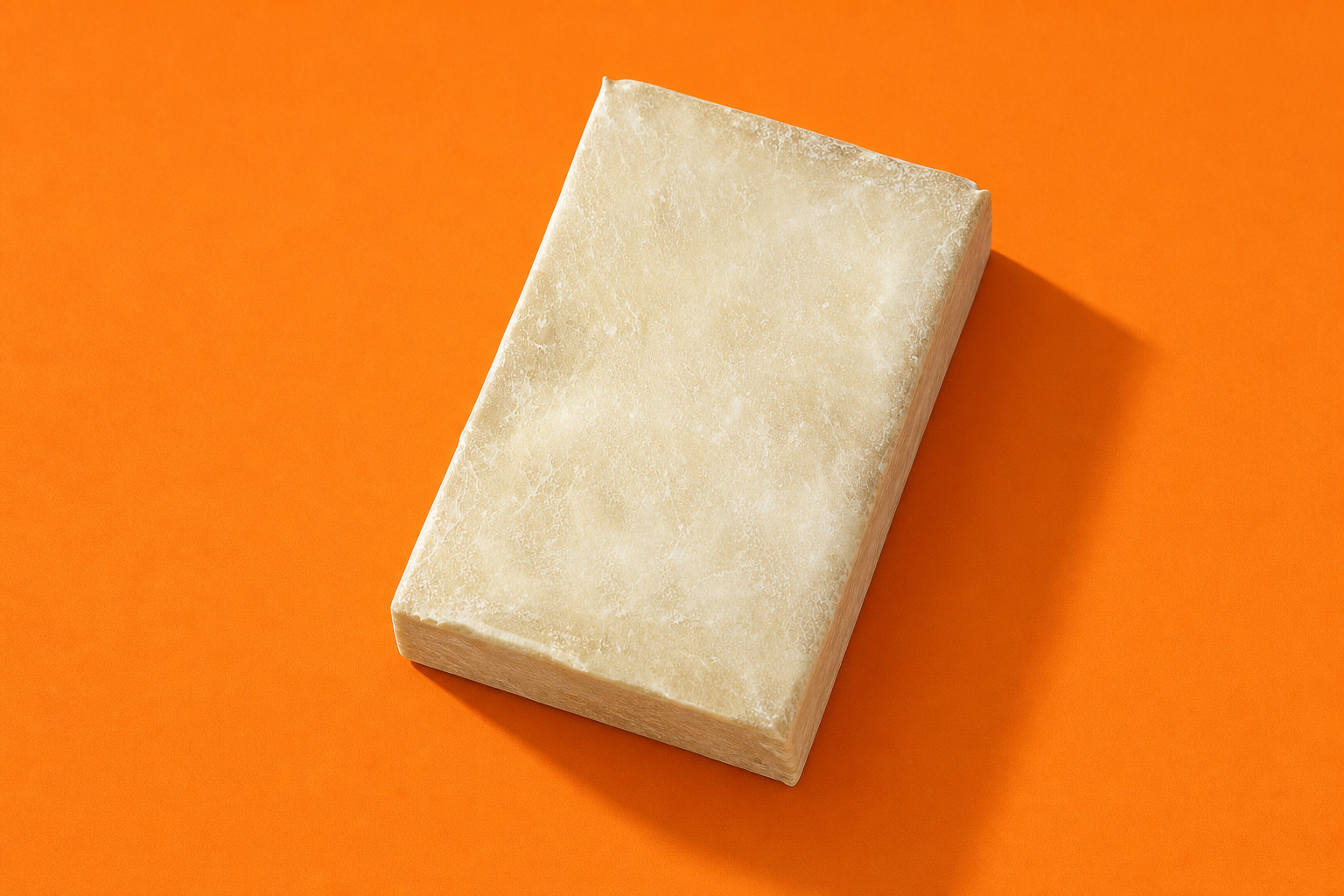
Regular cleansing helps lift surface oil and dead cells. Skin texture can look smoother over the weeks, without scrubbing.
This exfoliation stays gentle. It suits sensitive faces that do not get on with grainy scrubs.
Skin cleared of dead cells takes the products you apply next more easily. Your complexion can look brighter.
Vitamins and nourishing fats
Goat milk contains vitamins A and D, along with fatty acids and triglycerides. These components contribute to the nourished feel after washing.
This soap is also superfatted: some of the plant oils are not turned into soap and stay in the bar. That is what gives it its soft feel and supple finish after rinsing.
The tight feeling after washing is less marked than with a stripping cleanser. Your skin stays comfortable for longer.
Keeping skin hydrated when you have blemishes
Compare the creamy texture of goat milk soap with standard foaming gels. Some cleansing agents are very stripping. A superfatted soap, on the other hand, is kinder to your skin barrier.
Hydration still matters, even for oily skin. Dehydrated skin feels uncomfortable and more reactive. A gentle cleanser avoids making that feeling worse.
Glycerine forms naturally during saponification and stays in the bar. It holds water at the surface of the skin. Your face keeps a soft feel.
Watch the pH, however. Like all soap, goat milk soap is alkaline: a study of 64 soaps measured a pH of 9 to 10 for most of them, while healthy skin sits between 5.4 and 5.9. After washing, apply a moisturiser suited to acne-prone skin.
A soothing feel for sensitive skin
The creamy lather leaves a soft, soothing feel on sensitive areas. It suits skin that does not get on with fragranced cleansers.
This soap is fragrance-free, and fragrance is often poorly tolerated by sensitive skin. The ingredient list stays short. If your skin is very reactive, patch test on a small area first, for example the inside of your elbow or under your jawline.
More comfortable skin makes it easier to resist touching your spots. Picking or squeezing spots only irritates them further.
With this goat milk soap, you give your face a gentle break. So, does goat milk soap help with acne? It can help you cleanse your skin gently as part of a simple routine, but it does not replace a treatment.

Goat milk soap can fit into a routine that uses other natural ingredients, as long as you follow their precautions.
Which natural ingredients pair well with goat milk soap?
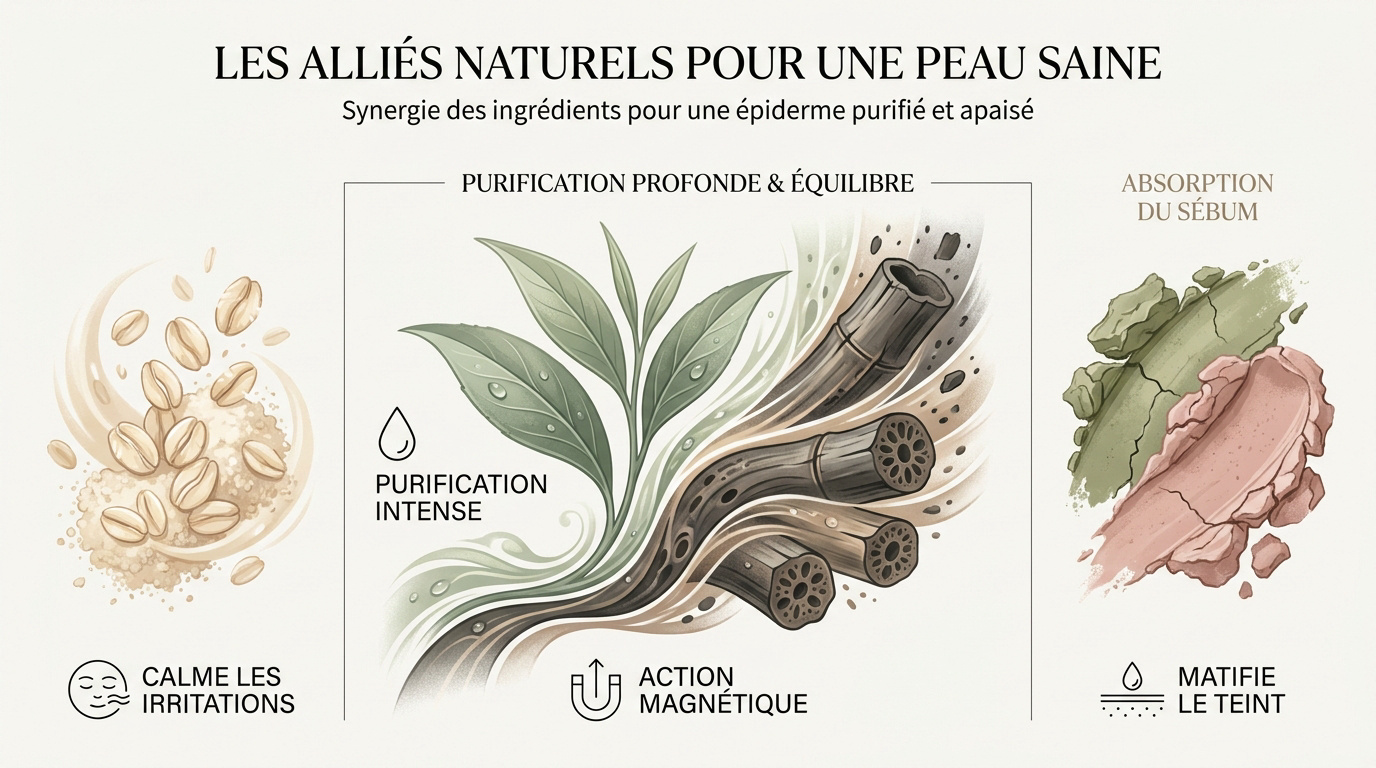
Tea tree essential oil, plant charcoal, colloidal oatmeal and clays are the natural ingredients most often paired with goat milk soap in care for blemish-prone skin. Knowing them also helps explain why the harshest cleansers are not necessarily the best for your face.
Tea tree essential oil and charcoal
Tea tree essential oil is rich in terpinen-4-ol, its main compound. It is traditionally used in care for blemish-prone skin, for its purifying effect.
Never apply it neat to the skin. A proper dilution in a plant oil or a neutral product is essential, because at high concentrations it can cause skin irritation. Patch test before first use, and avoid it during pregnancy, while breastfeeding and on young children.
Activated plant charcoal has a highly porous structure. In a soap or a mask, it helps hold on to some of the oil and impurities, which then rinse away.
You can read about the benefits of tea tree for skin, and about our organic tea tree oil, always to be diluted.
This combination gives a thorough cleanse. It often appeals to city dwellers whose skin feels grimy by the end of the day.
Oats and clays for a soothing feel
Colloidal oatmeal leaves a light, soft film on the face. It gives a soothing feel to skin that feels tight or hot.
Green clay absorbs some of the excess oil. Used as a mask, it helps mattify the T-zone.
- Pores look smaller
- More matte complexion
- A comfortable feel
Green clay suits oily skin and the T-zone. Pink clay is better for dry skin or sensitive skin that needs gentle purifying.
Pink clay is gentler than green clay. It purifies without leaving skin feeling tight.
Goat milk soap for acne or a sulphate cleanser: which to choose?
Sulphate surfactants and spot-prone skin
Sodium lauryl sulphate (SLS) is a powerful surfactant, valued for its rich lather. It has a well-known irritating effect on skin, so much so that it is used as a reference in skin irritation studies.
SLS weakens the skin barrier: it increases water loss from the skin and can cause redness, dryness and a tight feeling.
On acne-prone skin, a cleanser that is too stripping can make redness and discomfort worse.
Choose gentle cleansing agents. They cleanse without being harsh on your skin.
What cold-process soap changes for your skin
Cold process is a craft method that turns plant oils into soap without cooking. The resulting soap is superfatted: it keeps some of its oils.
The glycerine formed during manufacture stays in the bar, whereas it is often removed from industrial soaps. It gives a hydrated feel with every wash.
| Criterion | Cold-process soap | Mass-market cleansers |
|---|---|---|
| Glycerine | Kept in the bar | Often removed from industrial soaps |
| pH | Alkaline, like all soap | Varies with the formula |
| Cleansing agents | Saponified plant oils | Sometimes sulphates (SLS, SLES) |
Does goat milk soap help with acne more than a sulphate gel? It does not act on the causes of acne, but it cleanses without stripping, which is kinder to skin that is already sensitive.

A superfatted soap such as goat milk soap removes excess oil without leaving skin tight. To compare it with another traditional soap, read our guide to goat milk or Aleppo.
How do you use goat milk soap for acne-prone skin?
To use goat milk soap for acne-prone skin, wash your face with it morning and evening using a gentle, consistent method. Here is how to make this simple step a gentle cleansing step in your routine.
How to apply it for a gentle cleanse
Wet your face with lukewarm water. Work the soap into a lather between clean hands. Apply the lather using gentle circular movements.
Focus on shiny areas such as the forehead and chin. Leave the lather on for a few seconds. Then rinse thoroughly with clean water.
Pat your skin dry with a clean towel. Never rub, so you do not irritate any spots.
Use a separate towel for your face and your body, and change it often. It is a simple hygiene rule.
Goat milk soap is a cleanser, not a treatment. Patch test before first use. If acne is severe, painful, leaves scars or persists despite a gentle routine, see your GP or a pharmacist.
How often to wash, and how to store the soap
Wash your face morning and evening. Washing more often can dry the skin out. Consistency counts more than intensity.
Keep your soap on a draining soap dish. It needs to dry out completely between uses. A bar that stays wet goes soft.
When travelling, use a ventilated travel case. A wet bar melts much faster.
A well-kept bar lasts several weeks. It is an economical choice for your routine.
Use a soap dish with drainage holes to let the bar dry out fully. When travelling, choose a ventilated case so your soap lasts longer.
By following these steps, you get the most from this gentle cleanser. The real question is not whether a soap can make acne disappear, but how to cleanse your skin without stripping it.
This goat milk soap cleanses your skin gently, with its natural glycerine and rich oils. Use it morning and evening, followed by a suitable moisturiser. If spots are numerous, painful or persistent, talk to your GP or a pharmacist.
FAQ
Can goat milk soap replace an acne treatment?
No. Goat milk soap is a gentle cleanser, not a treatment. It suits acne-prone skin for everyday washing, because it cleanses without stripping and leaves skin feeling comfortable.
If your acne is severe, painful, leaves marks or has lasted several weeks, see your GP or a pharmacist. They can point you towards the right care.
What are the advantages over mass-market cleansers?
The difference lies in the ingredients and how the product is made. Some gels use sulphate surfactants such as SLS, whose irritating effect on skin is well documented. They can leave skin dry and tight.
A cold-process goat milk soap is superfatted and keeps its natural glycerine. It is still alkaline, like all soap, so follow your wash with a suitable moisturiser.
How do I add goat milk soap to my skincare routine?
We suggest using it morning and evening. Wet your face with lukewarm water, work the soap into a lather between your hands, then massage gently in circular movements. Rinse thoroughly and pat dry with a clean towel, without rubbing.
Patch test before first use. To make your bar last, keep it on a draining soap dish in a dry place so that it dries out fully between uses.
Can goat milk be combined with other purifying ingredients?
Yes. Tea tree essential oil is traditionally used for blemish-prone skin, and activated plant charcoal helps hold on to excess oil. Tea tree oil must always be diluted, never used neat, after a patch test, and it is not recommended during pregnancy, while breastfeeding or on young children.
Avoid using concentrated exfoliating acids (AHA, BHA) at the same time, so you do not weaken your skin barrier. Introduce one new product at a time.