

Dry cuticles: old-fashioned tips to moisturise them naturally
Contents
Dry cuticles that catch, little flaps of skin you are itching to pull: before you cut anything, the old-fashioned tips handed down by our grandmothers are often right. The cuticle protects the base of the nail, and cutting it can let irritants and germs in.
Here are the simple steps to moisturise dry cuticles naturally, without being harsh on the skin, and the few cases where it is better to leave them alone.
Dry cuticles: the old-fashioned tip that makes sense
For dry cuticles, the old-fashioned tip that makes sense is also the simplest one: nourish the skin around the nail with an oil every day, rather than cutting off the little flaps of skin.
What the skin needs
A rough, whitish or uneven cuticle can split. Small flaps of skin (hangnails) then appear around the nail. They catch on clothes and can hurt.
Repeated washing strips away some of the skin's natural oils. Water, soap and hand sanitiser also dry out the skin around the nails. Cold weather and cleaning products make it worse.
A crack weakens this barrier. To help the skin, soften it gently, without scratching or trimming it.
For a natural routine, oil is the right choice: it leaves a supple film and sinks in quickly. If your skin is very dry, apply it several times a day.
The old-fashioned tips worth keeping
- The warm oil soak: a few drops of organic jojoba oil in a little warm water, for five minutes, once a week, to soften the flaps of skin.
- The overnight care: a dab of castor oil, rich and nourishing, around the nails in the evening, then cotton gloves for the night.
- The habit after every wash: pat your hands dry, then a stroke of cuticle oil on each nail.
Lemon, vinegar or a sugar scrub often turn up in grandmother's recipes, but they sting skin that is already cracked: save them for later.
Choosing and applying a product
For the everyday step, Bon Sens Organic Cuticle Oil is enriched with vitamin E and designed for the skin around the nail. Here is what you need to know about it:
- Composition: ingredients of natural origin, Ecocert COSMOS Organic certified, vegan, and rated Excellent 100/100 on the Yuka app.
- Format: a 10 ml bottle with a brush built into the cap to apply the oil around each nail; it dries quickly with no greasy finish.
- Flavours: two gourmand flavours, vanilla or strawberry. Its formula is edible, a reassuring detail if your fingers often end up in your mouth.
- Price and delivery: the bottle costs €6.99, with free delivery on orders from €19 and free returns within 30 days.

To apply it, brush a stroke onto the base of the nail, the sides and any dry flaps of skin. Massage with your fingertip, without pushing the cuticle back. The oil dries quickly, with no greasy finish.
One application a day is enough to keep the skin supple. If your cuticles are very dry, you can repeat it after washing your hands, then again in the evening before bed.
How do you give dry cuticles five-minute care at home?
Home care for dry cuticles takes five minutes: washed and dried hands, a stroke of oil on each nail, a gentle massage, then gloves if a wet chore follows.

Start by washing your hands, then dry them thoroughly, especially around the nails. Use lukewarm water rather than very hot water, and pat your hands with a towel instead of rubbing them.
After washing, your skin is clean and still supple. That is the right moment to apply the oil. You can also do it after a shower, as long as your fingers have not been soaking for long.
The steps, in order:
- Dry your hands.
- Apply the oil.
- Massage.
- Protect your hands if a task exposes them to water.
Brush a stroke of Bon Sens Organic Cuticle Oil onto each nail. Massage in small circles at the base, then along each side. Go gently: the massage should not hurt or press hard on the skin.
For housework, choose suitable gloves. A cotton or soft lining limits contact with water and cleaning products. If your hands sweat, take the gloves off regularly. Skin that stays damp for a long time can become irritated too.
Why should you never cut or force a cuticle?
Protecting the barrier around the nail
You should never cut or force a cuticle because, at the base of the nail, the cuticle protects the area where the nail grows. It sticks to the nail and seals off the matrix, the part that produces the nail, from the outside.
After cutting, the skin can grow back unevenly and catch on things. You then want to cut it again. Do not cut, do not tear and do not force it.
A manicure that does no harm
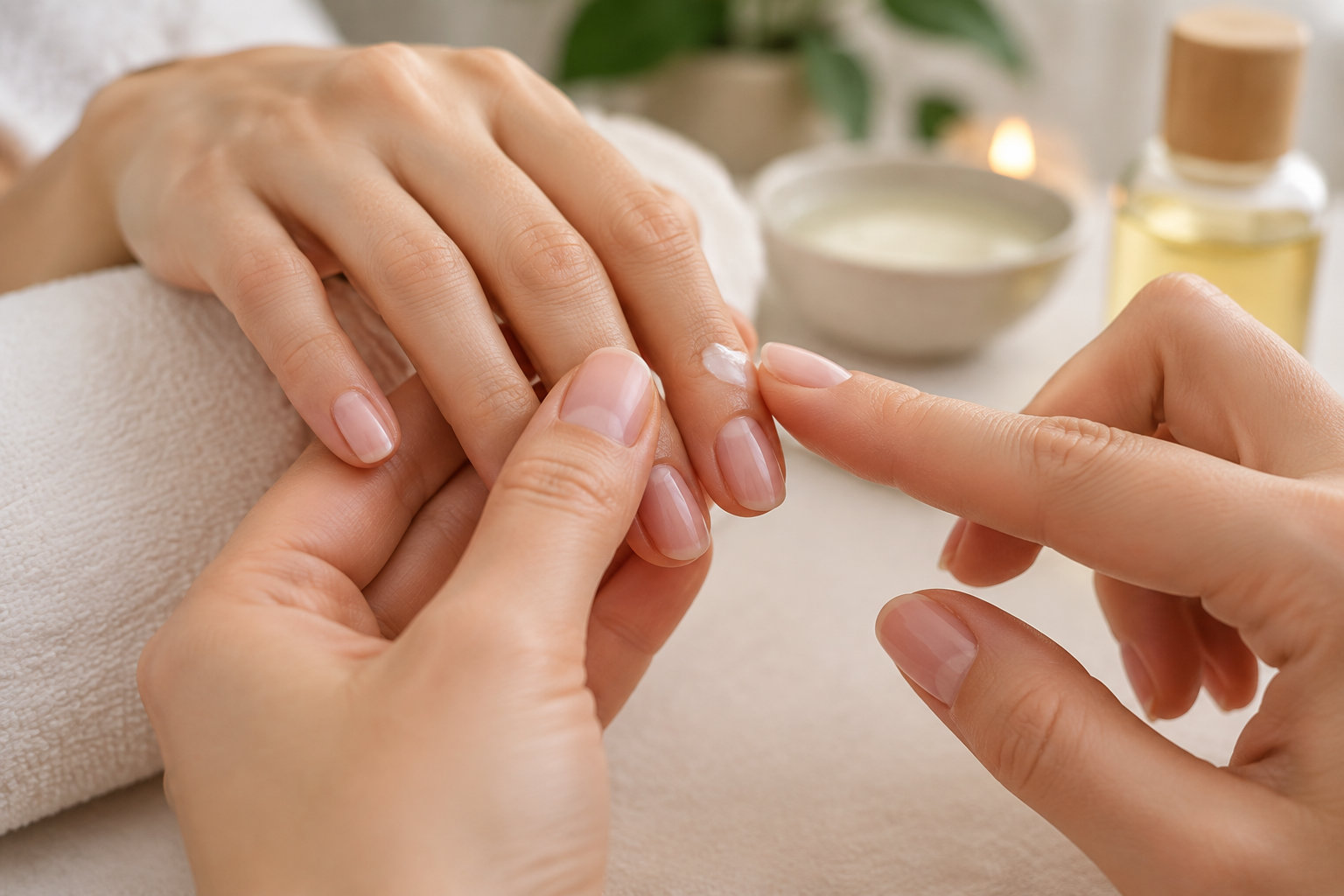
For a gentle manicure, leave the cuticle in place and moisturise it. A thin film of skin lifting on the nail? Do not scrape it off with a metal tool.
Do not push back a dry cuticle. Want to smooth the edge of the nail a little? Do it after a shower, without rushing. Stop as soon as the skin resists.
If your cuticle is damaged, avoid nippers, blades and electric files. These tools can cut the skin, widen a crack or inflame the edge of the nail.
Nail varnish, varnish remover and frequent manicures can also weaken the skin around the nail. If it stings or peels, take a break and simply moisturise it.
Leave a sore or irritated area alone
Recognising the signs of infection
Simple dryness mostly shows as tight skin, hangnails and a rough texture. The colour of the skin usually changes little and any pain stays mild.
Irritation can show as redness, tingling, itching or a burning feeling. These signs appear after contact with water, soap, sanitiser or a cleaning product. Several fingers can be affected at once.
Paronychia is an infection of the skin around the nail. It causes redness in one precise spot, heat, swelling and pain that gets worse. Pus can form at the edge of the nail or under it.
The area then becomes very tender to the touch. Throbbing pain, swelling that spreads or an abscess are no longer signs of simple dryness.
When to seek medical advice
If your skin turns red, hot, swollen or painful, take a break from massage, trimming and manicures.
See a doctor if the pain gets worse, if pus appears or if the redness spreads. Do the same if the inflammation keeps coming back. A doctor will be able to suggest the right care.
Seek advice quickly if:
- you have a temperature or feel unwell;
- you can no longer bend the finger properly;
- the infection reaches the pad of the finger.
Stay alert, too, after a bite, torn skin, a splinter or a manicure that cut you. The risk also rises if you bite your nails, if your hands spend a long time in water or if an illness weakens your defences.
What causes dry cuticles, and how do you limit it?
Identifying what is hard on your hands
Dry cuticles are caused mainly by frequent washing, hot water, harsh soaps and cleaning products, which dry out the skin around the nails. Cold, wind and dry air can make the cracks more marked.
Frequent contact with water weakens the skin as well. Washing-up, cleaning, gardening: if your hands stay wet for a long time, the skin around the nails is very exposed.
Do not keep your gloves on all day. Worn for too long, they trap heat and sweat, which can irritate the skin. Choose the right size, keep them clean and take them off as soon as you have finished.
An acetone-based remover can dry out the skin around the nail. Also avoid scraping off leftover varnish or peeling off a manicure with your fingers.
Reducing irritation day to day
Keep Bon Sens Organic Cuticle Oil next to the basin. After washing your hands, dry them. Apply a little oil around the nails and massage briefly. Tying it to handwashing helps you make it a regular habit.
In the evening, take the time to put some on the base of each nail and on any small cracks. A regular application is better than a large amount once a week.

For jobs that involve water or cleaning products, put your gloves on over clean, dry hands. If you have to wear them for a long time, a cotton lining can limit sweating and rubbing.
Keep washing your hands as often as you need to, then moisturise straight away: that is the habit that protects your cuticles.
Washing and moisturising your hands
- Wash them when you need to, with lukewarm water and a mild product.
- Pat them dry thoroughly, then moisturise them.
Let hangnails fall off by themselves. You can also cut the part that has already come away with a clean tool. Then protect the area with a thin layer of oil, without a tight plaster.
From your next handwash, dry your hands thoroughly and apply a stroke of oil around the nails. Massage without pushing the cuticle back, then put on gloves for wet jobs. To go further, the full nail care routine covers filing and protection, and our nail oil guide helps you read a label. You will also find the cuticle oil among our 100/100 products on Yuka.
Frequently asked questions
Does a cuticle oil replace a hand cream?
The two work together: the oil targets the skin around the nail precisely, thanks to its brush, exactly where the skin cracks first. For dry cuticles, the oil is what makes the difference.
Can you use water alone to fix a dry cuticle?
No, water softens the skin for a short while, but it is not enough to fix it. After washing, dry your hands and apply a product that helps the skin hold on to moisture.
Why do dry cuticles come back despite regular care?
Dry cuticles can crack again if they stay exposed to water, detergents, cold or damp gloves. Combine regular care with careful drying and protection during household tasks.
What is the best old-fashioned tip for dry cuticles?
The best old-fashioned tip for dry cuticles is an oil massage every evening, on the base and sides of the nail. A warm jojoba oil soak once a week softens the flaps of skin without cutting them.
Is a flavoured cuticle oil suitable for a damaged cuticle?
Yes, Bon Sens Organic Cuticle Oil uses gourmand flavours, vanilla or strawberry, and suits sensitive skin. On cracked skin, simply test it on one finger before the first use.