

Dry cuticles: how to care for them naturally at home
Contents
The cuticle protects the base of the nail, and cutting it can let irritants and germs in. Dry cuticles crack, and the little flaps of skin catch on things and tempt you to pull them off.
Here is how to look after dry cuticles naturally, with simple steps that are kind to the skin, and how to tell when it is better to leave them alone.
How do you moisturise dry, cracked cuticles?
What the skin needs
You moisturise dry, cracked cuticles by softening them gently with an oil or a rich cream, never by scraping or trimming them. A rough, whitish or uneven cuticle can split. Small flaps of skin (hangnails) then appear around the nail, catch on clothes and can hurt.
Repeated washing strips away some of the skin's natural oils. Water, soap and hand sanitiser also dry out the skin around the nails. Cold weather and cleaning products make it worse.
A crack weakens this barrier, so irritants and micro-organisms get through more easily. To help the skin, soften it gently. Do not scratch it and do not cut it.
For a natural routine, choose an oil or a rich cream. Oil leaves a supple film and sinks in quickly. If your skin is very dry, go for a thick cream or balm instead.
Choosing and applying a product
Bon Sens Organic Cuticle and Nail Oil contains sunflower oil, a flavouring and vitamin E. Here is what you need to know about it:
- Composition: 100% ingredients of natural origin, 97.8% of them from organic farming.
- Format: a 10 ml dark glass bottle with a brush built into the cap, so you can dab the oil around each nail.
- Manufacture and flavours: the oil is made in France and certified Cosmos Organic, and comes in two natural flavours, strawberry and vanilla. It is also presented as edible, a practical detail if your fingers often end up in your mouth.
- Price and delivery: the bottle costs €6.99. In France, delivery to a pickup point is free on orders from €19, and home delivery from €29. Parcels are sent by Chronopost to pickup points and by Colissimo to home addresses.
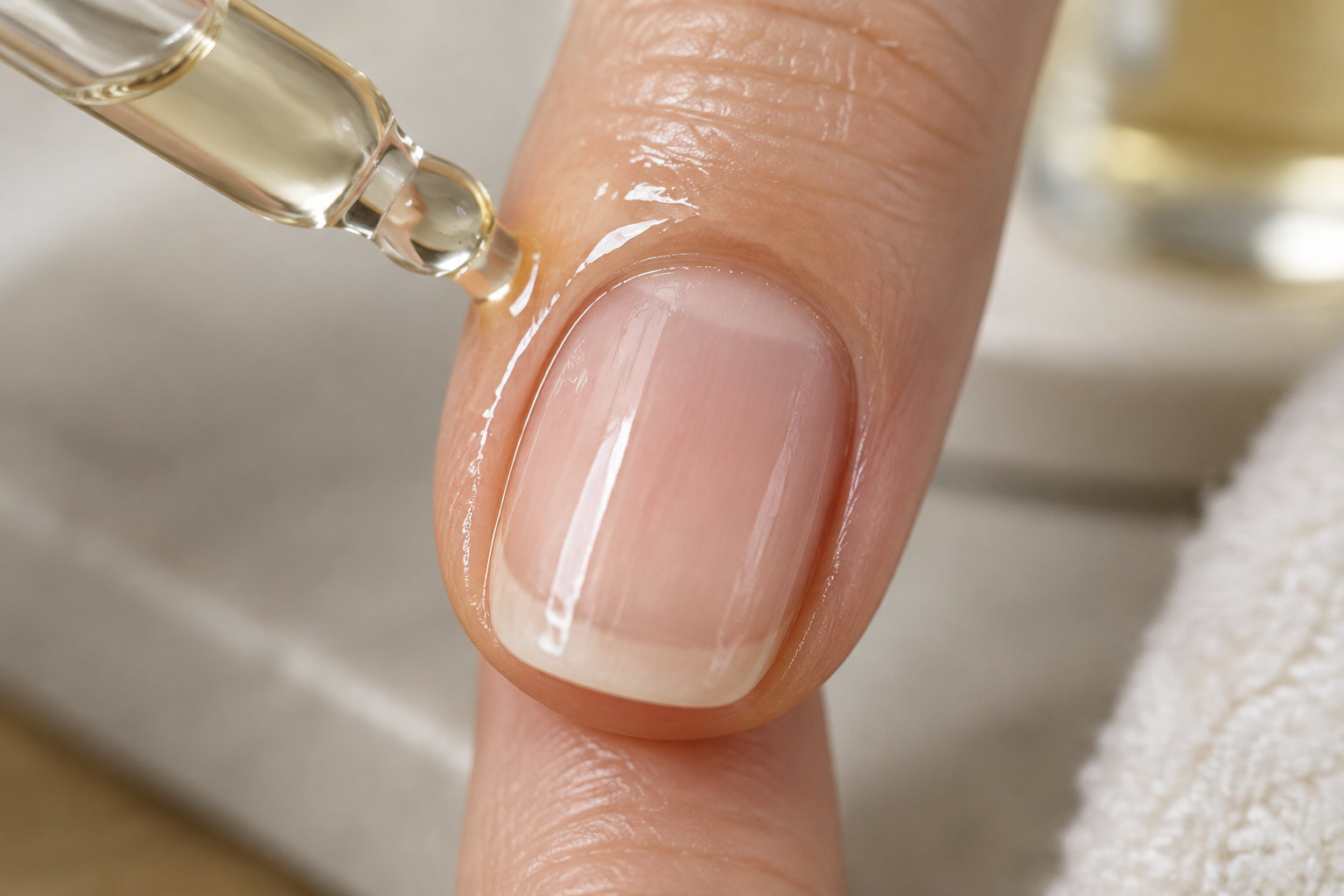
To apply it, brush a thin layer onto the base of the nail, the sides and any dry flaps of skin. Massage with your fingertip, without pushing the cuticle back. The oil dries quickly and does not leave a very greasy finish.
One application a day is enough to keep the skin supple. If your cuticles are very dry, you can repeat it after washing your hands, then again in the evening before bed.
What is a gentle home routine for dry cuticles?

A gentle home routine for dry cuticles has four steps: wash and dry your hands, apply oil, massage it in, then protect your hands from water. Dry them thoroughly, especially around the nails. Use lukewarm water instead of very hot water, and pat your hands with a towel instead of rubbing them.
After washing, your skin is clean and still supple. That is the right moment to apply the oil. You can also do it after a shower, as long as your fingers have not been soaking for long.
Allow about five minutes for the whole routine.
- Dry your hands.
- Apply the oil or cream.
- Massage.
- Protect your hands if a task exposes them to water.
Dab a little Bon Sens Organic Cuticle and Nail Oil onto each nail. Massage in small circles at the base, then along each side. Go gently: the massage should not hurt or press hard on the skin.
For housework, choose suitable gloves. A cotton or soft lining limits contact with water and cleaning products. If your hands sweat, take the gloves off regularly. Skin that stays damp for a long time can become irritated too.
Why should you never cut or force a cuticle?
Protecting the barrier around the nail
You should never cut or force a cuticle because, at the base of the nail, the cuticle protects the area where the nail grows. It sticks to the nail and seals off the matrix, the part that produces the nail, from the outside.
After cutting, the skin can grow back unevenly and catch on things. You then want to cut it again. Do not cut, do not tear and do not force it.
A manicure that does no harm
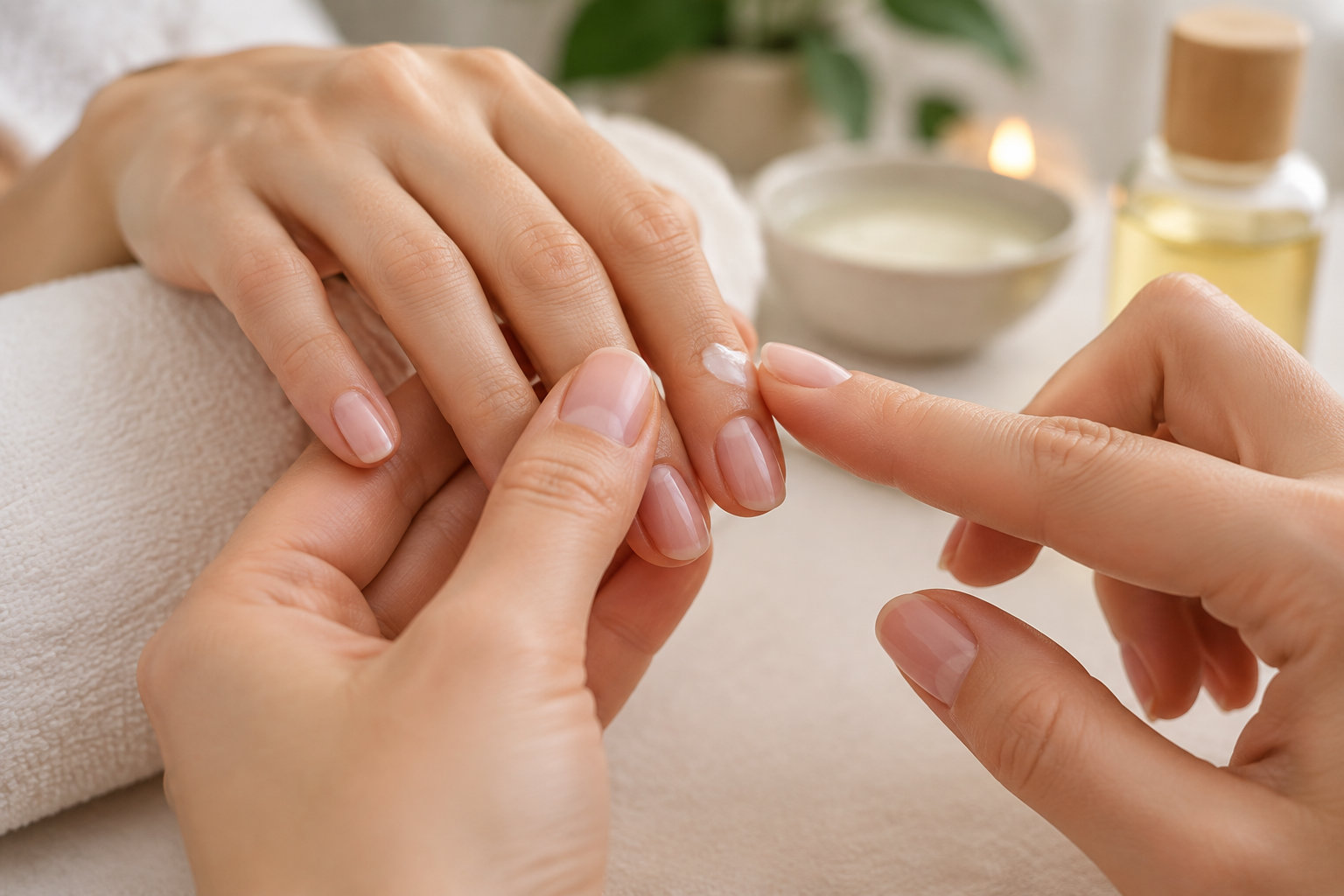
For a gentle manicure, leave the cuticle in place and moisturise it. A thin film of skin lifting on the nail? Do not scrape it off with a metal tool.
Do not push back a dry cuticle. Want to smooth the edge of the nail a little? Do it after a shower, without rushing. Stop as soon as the skin resists.
If your cuticle is damaged, avoid nippers, blades and electric files. These tools can cut the skin, widen a crack or inflame the edge of the nail.
Nail varnish, varnish remover and frequent manicures can also weaken the skin around the nail. If it stings or peels, take a break and simply moisturise it.
Leave a sore or irritated area alone
Recognising the signs of infection
Simple dryness mostly shows as tight skin, hangnails and a rough texture. The colour of the skin usually changes little and any pain stays mild.
Irritation can show as redness, tingling, itching or a burning feeling. These signs appear after contact with water, soap, sanitiser or a cleaning product. Several fingers can be affected at once.
Paronychia is an infection of the skin around the nail. It causes redness in one precise spot, heat, swelling and pain that gets worse. Pus can form at the edge of the nail or under it.
The area then becomes very tender to the touch. Throbbing pain, swelling that spreads or an abscess are no longer signs of simple dryness.
When to seek medical advice
If your skin turns red, hot, swollen or painful, stop the oil, the massage, any trimming and manicures.
See a doctor if the pain gets worse, if pus appears or if the redness spreads. Do the same if the inflammation keeps coming back. An infection around the nail may need a prescribed topical product or medical drainage.
Seek advice quickly if:
- you have a temperature or feel unwell;
- you can no longer bend the finger properly;
- the infection reaches the pad of the finger.
Stay alert, too, after a bite, torn skin, a splinter or a manicure that cut you. The risk also rises if you bite your nails, if your hands spend a long time in water or if an illness weakens your defences.
What causes dry cuticles, and how do you limit it?
Identifying what is hard on your hands
Dry cuticles are caused mainly by frequent washing, hot water, harsh soaps and cleaning products, which dry out the skin around the nails. Cold, wind and dry air can make the cracks more marked.
Frequent contact with water weakens the skin as well. Washing-up, cleaning, gardening: if your hands stay wet for a long time, the skin around the nails is very exposed.
Do not keep your gloves on all day. Worn for too long, they trap heat and sweat, which can irritate the skin. Choose the right size, keep them clean and take them off as soon as you have finished.
An acetone-based remover can dry out the skin around the nail. Also avoid scraping off leftover varnish or peeling off a manicure with your fingers.
Reducing irritation day to day
Keep the Bon Sens Organic Cuticle and Nail Oil next to the basin. After washing your hands, dry them. Apply a little oil around the nails and massage briefly. Tying it to handwashing helps you make it a regular habit.
In the evening, take the time to put some on the base of each nail and on any small cracks. A regular application is better than a large amount once a week.

For jobs that involve water or cleaning products, put your gloves on over clean, dry hands. If you have to wear them for a long time, a cotton lining can limit sweating and rubbing.
Do not skip handwashing to protect your cuticles.
Washing and moisturising your hands
- Wash them when you need to, with lukewarm water and a mild product.
- Dry them carefully, then moisturise them.
Let hangnails fall off by themselves. You can also cut the part that has already come away with a clean tool. Then protect the area with a thin layer of oil, without a tight plaster.
From your next handwash, dry your hands carefully and apply a thin layer of oil around the nails. Massage without pushing the cuticle back, then put on gloves for wet jobs. If the area turns red, hot or painful, seek medical advice.
Frequently asked questions
Does a cuticle oil replace a hand cream?
No, a cuticle oil works mainly around the nail, whereas a cream or balm also covers the fingers and palms. If your hands are very dry, you can use both.
Can you use water alone to fix a dry cuticle?
No, water softens a dry cuticle for a short while, but it is not enough to fix it. After washing, dry your hands and apply a product that helps the skin hold on to moisture.
Why do dry cuticles come back despite regular care?
Dry cuticles can crack again if they stay exposed to water, detergents, cold or damp gloves. Combine regular moisturising with careful drying and protection during household tasks.
Can you use a scented oil on a damaged cuticle?
A scented oil can be suitable if the skin is intact, but a cracked or irritated cuticle can react to fragrances and flavourings. Stop using the product if you notice burning, redness or itching, and seek medical advice if the irritation persists.