

Peppermint oil for headaches: how to use it safely
Peppermint oil for headaches is a popular natural ritual: menthol applied to the skin gives a strong cooling sensation that many people find comforting when their head feels tight. Recurring head tension can weigh on your concentration, and advice online is often vague about doses and precautions.
This guide explains how to use peppermint essential oil with precision and care: dilution ratios, where to apply it on the skin, and the HEBBD criterion (a botanically and biochemically defined essential oil). The aim is a careful, well-informed routine, never a replacement for medical advice.
- Why use peppermint oil for headaches?
- How do you apply peppermint oil for headaches?
- How do you dilute peppermint essential oil safely?
- A wider routine to limit recurring headaches
Why use peppermint oil for headaches?
People use peppermint oil for headaches mainly for its menthol, which gives a cooling, refreshing sensation on the temples and neck. A 10% dilution in a vegetable oil is the rule to follow for any use on the skin.
That sensation depends first on the quality of the oil you choose.
Choosing a pure, organic peppermint essential oil
At Bon Sens we sell an Organic Peppermint Essential Oil. According to its product page, it is 100% pure, natural and complete, steam-distilled from the leaves of Mentha piperita, and certified organic by Ecocert.
A pure oil has the highest concentration of aromatic compounds, which is exactly why it must be diluted before use. Our guide to organic essential oils explains what to check before you buy. A ready-diluted blend does not offer the same concentration.

The HEBBD criterion gives an essential oil a precise botanical and biochemical identity. For this peppermint oil, the product page lists a chemotype of 33 to 40% menthol and 18 to 32% menthone.
What does menthol feel like during a tension headache?
Menthol activates the cold receptors in the skin. This creates a local feeling of intense freshness that many people find soothing when tension builds around the head.
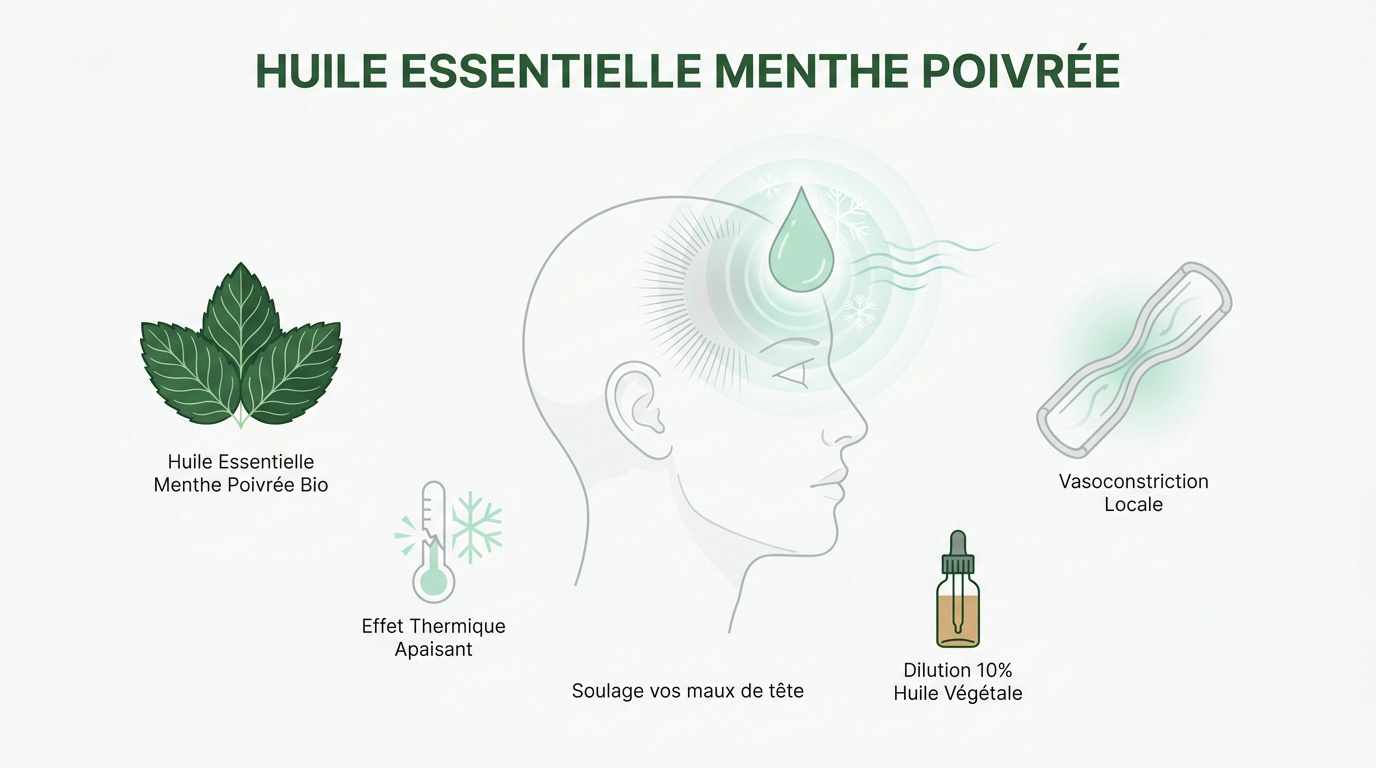
Peppermint oil is traditionally used for muscular head tension. Throbbing migraines are a different matter and call for medical advice.
Peppermint essential oil offers a cooling sensation: it is not a substitute for medicine or for a doctor's advice.
Properly diluted and used on the skin, it fits into a calm daily routine. Knowing how to use it carefully makes that ritual more comfortable.
How do you apply peppermint oil for headaches?
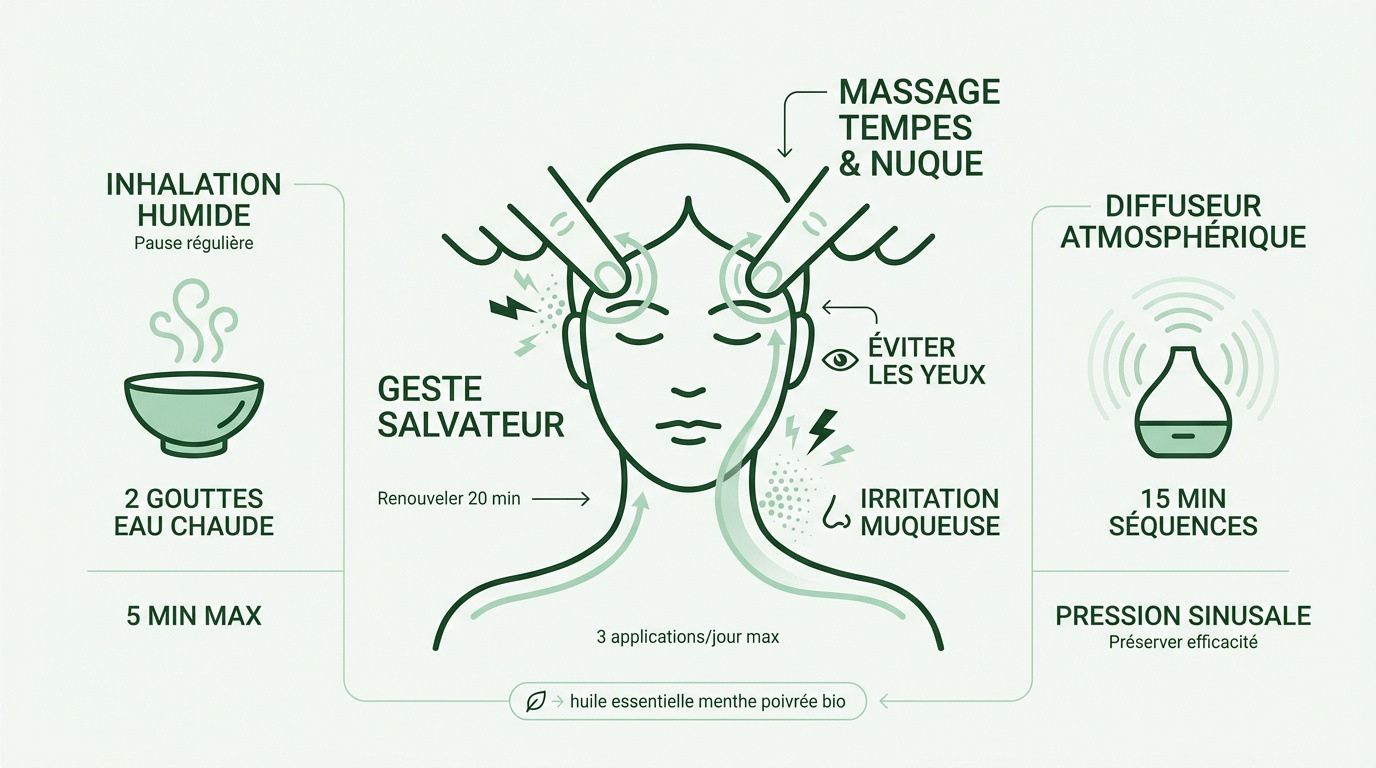
Peppermint oil for headaches is used in three ways: a massage of the temples and neck, a steam inhalation, or a short diffusion session. Once you have checked the quality of your bottle, the priority is getting the technique right.
Temple and neck massage: the core technique
Massage your temples in small circles with two fingers. Then work down to the back of the neck and the top of the shoulders. This massage helps release built-up muscle tension.
Keep well away from the eye area when you apply it. Menthol strongly irritates the eyes and the delicate membranes around them. Wash your hands after the massage to avoid any burning sensation.
Use no more than three applications a day, in line with the European monograph for use on the skin. This limit protects your skin from irritation.
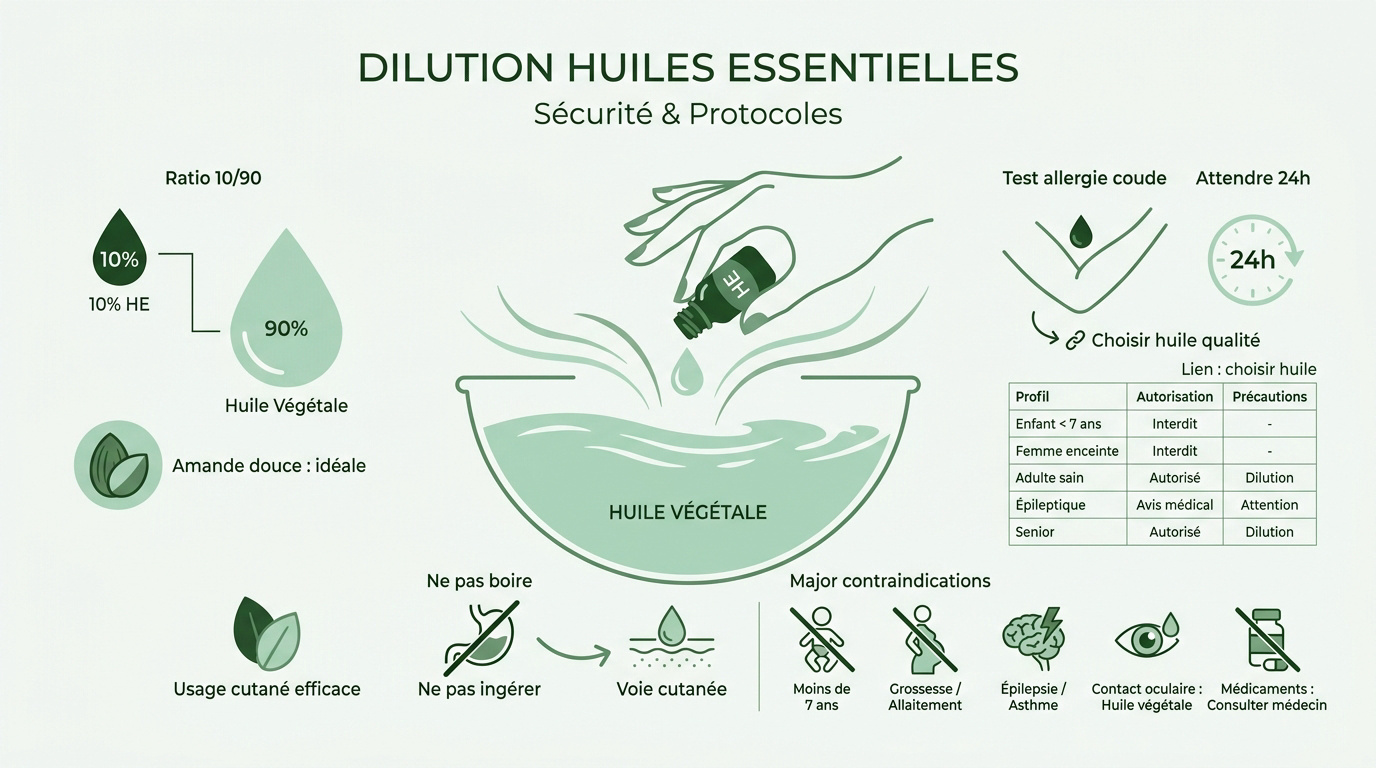
For use on the skin, allow 1 drop of essential oil to 9 drops of vegetable oil, which gives a 10% dilution.
Steam inhalation and diffusion: a cooling sensation
Add two drops to a bowl of hot water. Breathe in the steam for a few minutes only, with your eyes closed. This steam ritual gives a feeling of fresher breathing.
You can also use a diffuser in short sessions. The fresh scent helps create a calmer room. The atmosphere becomes more relaxing.
Take breaks so your sense of smell does not become saturated. This keeps the scent noticeable. Choose an organic peppermint oil for consistent quality.
How do you dilute peppermint essential oil safely?
Peppermint essential oil is diluted to 10% in a vegetable oil, because safety always comes before intensity and careful dilution is what makes skin use reasonable.
Diluting in a vegetable carrier oil
Follow a precise ratio. Use 10% essential oil to 90% vegetable oil, a rate within the 5 to 20% range set by the European monograph for oily preparations in adults. Sweet almond oil is a good choice for its mildness.
Test your skin tolerance first. Put a drop of the blend in the crook of your elbow and wait until the next day to check for any redness. Jojoba also works well as a carrier: see our guide to jojoba oil, and our tips to dilute your oils before a massage.
Never swallow peppermint oil for a headache. Never drink the pure oil. Only diluted skin application is covered in this guide.
Contraindications: who should not use peppermint oil?
Some people should not use peppermint essential oil, and these are strict exclusions. The European monograph rules it out under 2 years (menthol can trigger a spasm of the larynx) and in children with a history of seizures; as a precaution, we advise against it under 7. It is not recommended during pregnancy or breastfeeding. People with epilepsy or asthma should ask a doctor first.
| Profile | Use | Precautions |
|---|---|---|
| Child < 7 years | Not advised | Risk of laryngeal spasm. |
| Pregnancy and breastfeeding | Not advised | Safety not established. |
| Healthy adult | Possible | 10% dilution. |
| Person with epilepsy | Medical advice | History of seizures. |
| Long-term medication | Medical advice | Ask a doctor or pharmacist. |
Never apply the oil to broken or irritated skin. If it gets into your eyes, contact a poison centre straight away or a doctor.
Speak to your doctor or pharmacist before use if you take long-term medication.
A wider routine to limit recurring headaches
Beyond the moment itself, a few everyday habits can help limit how often tension headaches come back.
Pairing scents with relaxation techniques
Peppermint is often paired with true lavender in aromatherapy. The blend gives a softer scent that many people find relaxing. Applying it to the skin then becomes a small self-care ritual.
Practise slow belly breathing regularly. A warm bath helps loosen the neck and shoulders; never pour pure essential oil into it, as it does not mix with water. These simple habits support your everyday wellbeing.
Drink enough water through the day. Regular sleep also helps limit tiredness. These small reflexes support a steadier routine.
- Regular hydration
- Good-quality sleep
- Screen breaks
- Ergonomic posture at your desk
Warning signs that need medical attention
A sudden, severe headache always needs medical advice, so learn to tell an emergency from an ordinary passing headache. Never ignore intense pain that strikes all at once, like a thunderclap.
A thunderclap headache, a high fever, confusion or difficulty speaking need emergency help immediately.
France's health insurance service advises calling emergency services for a sudden, violent headache with weakness, difficulty speaking, fever, a stiff neck or loss of vision. In the UK, call 999 (15 or 112 if you are in France). Your safety depends on acting quickly.
If your headaches become frequent or change in nature, see a healthcare professional. Self-care has real limits, even with natural products. Any change in your symptoms deserves medical advice.
Using peppermint oil for headaches comes down to three things: a pure, well-identified oil, a careful 10% dilution, and a gentle temple massage or short inhalation for a moment of cooling comfort. Keep it as a simple ritual alongside good daily habits, and see a doctor whenever a headache feels unusual.
FAQ
What does peppermint essential oil do for headaches?
Peppermint essential oil contains a high level of menthol, which activates the cold receptors in the skin and creates an intense cooling sensation wherever it is applied.
Many people find this cooling feel comforting during a tension headache. It is a comfort ritual, not a painkiller: it does not replace medical advice or any medicine you have been prescribed.
How do you apply peppermint oil during a headache?
For comfortable use, massage diluted peppermint oil into the temples, forehead and back of the neck. Always dilute it to 10% in a vegetable oil such as sweet almond or jojoba, to avoid skin irritation from its strong cooling effect.
Apply the blend in small circles and keep well away from the eyes, as menthol is highly irritating to them. Use no more than three applications a day.
Can you inhale peppermint oil when your head feels heavy?
Yes, steam inhalation is a traditional way to use peppermint when a headache comes with a blocked-nose feeling. Add two drops to a bowl of hot water and breathe in the steam for a few minutes, which gives a feeling of fresher breathing.
Diffusion is another option to freshen the air in the room. Keep sessions short so your sense of smell does not become saturated.
What precautions and contraindications should you follow?
Peppermint essential oil must be used with strict precautions. It is not advised during pregnancy or breastfeeding, or for children under 7. People with epilepsy, asthma or high blood pressure should ask a doctor first.
Never swallow the pure oil and never add it undiluted to your bath, because it does not mix with water. If it gets into your eyes, contact a poison centre or a doctor.
When should you see a doctor about headaches?
Natural products never replace a medical diagnosis when symptoms are unusual. Call 999 for a sudden thunderclap headache, or for a headache that comes with fever, confusion or difficulty speaking.
If your headaches become frequent or more intense despite using peppermint oil, see a healthcare professional. Self-care is for occasional, mild discomfort and must never mask a problem that needs proper follow-up.