

Eucalyptus oil for a blocked nose: how to use it safely
In brief:
- Eucalyptus oil for a blocked nose is a traditional comfort measure, not a treatment.
- Its main compound, eucalyptol, mostly gives a feeling of freshness that helps you feel less stuffed up.
- Always dilute it for skin use (10% at most), never use it in pregnancy or while breastfeeding, and not before age 6.
- If symptoms last more than a week, get worse or come with a fever, see a doctor.
Eucalyptus oil for a blocked nose is one of the most common home habits when you are congested. Its main compound, eucalyptol (1,8-cineole), gives a feeling of freshness and easier breathing. The practical questions are which variety to choose, how many drops to use and who should avoid it.
Used the wrong way, it can irritate the skin and airways. This guide covers the safe ways to use it, the precautions that always apply, and the difference between eucalyptus radiata and eucalyptus globulus before you buy.
- Why is eucalyptus oil used for a blocked nose?
- What should you look for in an organic eucalyptus oil?
- 3 safe ways to use eucalyptus oil for a blocked nose
- How do you adapt eucalyptus oil for sensitive airways?
Why is eucalyptus oil used for a blocked nose?
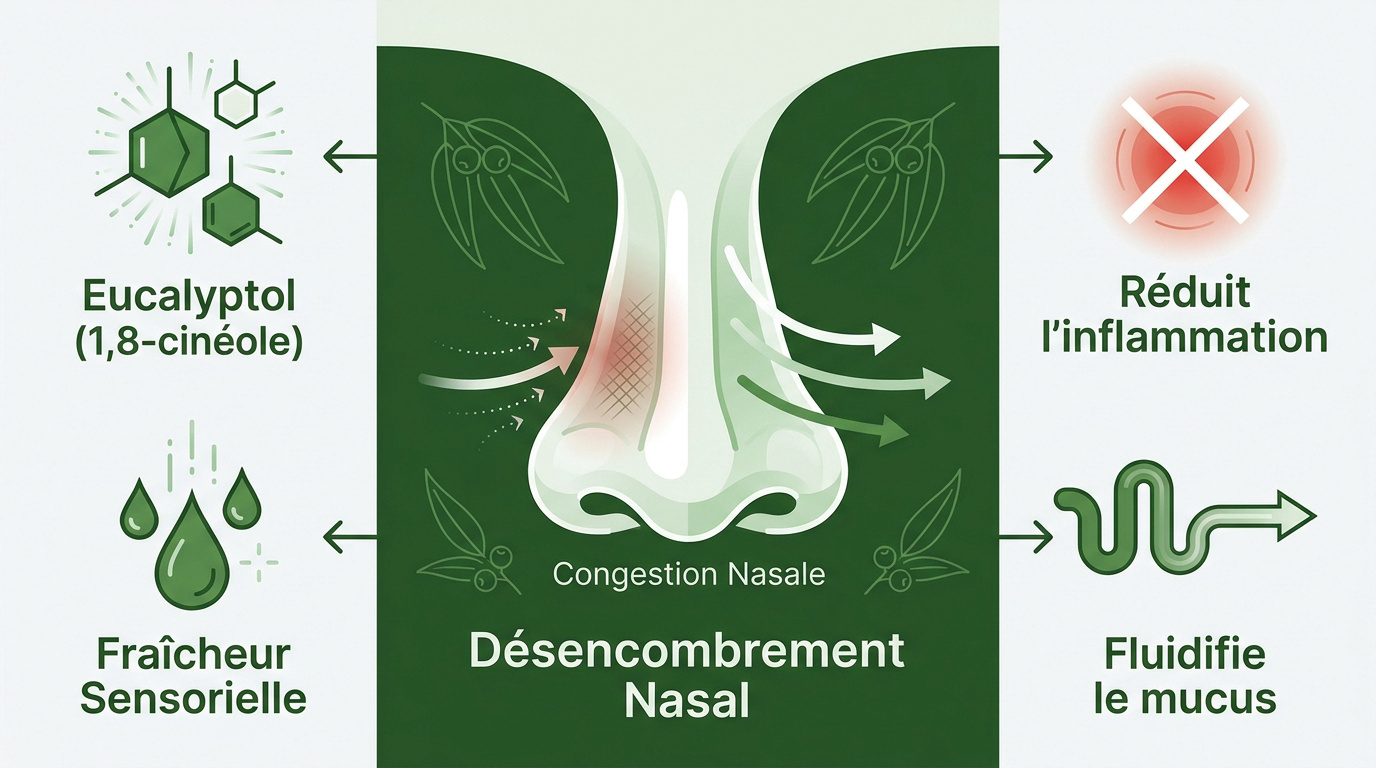
Eucalyptus oil is used for a blocked nose because eucalyptol (1,8-cineole), its main compound, gives a feeling of freshness and a clearer nose when you breathe it in. The European monograph recognises a traditional use of eucalyptus oil to relieve a cough associated with a cold, based on long-standing use rather than clinical trials.
What eucalyptol does in a stuffy nose
Eucalyptol is traditionally associated with more fluid secretions. Thinner mucus is easier to clear when you blow your nose.
That is why Eucalyptus globulus has such a long history in steam inhalations. It does not tackle the cause of a blocked nose (a cold, an allergy, sinusitis): it works on how it feels.
In short, eucalyptol is valued for a quick feeling of breathing comfort. It is a comfort measure, not a remedy.
Eucalyptus radiata vs eucalyptus globulus
Eucalyptus globulus and eucalyptus radiata both give an oil rich in eucalyptol, and the exact content varies with origin and distillation. In aromatherapy, globulus is traditionally chosen for the chest, and radiata, said to be gentler, for the nose and throat.
Traditional use: nose and throat. Said to be gentler. Not covered by the European monograph.
Traditional use: chest and steam inhalations. Species covered by the European monograph.
Our organic eucalyptus oil is Eucalyptus globulus, certified organic by Ecocert, grown and distilled in Spain. Always check the Latin name on the label.
Choosing a variety does not replace the precautions. Radiata or globulus, the same rules apply to children, pregnancy and breastfeeding (see below).
Feeling clearer vs actually being clearer
Eucalyptol activates the TRPM8 receptors, which normally detect cold. That minty, cooling sensation signals freshness to your brain, so you feel you are breathing more easily before anything has changed in your nose.
The cooling effect of eucalyptol is first and foremost a sensation: it brings comfort, but it says nothing about the cause of the congestion.
Knowing the difference helps you judge honestly what eucalyptus oil does for you. If the stuffiness lasts more than a week, the European monograph advises seeing a doctor.
What should you look for in an organic eucalyptus oil?
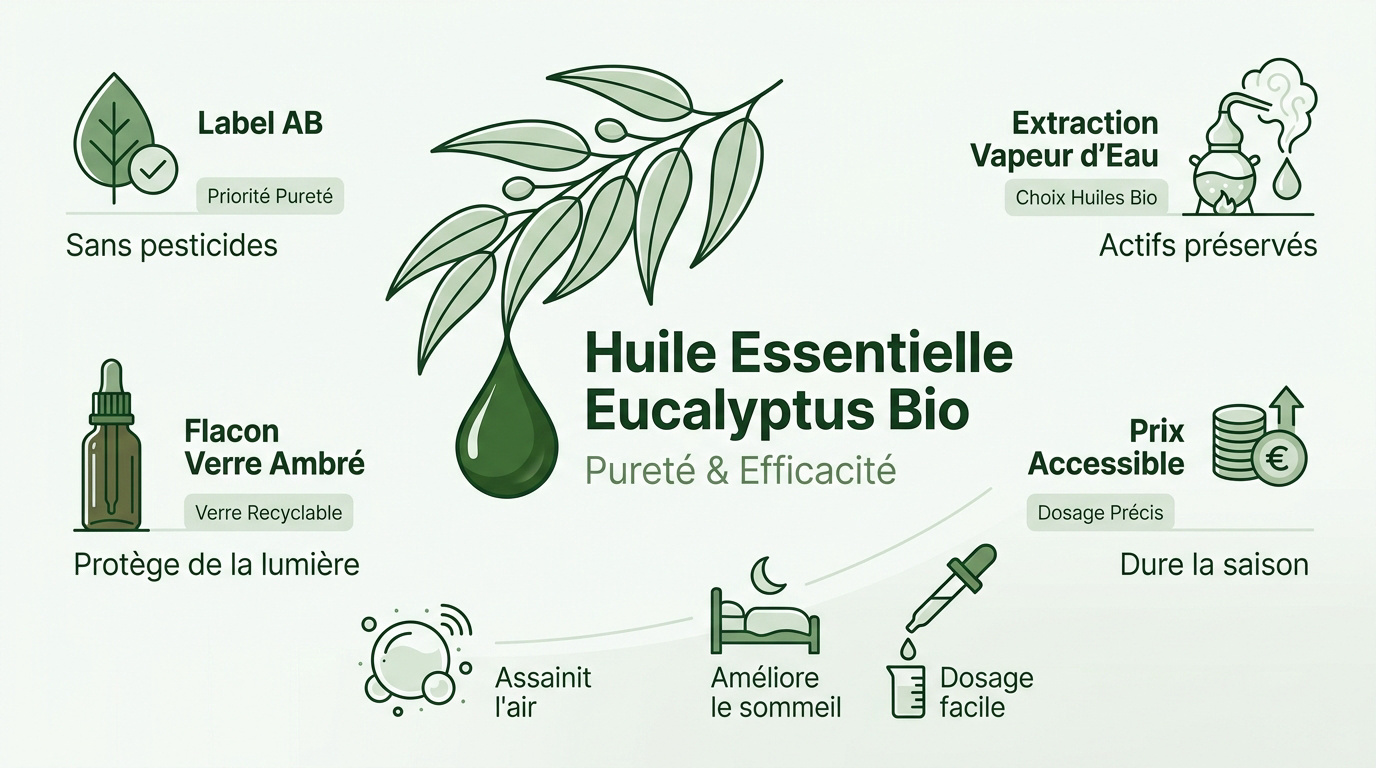
An organic eucalyptus oil should clearly state its Latin name, origin and certification, because the quality of the oil itself matters as much as the way you use it.
What the organic label tells you
Organic certification rules out synthetic pesticides in growing. The Latin name and chemotype tell you what is actually in the bottle.
Take care when choosing an oil you will breathe in or put on your skin. Always check where the bottle comes from and which part of the plant was distilled.

The price stays affordable, and a 50 ml bottle is used a drop at a time.
Diffusing eucalyptus oil to freshen indoor air
A few drops in a diffuser scent and freshen the air in a room. The air feels lighter. Diffuse in short sessions, air the room afterwards, and always stop diffusing before you go to sleep.
Certified organic
Pure and natural
Breathing more comfortably often makes the end of the day more pleasant. A calmer evening is often what people are looking for.
The dropper cap is practical. It gives you precise doses without waste.
Bon Sens: origin and traceability
Our eucalyptus oil is steam distilled from the leaves, then bottled in France.
The glass bottle filters UV light to protect the oil, and glass goes in your recycling. It is a kinder choice for the planet.
Find eucalyptus among our organic essential oils, each listed with its precautions for use.
3 safe ways to use eucalyptus oil for a blocked nose
The three safe ways to use eucalyptus oil for a blocked nose are inhalation, diluted skin application and simple nasal hygiene, and each one depends on getting the technique and the dose right.
Steam inhalation and diffusion
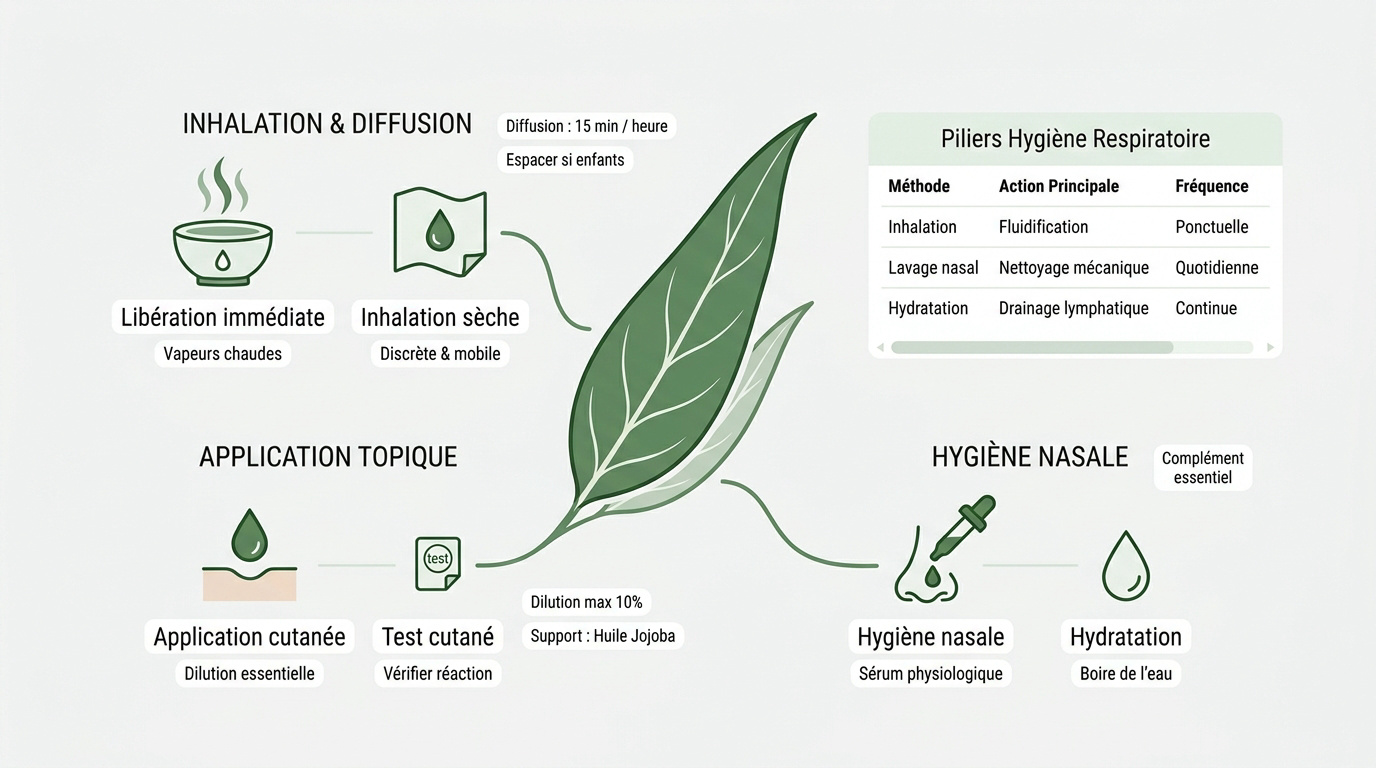
Steam inhalation gives the quickest feeling of relief. Add 2 to 3 drops to a bowl of hot water and breathe in the vapour under a towel for a few minutes, keeping your eyes out of the steam. For adults, the European dosage goes no higher than 8 drops per 250 ml of water, 3 times a day.
Diffusing eucalyptus oil into a room needs a few rules to stay pleasant and safe:
- Short sessions: a few minutes, never non-stop
- Never diffuse while you sleep
- No diffusion around children or pets
- Air the room after use
Dry inhalation suits days out. Put a single drop on a cotton handkerchief and breathe it in discreetly at work to keep your nose feeling clear.
Put 1 to 2 drops on a handkerchief for discreet use at the office or while travelling, and keep your nose feeling clear through the day.
Skin application and why dilution matters
We recommend jojoba oil as the carrier oil to dilute eucalyptus and protect your skin barrier. Eucalyptus oil never goes on the skin or mucous membranes undiluted.
Always stick to a cautious dose: 10% at most, the strength of the ointments described in the European monograph. Then apply the blend to the chest or upper back, never on broken or irritated skin. Our dilution guide walks through the maths.
Always do a skin test first. Put one drop of the diluted blend in the crook of your elbow and wait 24 hours to check that your skin shows no redness. Wash your hands after applying it.
Nasal hygiene and hydration alongside eucalyptus oil
Saline solution is a simple companion. A saline nasal rinse mechanically washes out the nose and pairs well with a eucalyptus steam inhalation.
| Method | Purpose | Frequency |
|---|---|---|
| Steam inhalation | Feeling of freshness | Up to 3 times a day (adults) |
| Saline nasal rinse | Mechanical cleansing | As advised by your pharmacist |
| Drinking water | General hydration | Throughout the day |
Remember to drink water regularly. Staying well hydrated adds to your general comfort when you have a cold.
How do you adapt eucalyptus oil for sensitive airways?
To adapt eucalyptus oil for sensitive airways, you reduce or avoid exposure depending on who is concerned, because caution comes first for the most vulnerable.
Do not use in children under 6, during pregnancy or while breastfeeding. Contraindicated in children with a history of seizures. Ask a doctor before any use if you have asthma or epilepsy. No diffusion around pets.
Precautions for children and sensitive people
ANSES advises against essential oils for children and pregnant women, and recommends asking a health professional before any use. The European monograph contraindicates eucalyptus oil under age 2, because of a risk of laryngospasm, and in children with a history of seizures. To be safe, we do not advise it before age 6, and after that only on the advice of a doctor or pharmacist.
The same monograph advises against use during pregnancy and breastfeeding, because safety has not been established. People with asthma or epilepsy should ask their doctor's advice before any use.
Pets, cats in particular, are sensitive to diffused essential oils. As a precaution, do not diffuse around them and ask your vet for advice.
Signs that you need medical advice
According to the European monograph, see a doctor if symptoms last more than a week or get worse, or if you have a fever, shortness of breath or discoloured, thick phlegm. Increasing pain in the face is also a warning sign. Never ignore a sudden turn for the worse in how you feel.
Essential oils remain a comfort measure: they never replace treatment prescribed by your doctor, including antibiotics for a confirmed bacterial infection.
Keep a short daily note of your symptoms. It helps you see whether eucalyptus oil actually makes you more comfortable, and lets you give precise information to your GP or pharmacist.
Eucalyptus oil for a blocked nose brings a welcome feeling of freshness, which is why it is such a common aromatherapy habit. Check the Latin name on the label, always dilute it for skin use, follow the precautions for children, pregnancy and breastfeeding, and see a doctor if symptoms persist or get worse.
FAQ
Why is eucalyptus oil used for a blocked nose?
Eucalyptus oil is used for a blocked nose mainly because of eucalyptol (1,8-cineole), traditionally associated with more fluid secretions that are easier to clear.
Eucalyptol also stimulates the TRPM8 cold receptors and gives a feeling of freshness, so breathing feels easier. It does not act on the cause of a blocked nose.
What is the difference between eucalyptus radiata and eucalyptus globulus?
Both are rich in eucalyptol. In aromatherapy, eucalyptus radiata, said to be gentler, is traditionally chosen for the nose and throat, and eucalyptus globulus for the chest. Only globulus is covered by the European monograph, and it is the species Bon Sens sells.
For children, the same precautions apply to both varieties: no use before age 6, and after that only on the advice of a doctor or pharmacist.
How do you use eucalyptus oil to clear your airways?
You can use steam inhalation by adding 2 to 3 drops to a bowl of hot water and breathing in the vapour under a towel, with your eyes out of the steam. On the go, dry inhalation from a cotton handkerchief is a discreet alternative.
Skin application is also possible if you dilute the essential oil to 10% at most in a carrier oil such as jojoba. Then massage it into the chest or upper back for a warming, fresh feeling, after a 24-hour skin test.
Are there any contraindications to eucalyptus oil?
Yes, eucalyptus oil requires caution for some people. It is not recommended during pregnancy and breastfeeding, contraindicated under age 2 and in children with a history of seizures, and we do not advise it before age 6. People with asthma or epilepsy should see their doctor before any use.
Also make sure you protect your pets, cats in particular: do not diffuse around them. Always air the room after each diffusion session.
When should you see a doctor about a blocked nose?
See a doctor if a blocked nose lasts more than a week despite aromatherapy, gets worse, or comes with a fever, shortness of breath or discoloured, thick phlegm. These signs call for prompt medical advice.
Essential oils can support your comfort, but they never replace treatment prescribed by a health professional, including antibiotics when a bacterial infection has been diagnosed.