

Essential oils for sleep: which one to choose and what to expect
Contents
Which essential oils for sleep are worth trying, when none of them can guarantee a deep night's sleep?
The effects vary from person to person, and poor use can irritate your skin or make breathing uncomfortable. This guide helps you pick an option with care and know when to look for more suitable help.
Essential oils for sleep: what can lavender, lavandin, sweet orange or cedarwood do?
Among essential oils for sleep, lavender is the most studied. The results are encouraging, but modest and variable.

Lavandin smells much like lavender. Sweet orange has a fruity note and Atlas cedarwood a woody one. Sleep data is far scarcer for these three oils.
Across 11 controlled trials involving 628 adults, lavender is associated with better sleep quality, although the results vary. An older study of 31 adults noted changes in certain sleep stages.
An essential oil can sit alongside your routine. But if insomnia persists, it is no substitute for proper care. For chronic insomnia, cognitive behavioural therapy remains the first-line choice.
What does the research say about lavender oil and sleep?
Research on lavender oil and sleep is encouraging but still limited: 20 controlled trials were identified in 2022. In 14 trials, a positive effect on sleep quality was reported. In 2025, the standardised mean difference was -0.56. Even so, results differ widely from one study to the next.
True lavender (Lavandula angustifolia) is not lavandin (Lavandula x intermedia). Lavandin is a hybrid. It often contains more camphor and 1,8-cineole.
| Typical lavandin compound | Indicative content | What it means |
|---|---|---|
| Linalool | 24 to 37% | Found in many lavandins, but its presence does not prove an effect on sleep. |
| Linalyl acetate | 25 to 38% | Contributes to the scent of the oil. Its share varies with the clone, the origin and the distillation. |
| Camphor | 6 to 8.5% | More abundant than in true lavender, which matters when you decide how to use the oil and how to stay safe. |
How do you use essential oils for sleep safely?
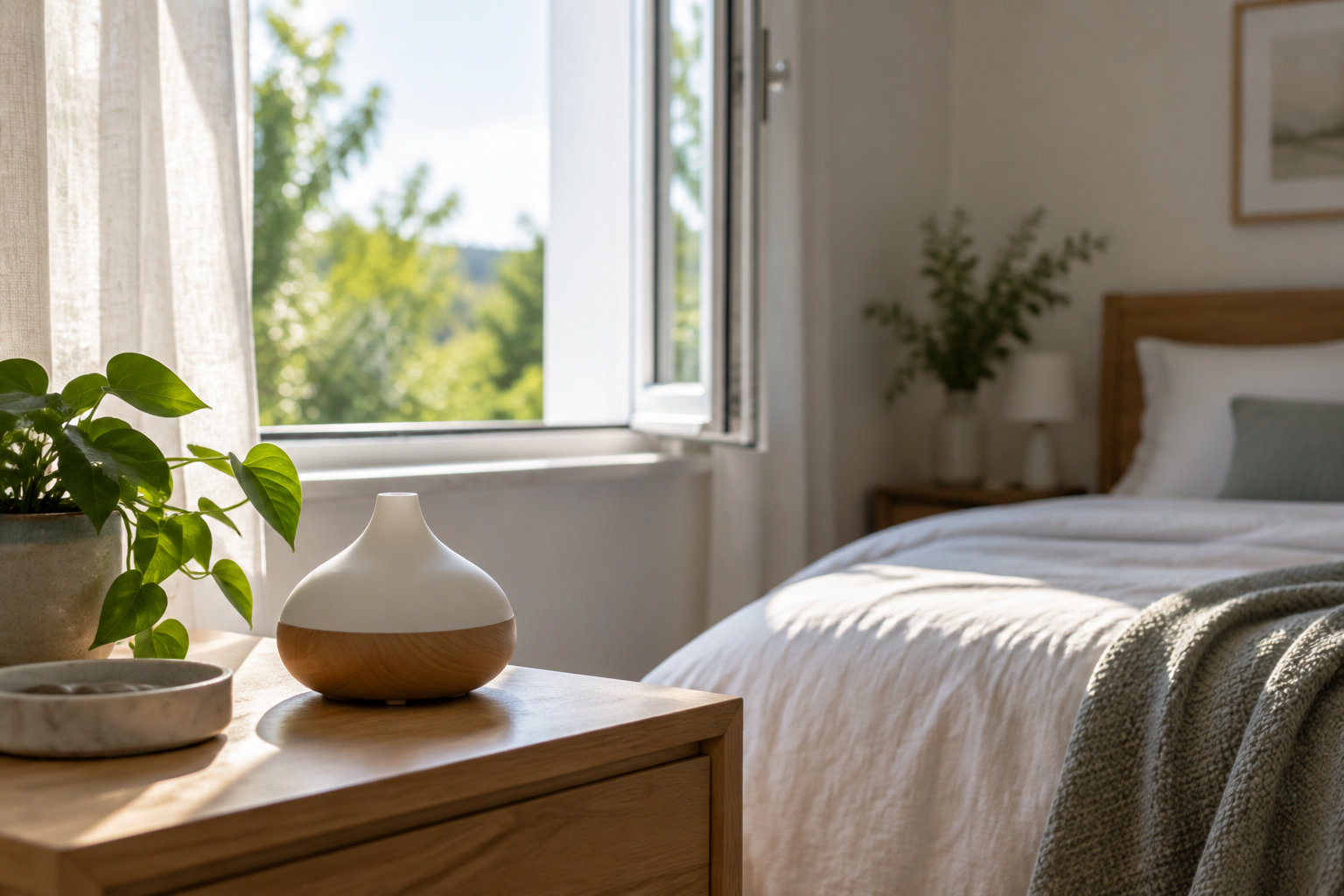
The lowest-risk way to start using essential oils for sleep is indirect inhalation. Run a short diffusion before bedtime to see how you react. Follow the instructions and air the room. Switch the diffuser off before you go to sleep. Do not leave it running all night in a closed bedroom.
On the skin, always dilute the oil. For Bon Sens lavandin, allow two to three drops in a teaspoon of carrier oil. Test the blend on a small area first. Never apply the oil neat to mucous membranes, inside the nose or near the eyes. Wash your hands after the massage.
After use, close the bottles and keep them upright. Store them away from light and heat, out of the reach of children. Keep them apart from baby care products, so they are not mistaken for vitamin D drops.
Do not use essential oils on your own initiative for several days in a row. Caution matters most with oral use or if you are on medication.
The three Bon Sens oils: composition, origin and price

All three oils are available. Each costs €9.99, excluding any delivery charge.
| Product | Stated origin | Scent and uses mentioned |
|---|---|---|
| Organic Lavandin Essential Oil, Bon Sens | France | Scent close to lavender. Diffusion, diluted skin application and food use are listed on the product page. |
| Organic Italian Sweet Orange Essential Oil, Bon Sens | Italy | Soft, fruity scent. Diffusion and food use are listed, and skin application must be diluted. |
| Organic Atlas Cedarwood Essential Oil, Bon Sens | Check the bottle label | Woody, soothing scent, to create a relaxing atmosphere. |
Delivery to a pick-up point is listed as free on orders from €19. Home delivery is free from €29.
Precautions and interactions you should not overlook
Avoid essential oils for children and during pregnancy. If you are breastfeeding, elderly, or have an allergy or a long-term condition, ask for medical advice before using any.
If you have asthma or sensitive airways, diffusion can irritate them. Stop as soon as you cough or feel uncomfortable.
There is no simple list of interactions for these oils. An occasional inhalation is not the same thing as repeated ingestion. Take particular care if you are on sedative medicines, medication that acts on the nervous system, or if you have a long-term condition.
If you take medication, particularly for sleep, anxiety, epilepsy or breathing, ask your GP or pharmacist. Never replace a medicine with an essential oil.
Which habits help your sleep more than an essential oil?
Everyday habits do more for your sleep than an essential oil, starting with stimulants. Late in the day, cut back on coffee, tea and energy drinks, along with other stimulants. In the evening, avoid alcohol and nicotine as well. They can make your sleep more broken.
If your insomnia is chronic, a professional may suggest cognitive behavioural therapy. It works in particular on anxious thoughts, stimulus control, relaxation and time spent in bed.
If you would like to try an essential oil, choose true lavender and start with a short, indirect diffusion, following the instructions and then airing the room. Stop if it bothers you. If insomnia persists or keeps coming back, book an appointment with a healthcare professional.
Frequently asked questions
Should you choose an organic essential oil for sleep?
An organic label tells you how the plant was grown and which production rules were followed, but it does not guarantee a better effect on sleep. Check the botanical name, the part of the plant used, the origin and the directions for use as well.
Is a pleasant scent enough to improve sleep?
A pleasant scent can help you unwind and become a cue in your evening routine. It does not address every cause of insomnia, and it guarantees neither falling asleep quickly nor sleeping more deeply.
Can you switch oils if you do not like the scent?
Yes, because scent matters a great deal when you use an essential oil by inhalation. Try one oil at a time, with low exposure, and stop if the scent bothers you or causes irritation.
Can an essential oil replace a sleeping pill?
No, an essential oil replaces neither a prescribed sleeping pill nor a medical assessment. It can sit alongside a wind-down routine, while cognitive behavioural therapy for insomnia is offered first in cases of chronic insomnia.