

How to choose a quality jojoba oil
Jojoba oil is technically a liquid wax composed of 97% wax esters, which gives it exceptional oxidative stability and a perfect affinity with human sebum. However, many bottles available on the market undergo chemical refining processes that destroy their natural vitamins. You may then end up applying an inert oily substance stripped of its original regulating and protective properties.
To ensure the effectiveness of your skincare products, you need to know how to choose jojoba oil by checking precise purity and extraction criteria. We will explain the technical indicators and certifications that confirm the superior quality of virgin oil.
- The technical criteria for choosing excellent jojoba oil
- Bon Sens organic jojoba oil: our purity recommendation
- How can you identify superior-quality virgin oil?
- 3 ways to incorporate this treatment into your routine
The technical criteria for choosing excellent jojoba oil
Excellent jojoba oil requires extraction by first cold pressing and organic certification guaranteeing the absence of solvents. Its 100% pure composition, preserved in amber glass, protects its unique sebum-regulating properties.
The latest information on storage leads directly back to the quality of the initial pressing to guarantee this effectiveness.
Simmondsia chinensis produces a liquid wax. Its molecular structure is very similar to human sebum.
The first cold-press extraction method
We favour the mechanical crushing of the seeds. This process completely excludes the use of chemical solvents or heat.
The low temperature preserves the vitamins. This first cold pressing keeps the valuable fatty acids intact.
This process guarantees a virgin oil. You therefore obtain a product with high nutritional quality.
The importance of organic certification and purity
We recommend Cosmos or Ecocert labels. These certifications validate strict criteria:
- No chemical residues
- Respect for the environment
- GMOs prohibited
Check the bottle's INCI list. It should mention only Simmondsia Chinensis Seed Oil. Avoid filling oils.
The role of opaque glass packaging
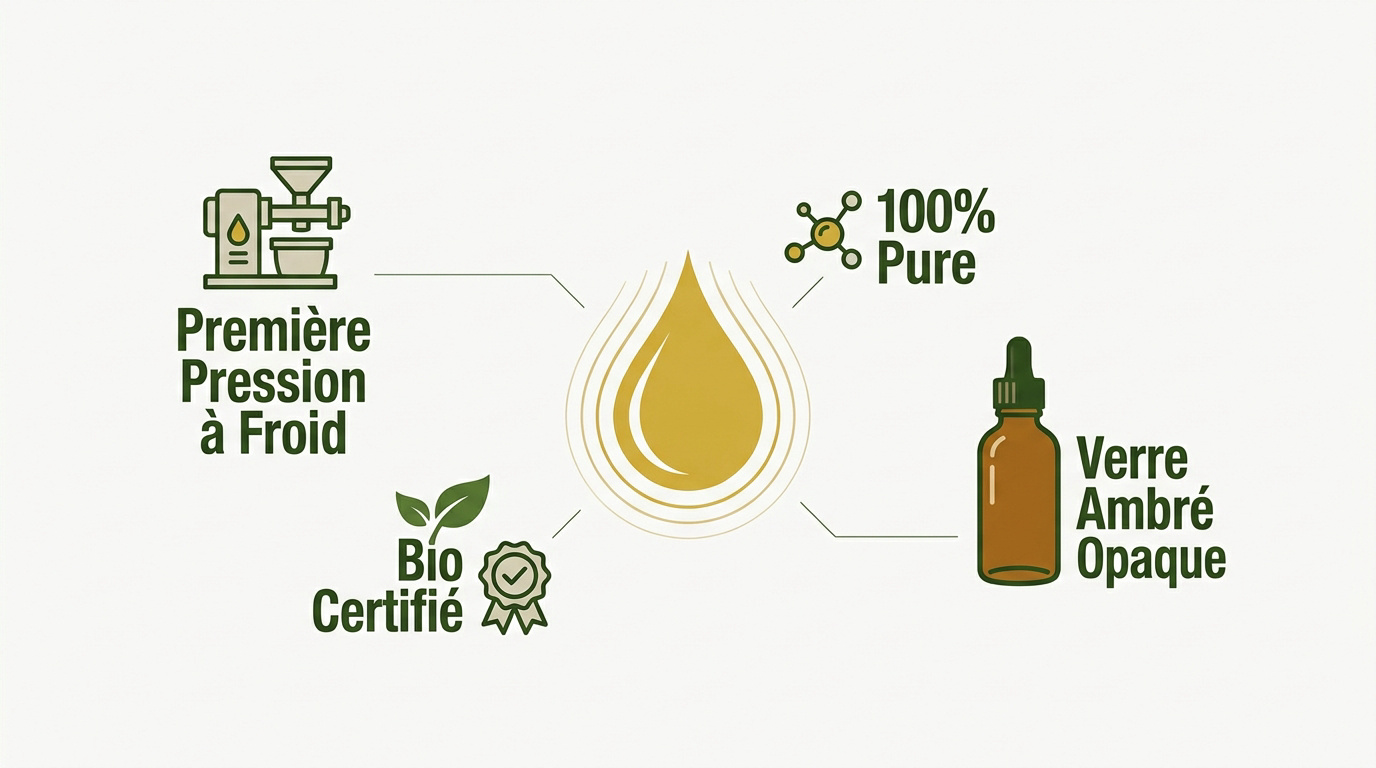
Use amber glass bottles. They block ultraviolet rays. Avoid plastic to prevent molecular transfer.
Light accelerates the oxidation of active compounds. Optimal protection preserves the treatment's effectiveness over the long term.
Bon Sens organic jojoba oil: our purity recommendation
Having identified the quality criteria, let's turn to a reference that meets every requirement of high-quality craftsmanship.
Balancing properties and 100% natural composition
Bon Sens oil effectively regulates sebum on the skin. It is perfectly suited to combination or oily skin. Its structure mimics natural human sebum.
We guarantee complete purity without any denaturing treatment. This organic jojoba oil preserves its essential fatty acids. You benefit from an authentic treatment.

Health applications confirm its complete safety. The absence of additives reassures demanding consumers. It is a reliable choice for you.
0/5 (Non-comedogenic)
Below 10°C
Versatile use for shine and suppleness
This treatment repairs dry, brittle hair. It nourishes the hair fibre without weighing it down.
Jojoba oil acts as a protective liquid wax, instantly restoring shine and suppleness to even the dullest lengths.
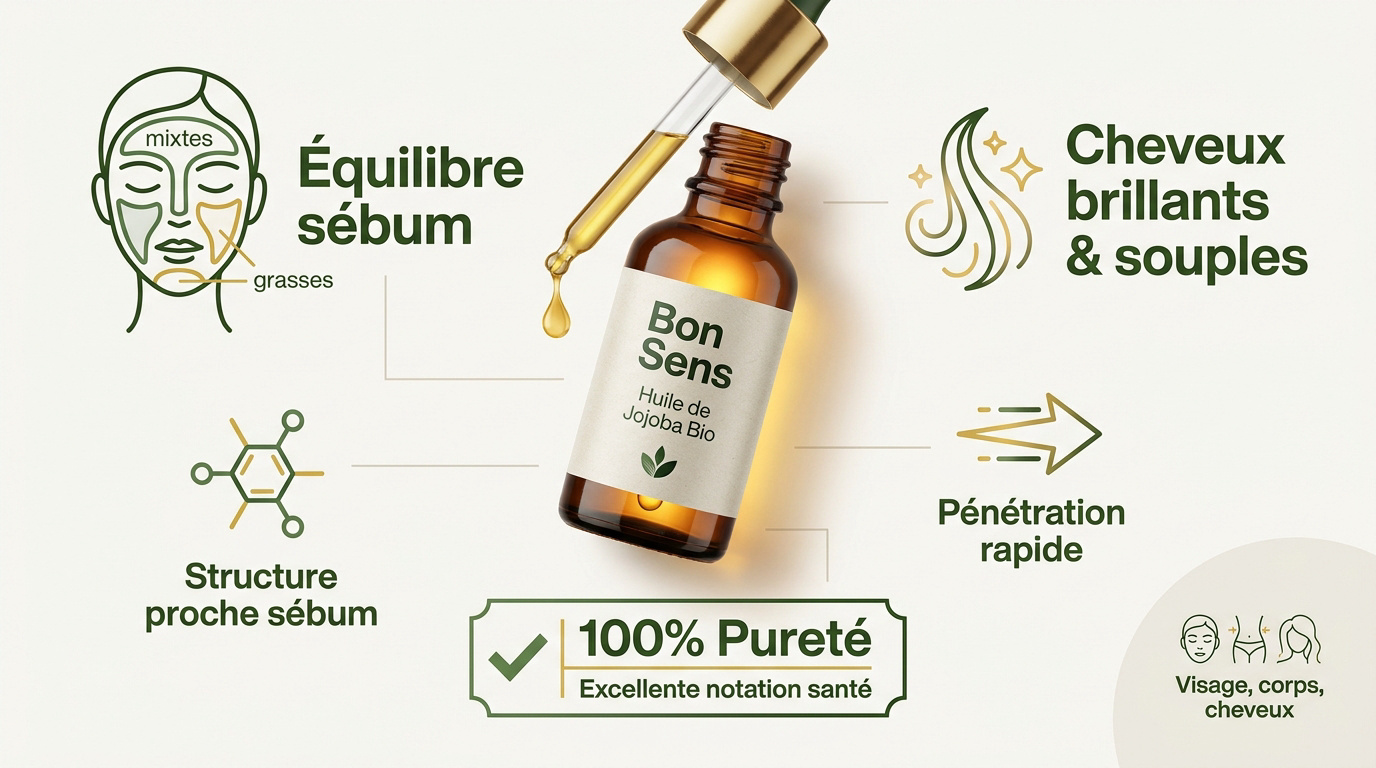
The epidermis absorbs this fluid with surprising speed. No heavy feeling appears after application. Comfort is immediate.
This product is suitable for the face, body and hair. One bottle is all you need for your daily uses.
How can you identify superior-quality virgin oil?
Beyond the brand, learning how to interpret technical indicators allows you to confirm the product's true freshness.
Peroxide and acidity value analysis
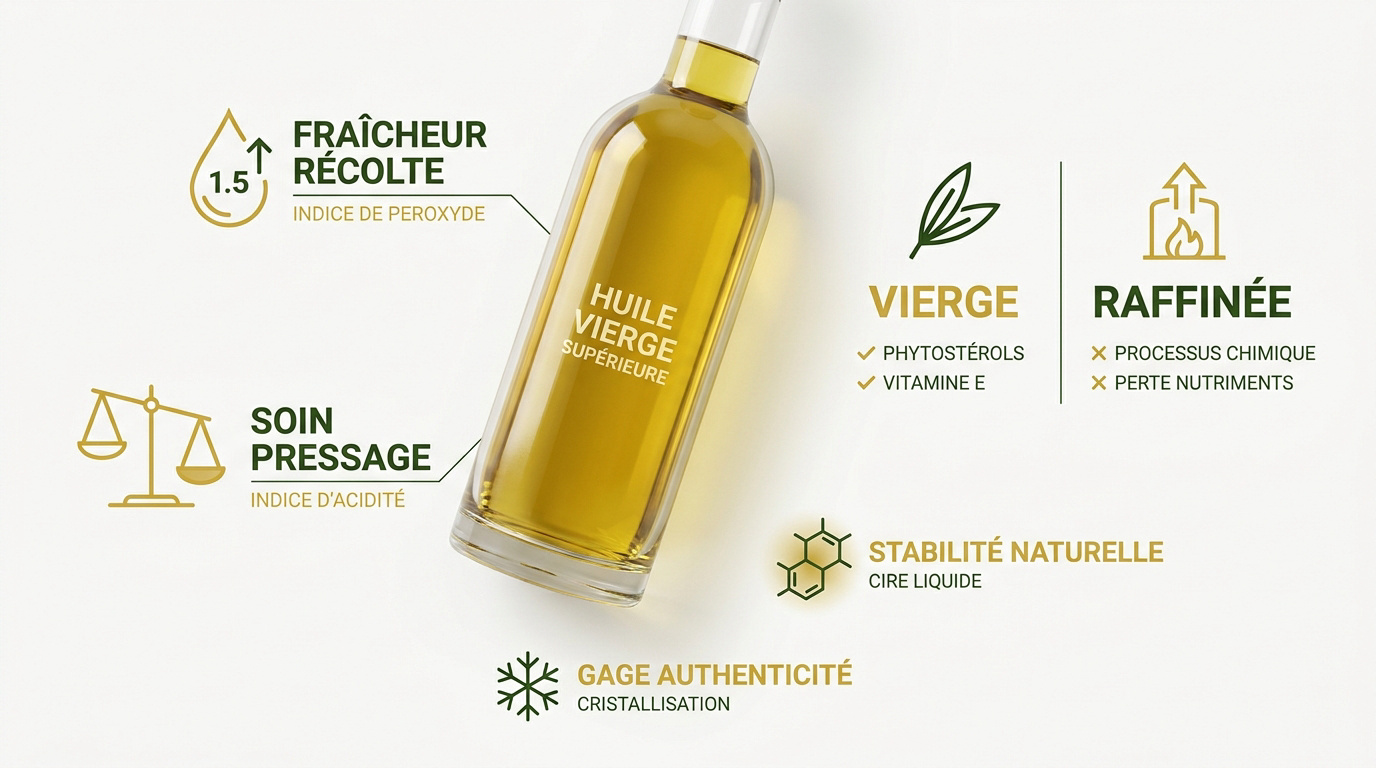
The peroxide value precisely measures the level of oxidation. A level below 2 meq O₂/kg guarantees optimum freshness. This is a major technical indicator for validating your purchase.
Free acidity reflects the care taken during pressing. Strict control prevents the premature degradation of lipids. We recommend requesting this information directly from the producer.
Nutritional differences between virgin and refined oil
Production methods differ radically. Industrial refining uses high temperatures and chemical solvents. Unfortunately, this heat treatment destroys phytosterols and natural vitamin E.
| Criterion | Virgin Oil | Refined Oil |
|---|---|---|
| Process | Cold pressing | Solvents and heat |
| Vitamin E | Preserved | Altered |
| Odour | Light, nutty scent | Odourless |
| Effectiveness | Optimal | Reduced |
Natural stability and resistance to rancidity
This liquid wax has a unique chemical structure. It resists oxidation far better than conventional vegetable oils. Its thermal stability remains exceptional when exposed to external factors.
Be aware that this product solidifies below ten degrees. This physical change confirms the authenticity of your oil. There is therefore no need to worry about this entirely natural crystallisation.
3 ways to incorporate this treatment into your routine
Now that you know how to choose the best product, let's look at how to use it in practice to transform your skin and hair.
Facial application and use as a make-up remover
Oil cleansing dissolves waterproof make-up. Oils capture lipophilic impurities. Massage gently, then rinse with a damp cloth.
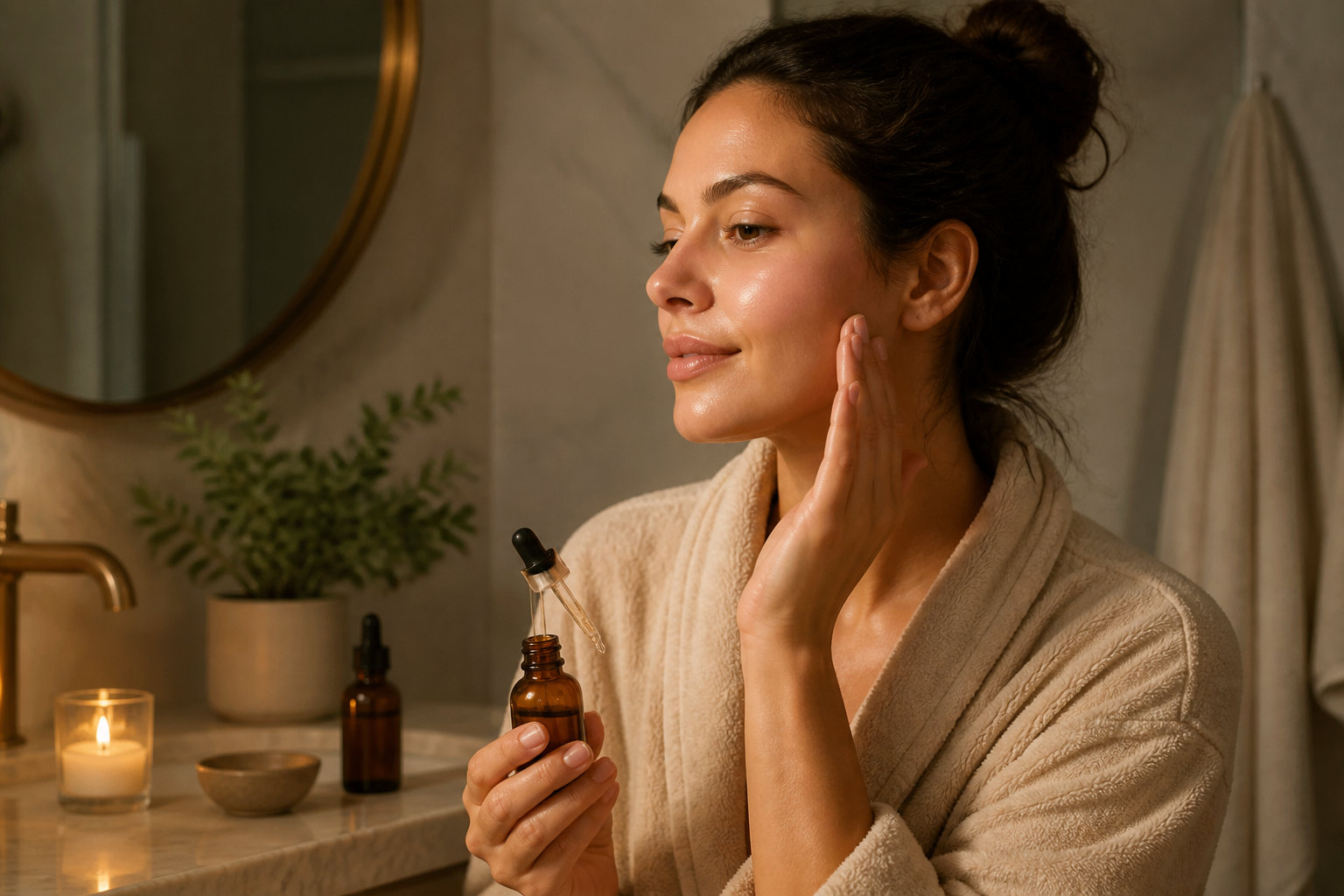
This product is non-comedogenic. It is perfectly suited to blemish-prone skin. It soothes without clogging the pores.
Hair care and beard maintenance
Massage your scalp regularly. This regulates excess sebum at the roots. You can also discover which styling product to choose for your lengths.
It is ideal for beard care. The oil softens the hairs and protects the skin. It prevents itching associated with regrowth.
Natural combinations and storage precautions
Mix your treatment with tea tree essential oil to purify the skin. These combinations enhance the targeted action. Adjust the quantities according to your needs.

Always keep your bottle away from heat. The active compounds remain effective for eighteen months after opening. Store it in a temperate place.
To ensure maximum effectiveness, always choose a virgin, certified organic oil extracted by first cold pressing. By adopting this non-comedogenic and stable treatment now, you can regulate your sebum over the long term while protecting your skin from oxidation. Knowing how to choose jojoba oil can radically transform the quality of your beauty routine.
FAQ
How can you recognise high-quality jojoba oil?
To identify excellent oil, you must check two statements on the label: first cold pressed and virgin. These indications guarantee that the seeds were mechanically crushed without the use of chemical solvents or excessive heat, thereby preserving all the active compounds.
Superior-quality oil has a pale yellow to golden colour and a very subtle plant-based scent. It should be 100% pure, with no additives or synthetic fragrances. Its ability to solidify below 10°C is also a reliable indicator of its authenticity and natural purity.
Why is it preferable to choose certified organic jojoba oil?
Organic certification, such as Cosmos or Ecocert, assures you that the shrubs were grown without pesticides or synthetic chemical fertilisers. This approach guarantees not only a final product free from toxic residues for your skin, but also confirms an environmentally responsible production method.
By choosing an organic label, you benefit from an oil richer in essential nutrients, such as vitamin E and unsaturated fatty acids. This is an essential guarantee of safety for daily application, particularly if you have sensitive or reactive skin.
What is the difference between virgin jojoba oil and a refined version?
Virgin oil is a raw product that is simply filtered after pressing, allowing it to retain its phytosterols and antioxidant properties intact. By contrast, industrial refining uses thermal and chemical processes to deodorise and decolourise the oil, which irreversibly reduces its nutritional value and therapeutic effectiveness.
We systematically recommend the virgin version for cosmetic use. Although refined oil is more stable for large-scale industrial applications, it loses the molecular structure similar to human sebum that makes jojoba so effective at regulating the skin and nourishing the hair fibre.
Is jojoba oil suitable if I have oily skin?
Absolutely. Jojoba oil is your best ally for balancing combination to oily skin. Its chemical composition is unique because it is technically a liquid wax whose molecular structure mimics that of human sebum. This similarity allows it to naturally regulate oil production without clogging the pores.
With a comedogenic rating of 0 out of 5, it absorbs instantly without leaving a greasy film. It soothes skin inflammation while protecting your face from dehydration, making it a perfectly safe daily treatment for blemish-prone skin.
How should I store my jojoba oil to preserve its benefits?
Although jojoba oil is exceptionally stable thanks to its high wax ester content, we recommend storing it away from direct light and heat. Using an amber or opaque glass bottle is crucial for blocking UV rays that could accelerate the oxidation of active compounds.
Optimal storage in a temperate place helps maintain the treatment's effectiveness for up to eighteen months after opening. If you notice an unusual rancid smell, stop using the product, as oxidised oil may become comedogenic and lose its regenerating properties.