

Castor oil for beard growth vs black seed oil: which to choose
Castor oil for beard care is mainly about ricinoleic acid, which makes up up to 90% of castor oil and gives it its thick, coating texture. If your beard has patchy areas or fine hair, choosing between castor oil and black seed oil is a simple first step to get a fuller-looking beard. Many men end up with a shelf of products without realising that the skin under the beard matters as much as the hair itself.
This guide compares what each plant oil actually does, so you can build a simple beard routine. It covers ricinoleic acid in castor oil, thymoquinone in black seed oil (also called nigella sativa oil) and how to use both to improve how your beard looks over time.
- Castor oil for beard and black seed oil: what does each one do?
- Castor oil for beard patches or black seed oil: which should you choose?
- How do you apply castor oil for beard care? 4 tips
- Can you mix castor oil and black seed oil?
Castor oil for beard and black seed oil: what does each one do?
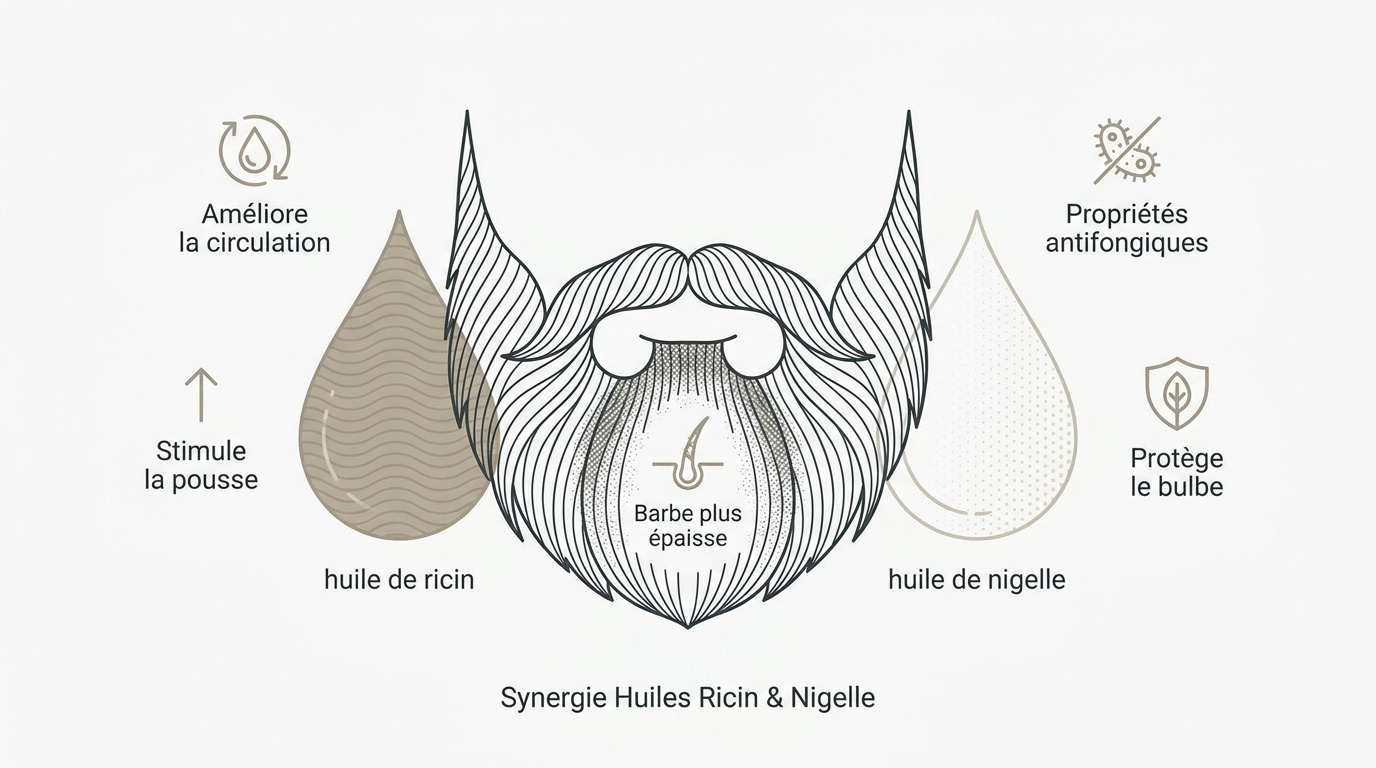
Castor oil for beard care works on the hair itself: its ricinoleic acid and thick texture coat each hair. Black seed oil works on the skin, where thymoquinone gives it a cleansing reputation. Used together, the two oils look after both the beard and the skin beneath it.
Castor oil is rich in ricinoleic acid, which coats the hair, and black seed oil contains thymoquinone, traditionally used in hair and scalp care.
Ricinoleic acid for coated, thicker-looking hair
Ricinoleic acid gives castor oil a thick texture that coats each hair along its length. Massage it into patchy areas so it spreads down to the skin. Use organic castor oil.
Its fatty acids coat the hairs you already have. The beard feels denser. It looks fuller.

The nourishing feel is noticeable from the first application. Your beard feels softer and stronger.
Thymoquinone and the cleansing reputation of black seed oil
Thymoquinone is the main constituent studied in black seed oil, and it is what gives the oil its cleansing reputation. It helps keep the skin under your beard clean. Apply black seed oil.
Black seed oil is traditionally used to limit the look of beard flakes. It helps keep the skin under the hair comfortable.
Clean, comfortable skin is a good base for your beard. Tightness is often less noticeable.
Castor oil for beard patches or black seed oil: which should you choose?
For patchy beard areas, castor oil is the better choice when the hair is there but fine and prone to breaking, while black seed oil suits patches where the skin is dry, tight or flaky. The right oil depends on what is holding your beard back: the hair or the skin.
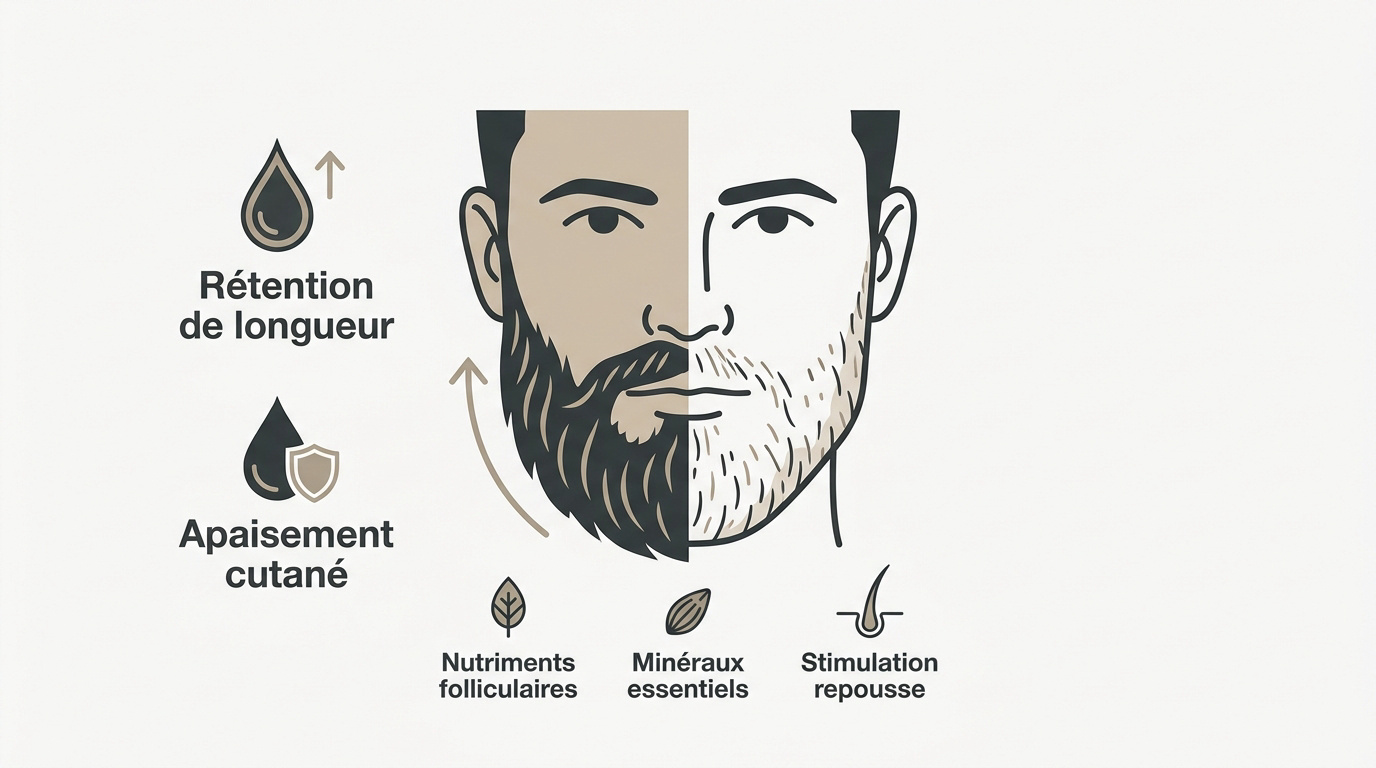
Jamaican black castor oil for length retention
Jamaican black castor oil is darker and thicker than cold-pressed castor oil.
Jamaican black castor oil stands out mainly for its colour and texture: no advantage over standard castor oil has been shown for beards.
Its high viscosity gives a protective coating. It forms a sheath that limits breakage of fragile hairs.
Keeping more length gives the impression of greater density. Areas where the hair is fine then look fuller.
For the skin under your beard, consider rosehip oil as well.
Length retention and a protective coating for existing hairs.
Skin comfort and nourishment around the hairs.
Black seed oil to soothe the skin under your beard
Black seed oil has a soothing reputation for the skin under a beard. Irritated skin often gets in the way of an even-looking beard. Calming it helps your beard look more even.
Rich in fatty acids, black seed oil nourishes the skin in patchy areas and leaves it feeling comfortable.

- Less visible redness.
- More comfort after shaving.
- Nourished skin.
- Antioxidant compounds.
Black seed oil prepares the ground. It helps your beard look more even across your face.
How do you apply castor oil for beard care? 4 tips
To apply castor oil for beard care, or black seed oil, you need four habits: a gentle massage, the right frequency, clean skin and a proper rinse. Here is how to get the most out of each oil.
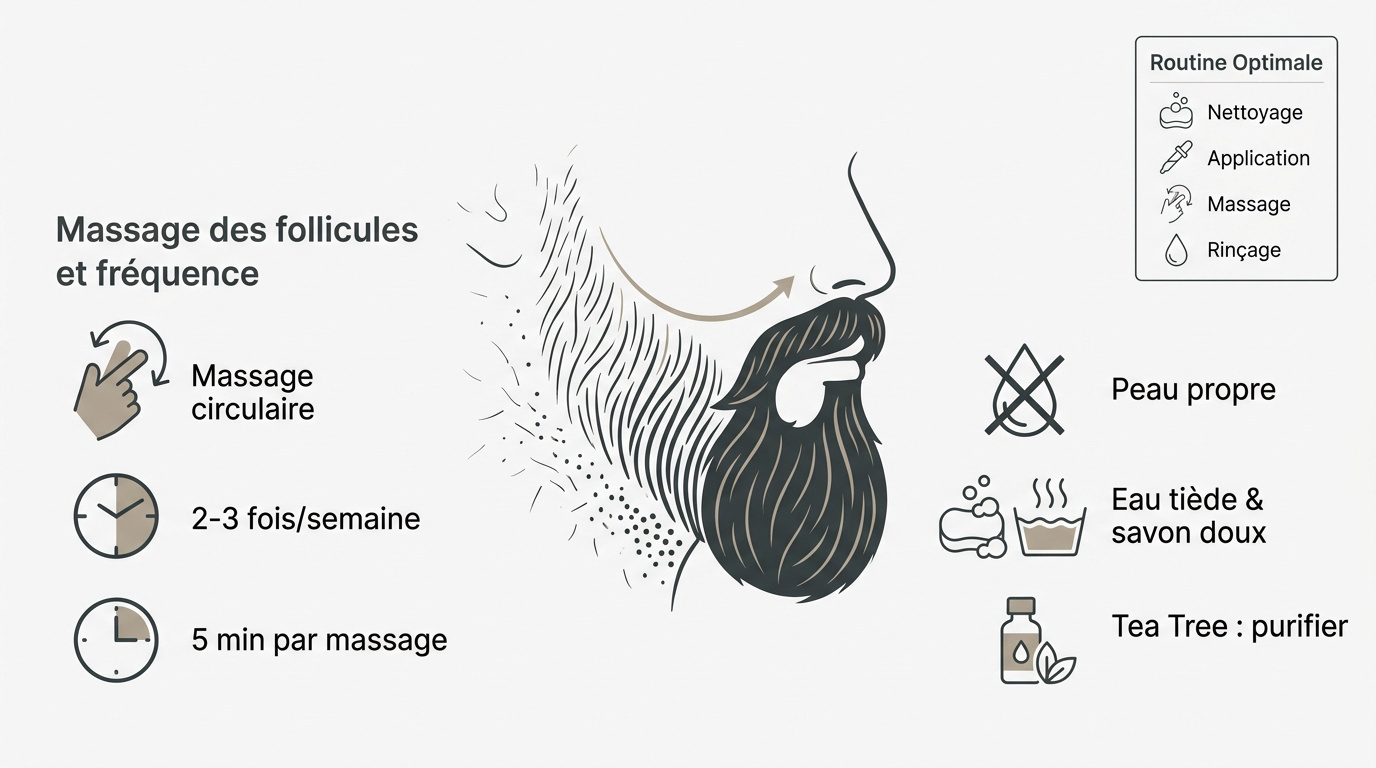
Massage and how often to apply
Massage the oil into your skin with your fingertips. Make gentle circular movements over the patchy areas. This technique spreads the oil down to the roots without irritating sensitive skin. Be consistent.
Apply two to three times a week. That is enough to nourish the hair without clogging your pores. Too much oil leaves the skin greasy. Moderation helps the skin absorb the oil.
A gentle fingertip massage is mainly there to spread the oil evenly down to the skin, without rubbing.
Finish with a styling cream if you want. It holds your style.
Cleansing first and rinsing properly
Always apply your oils to clean skin. Dirt and dust form a barrier on the skin. They stop the plant oils from absorbing properly. Cleansing clears the skin.
To rinse, use lukewarm water and a mild soap. This removes excess sebum without drying out the hair. Your beard stays soft and light. Avoid harsh cleansers.
| Step | Action | Benefit |
|---|---|---|
| Cleansing | Wash the skin | Removes dirt |
| Application | Apply the oil | Nourishes the hair |
| Massage | Circular movements | Spreads the oil |
| Rinsing | Lukewarm water | Avoids a greasy feel |
Can you mix castor oil and black seed oil?
Yes, castor oil and black seed oil can be mixed in one beard oil, which combines castor oil's coating effect with black seed oil's skin care.
Mixing textures for better absorption
Equal parts work well. Black seed oil thins out the natural thickness of castor oil. The blend becomes noticeably easier to spread and more pleasant to use every day.
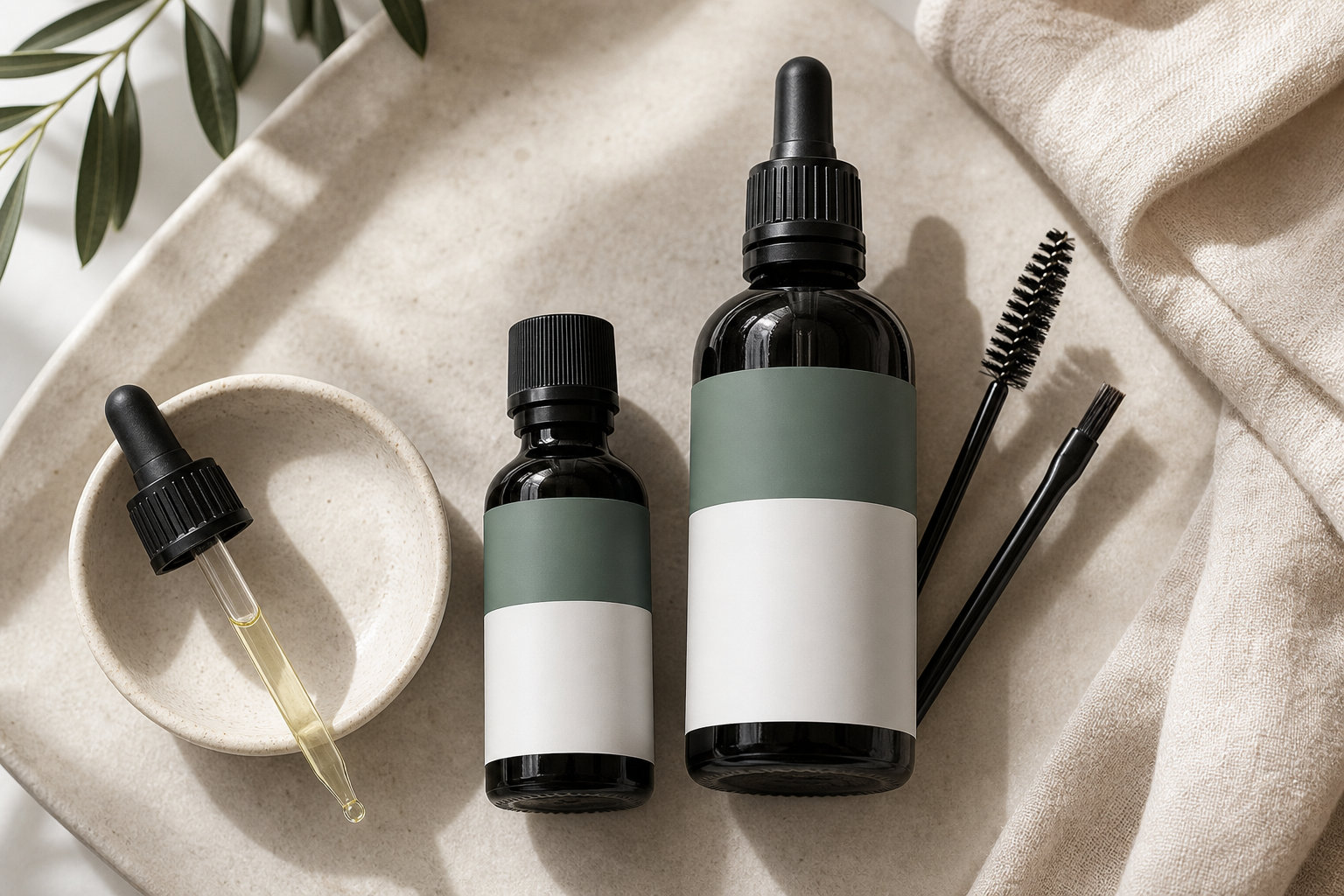
You can add a little jojoba oil to lighten the texture. A few drops of rosemary essential oil, always diluted, will also give the blend a light scent (read the precautions below).
- Castor and black seed oil blend
- A little jojoba oil
- Diluted essential oil (optional)
- Store away from light
Shake the bottle well before use. Make sure the blend is evenly mixed before each application.

Patch testing and avoiding blocked pores
A patch test is simple. Put one drop of oil in the crease of your neck. Then wait a full 24 hours. Check that no skin reaction appears during that time.
Avoiding blocked pores matters. If you have oily skin, use less oil. This helps avoid spots under your beard.
Always do a 24-hour patch test. People with oily skin should use smaller amounts to limit spots. Essential oils are never applied neat: use only a few drops, always diluted in a plant oil. Tea tree essential oil is not recommended for children or for pregnant or breastfeeding women. As a precaution, do not use rosemary essential oil either during pregnancy, while breastfeeding, on children or if you have a history of epilepsy, and ask a health professional if in doubt. Keep bottles out of the reach of children.
Choose good-quality organic plant oils.
Pay attention to how your skin reacts. Stop using the oil straight away if redness or itching appears.
Castor oil coats the hair to limit breakage, while black seed oil looks after the skin under your beard. Use them on their own or blended, two to three times a week on clean skin, for a fuller-looking beard.
FAQ
Does castor oil really help grow a thicker beard?
Castor oil can improve how your beard looks, but it does not change your genetics and does not make hair appear where there is none. Rich in ricinoleic acid, it coats the hairs you already have and makes them feel softer.
By limiting breakage, castor oil helps you keep more length. The result is a fuller-looking beard, especially with regular use.
What are the specific benefits of black seed oil for facial hair?
Black seed oil stands out for its thymoquinone content, a compound that gives it a cleansing and protective reputation. It helps keep the skin under the hair clean and is traditionally used to limit flakes and discomfort under the beard.
Black seed oil is a good choice to keep the skin under your beard comfortable, which helps the beard look more even. It nourishes the skin and provides antioxidant compounds.
How do you use Jamaican black castor oil on a beard?
Jamaican black castor oil is thicker than standard castor oil and suits dry or coarse beards. To make it easier to apply without clogging your pores, dilute it with a lighter oil such as jojoba, using one part castor oil to two parts carrier oil.
Apply the blend to a clean beard and massage it in with circular movements of your fingertips. Two to three times a week is enough to spread the oil down to the hair roots.
Can you mix castor oil and black seed oil for better results?
Yes, a blend of castor oil and black seed oil gives more complete care. Castor oil coats the hair and adds shine, while black seed oil soothes and looks after the skin. Mixing equal parts also thins out the castor oil, so the blend is easier to apply.
Before using the blend all over, do a patch test in the crease of your neck. This simple precaution checks that the oils suit your skin and limits the risk of a skin reaction or blocked pores.