

Essential oils for diffusers: which to choose and how to diffuse them
Choosing essential oils for diffusers starts with choosing a mood: fresh in the morning, soft in the evening, cosy in winter. With a few drops and a short session, a room is scented within minutes.
Here are the oils from our range that work best in a diffuser, the right way to use them and the few people to look out for.
Which essential oils for diffusers should you choose?
The best essential oils for diffusers are the ones that suit the moment and the people in the room: a citrus oil for a fresh atmosphere, a lavender to unwind in the evening, ravintsara for winter. All our essential oils are certified organic by Ecocert and cost €9.99.
This table sums up how each oil in our range is used in a diffuser. The doses are benchmarks for a living room: follow your device's instructions as well.
| Essential oil | Mood | Best time | Diffusion guide |
|---|---|---|---|
| Sweet orange | Fruity, rounded | Late afternoon, evening | Ideal to start with |
| Italian lemon | Zesty, bright | Morning, after cleaning | Short session, aired room |
| Lavandin | Clean lavender | Afternoon, evening | On its own or with a citrus oil |
| True lavender | Floral, soft | Evening, before bed | Short session before you go into the room |
| Ravintsara | Fresh, slightly camphor-like | Winter | Short session, aired room |
| Peppermint | Minty, very fresh | Now and then, during the day | 2 to 4 drops, adults |
| Eucalyptus | Fresh, airy | Winter | Small dose, adults |
| Tea tree | Fresh, herbal | Now and then | A few drops, with a citrus oil |

Citrus and lavender: the easiest essential oils for diffusers
Citrus and lavender essential oils are the easiest to diffuse day to day: most people like their smell, and a few drops are enough to scent a room.
Sweet orange is the first oil to try. Its rounded, fruity smell is traditionally linked with relaxation at the end of the day: our guide to diffusing sweet orange covers the right habits. Italian lemon brings a bright, zesty note, popular in the morning or after cleaning.
On the floral side, lavandin has a clean lavender smell and pairs very well with sweet orange. True lavender, which is softer, suits calm evenings: diffuse it before you go into the bedroom, then switch the device off.
In winter, ravintsara takes over. Its fresh, slightly camphor-like smell is traditionally associated with a clear-breathing sensation; for its other uses, see our guide to everyday ravintsara.

How do you diffuse peppermint, eucalyptus and tea tree?
Peppermint, eucalyptus and tea tree are diffused in small doses, in short sessions, in a well-aired room with adults present. These oils have a strong character: a small amount is enough to enjoy their freshness.
- Peppermint: 2 to 4 drops for a short session during the day. Its minty smell is popular for a feeling of freshness and energy; for its other uses, see our article on peppermint oil.
- Eucalyptus: a small dose in winter, on its own or with ravintsara. Keep it for rooms without young children or people with asthma. To choose the right species, read our radiata or globulus comparison.
- Tea tree: tea tree is mostly used diluted on the skin, but a few drops in a diffuser, combined with a citrus oil, give a fresh, herbal note. For its skin uses, see how to use tea tree.
A simple blend to start with: 2 drops of sweet orange and 1 drop of peppermint, for a fresh, sweet atmosphere.
How long should you diffuse an essential oil?
An essential oil is diffused in short sessions of 10 to 15 minutes, followed by airing the room. A short session is enough to scent the air: the smell lingers afterwards.
- If your diffuser has an intermittent setting, choose it.
- For the amount, follow your device's instructions: a few drops are usually enough in a water-based diffuser.
- Avoid continuous diffusion and diffusing while you sleep: diffuse before you go into the room, then switch the device off.
- Two to three sessions a day are enough to keep a pleasant atmosphere.
Precautions for diffusing essential oils: good habits
To diffuse essential oils with peace of mind, three habits are enough: air the room after each session, use a device designed for diffusion, and keep bottles and diffuser out of children's reach.
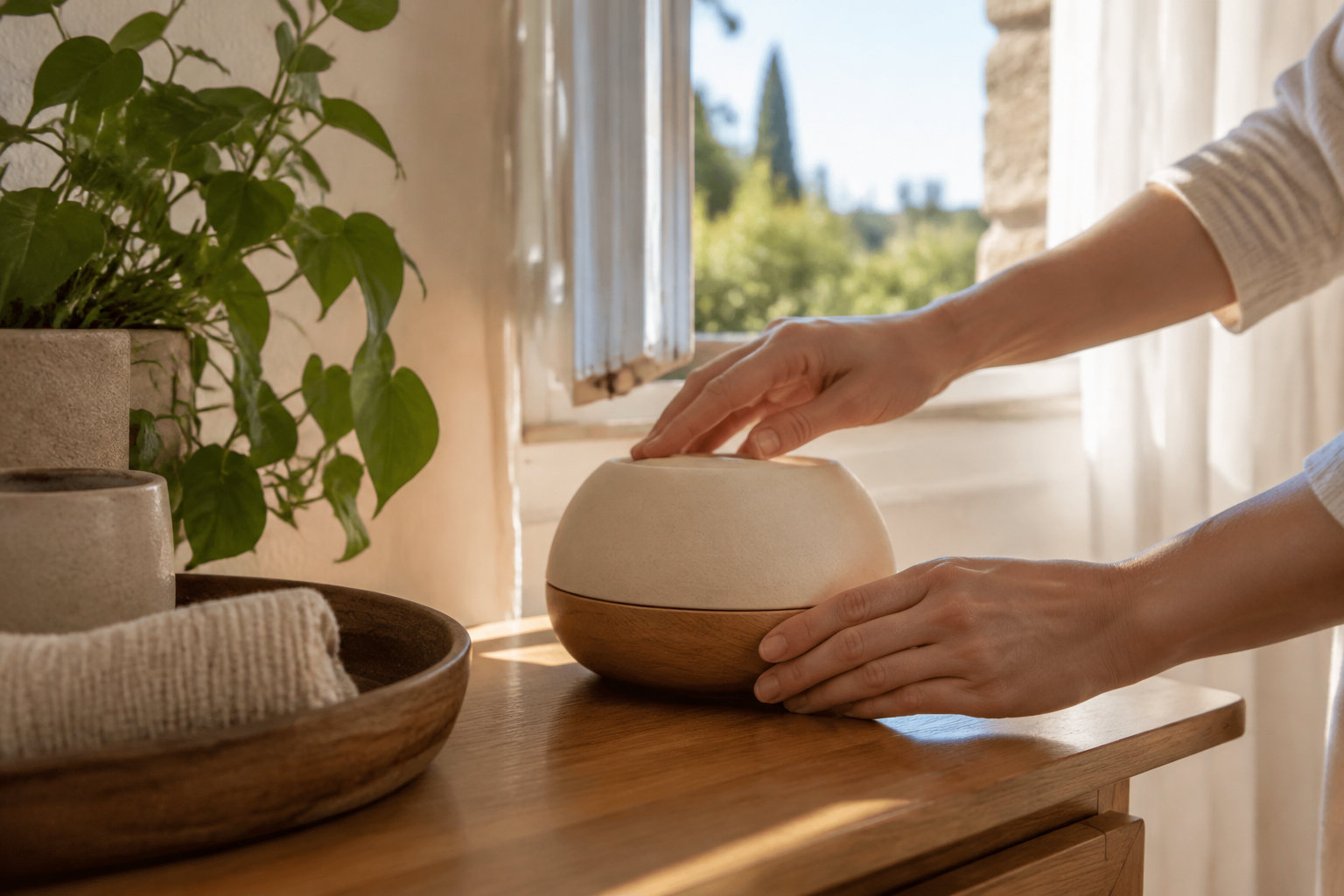
- Air the room: diffusion scents the air and goes alongside daily airing, without replacing it. Open the window for 10 to 15 minutes after each session.
- Never heat an essential oil: use a diffuser designed for the purpose, and follow its instructions.
- Store up high: bottles tightly closed and diffuser out of children's reach, like household cleaning products.
- Read the label: every Bon Sens product page explains how to use the oil.
Who should you look out for when diffusing?
When diffusing essential oils, look out for young children, pregnant or breastfeeding women, people with asthma or allergies, and pets: diffuse outside their room and air it before they come back.
- Young children: essential oils are not recommended for children, the French health agency ANSES points out. Diffuse in a room where they are not, and ask a health professional before diffusing anywhere near them.
- Pregnancy and breastfeeding: diffusion is not recommended as a precaution; ask your midwife or doctor.
- Asthma or allergies: ask your doctor first, and stop diffusing at the slightest discomfort.
- Pets: do not diffuse in the room where your cat lives, and always leave a door open so your pet can leave.
To put together your selection, see the best organic essential oils for the home, or browse our full collection of organic essential oils.
Frequently asked questions
Do you need to put water in an essential oil diffuser?
It depends on your device: ultrasonic diffusers have a water tank, nebulising diffusers do not. Follow the instructions for yours.
What is the best essential oil for a diffuser?
To start with, sweet orange is the simplest: most people like its rounded smell. Italian lemon suits the morning, true lavender and lavandin the evening, and ravintsara the winter.
How many drops of essential oil should you put in a diffuser?
A few drops are enough: follow your diffuser's instructions and start at the low end of the range. For peppermint, 2 to 4 drops are enough for a short session.
Can you mix several essential oils in a diffuser?
Yes, as long as you keep the same total number of drops. For example, combine sweet orange and lavandin in the evening, or ravintsara and eucalyptus in winter.