

How to use tea tree oil: dilution, skin uses and precautions
You may well keep a bottle of tea tree in the bathroom for a bite or a spot, without being quite sure how to use tea tree oil properly. Neat, this oil can irritate the skin, and swallowed, it can make a child drowsy.
This guide explains how to apply it, at what strength and with which precautions.
How to use tea tree oil: on the skin only
At home, our bottle lives on the bathroom shelf, always with the cap back on. For tea tree oil, the accepted route is the skin.
Do not inhale or diffuse this oil. If it does end up in a spray or a diffuser, air the room. For everyday skin care at home, see our pick of organic essential oils.
After swallowing tea tree oil, children have shown drowsiness, confusion, loss of balance and difficulty walking. Keep the bottle well out of their reach.
Never apply the undiluted oil to a mucous membrane.
Keep it away from the eyes and ears.
How do you dilute tea tree oil before applying it?
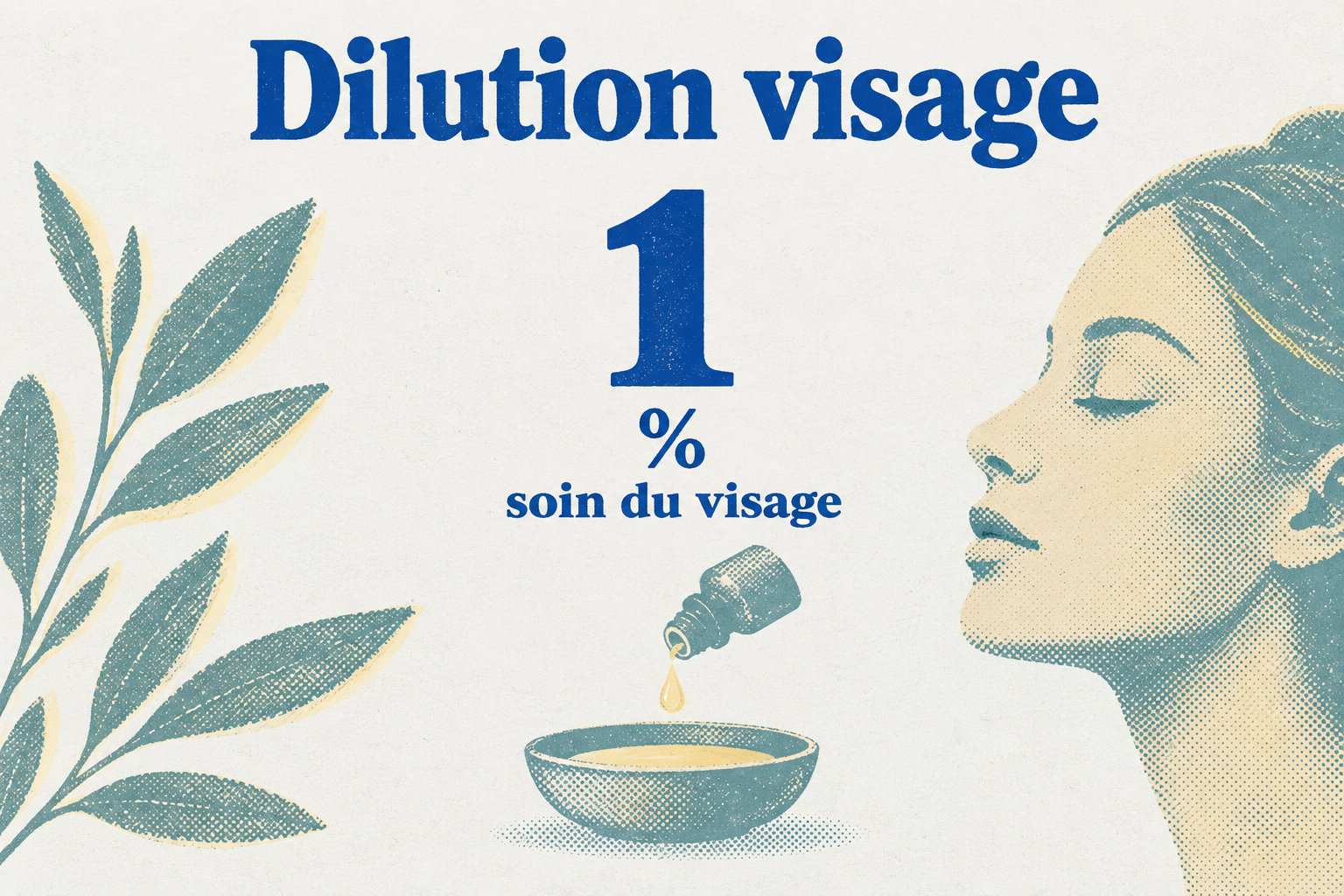
Tea tree oil is diluted in a carrier oil before it goes on the skin. At home, we used to dab on a drop of neat oil without thinking. Dilute it first, at a low concentration.
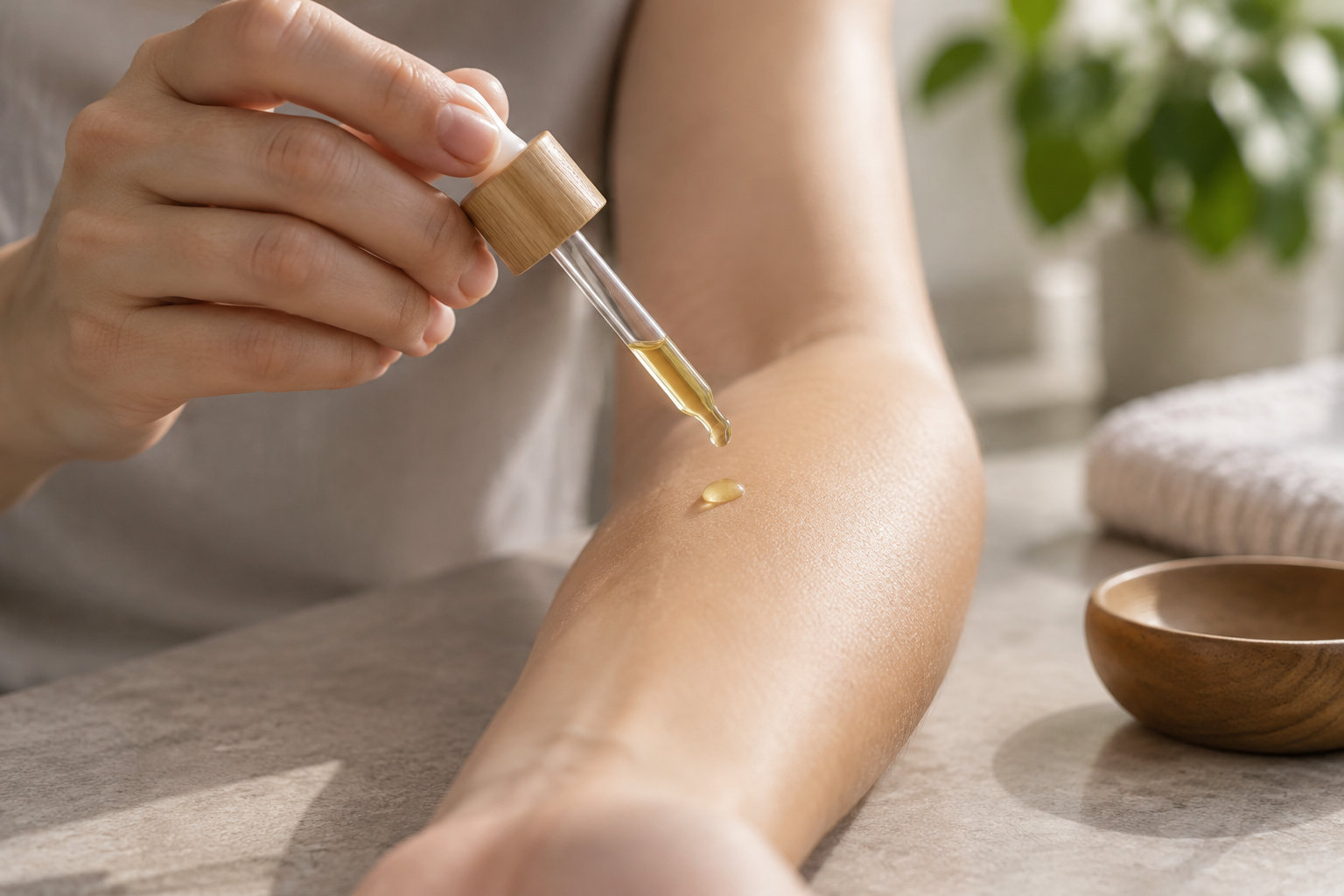
Before the first use, do a patch test: one drop of the blend on the inner elbow, then wait 24 to 48 hours. If the skin turns red, itches or stings, do not use the blend. For a massage, see how to dilute.
The strength changes with the area of the body. For a small wound, the figures below apply to medicinal preparations, not to self-medication.
| Criterion | Face | Body | Small wound |
|---|---|---|---|
| Dilution | 1% | 2 to 5% | Neat oil |
| Amount | 1 drop per 5 ml | 2 to 5 drops per 5 ml | 0.03 to 0.07 ml |
| Base | Carrier oil | Carrier oil | Cotton bud |
What can you use tea tree oil for on the skin?
Small wounds and insect bites
For small superficial wounds and insect bites, tea tree oil has a traditional use, but only as a diluted preparation. At home, we tried it on a mosquito bite one summer evening.
See a health professional if symptoms last more than a week, get worse or do not clear, or if a small wound comes with a fever or signs of infection. For other everyday care, see organic essential oils.
Blemishes and small boils
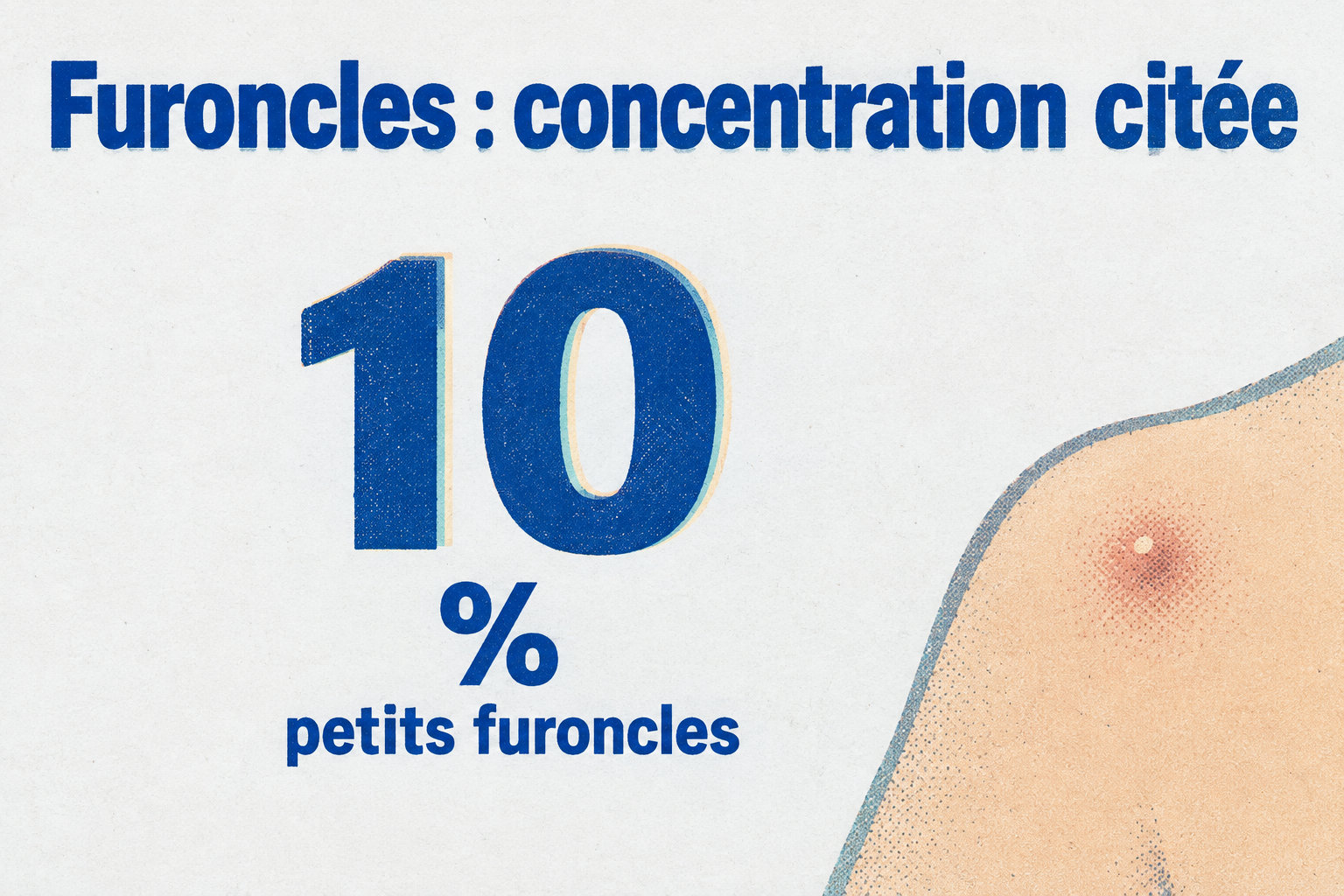
For small boils and mild acne (never severe acne), tea tree oil can be applied in two ways:
- A 10% preparation, applied one to three times a day.
- Undiluted oil dabbed on with a cotton bud, two to three times a day.
- For a small boil, do not go beyond one month of use, and see a health professional if symptoms last or get worse.
- A trial in 60 people with mild to moderate acne, who used a 5% gel, shows an effect, but the clinical data remain limited.
Mild athlete’s foot
Foot bath
-
The amount
Add 0.17 to 0.33 ml of oil to warm water. Soak your feet for 5 to 10 minutes.
-
The duration
Do not go beyond one month.
-
Nails
A trial in 117 people compares the neat oil with clotrimazole, but it does not prove that tea tree oil clears a fungal nail infection.
-
When to seek advice
See a pharmacist or GP about the fungal infection itself.
Hair, infections and cold sores: what does the evidence say?
For hair, neat tea tree oil on the scalp cannot be recommended. The one dandruff trial looked at a shampoo containing 5% tea tree oil, not at the neat oil.

For urinary or vaginal infections, tea tree oil is not an accepted use: never apply the oil to mucous membranes. For its other uses, see the tea tree benefits that are recognised.
For a cold sore, do not apply tea tree oil at the strength used on a small wound: on a lip that is already damaged, it may irritate. Ask a health professional for advice.
For a cold or an ear, nose or throat infection, do not inhale it: that route is not accepted for tea tree oil.
When should you avoid tea tree oil?
Children and pregnancy
Medicinal preparations based on tea tree oil are reserved for adults and adolescents over 12. Do not use them on a younger child.
During pregnancy and breastfeeding, avoid essential oils. If you are unsure or have a specific need, ask your GP, midwife or pharmacist first.
Skin reactions to watch for
This guide covers massage dilution in detail. Whatever the blend, stop applying it as soon as your skin shows one of these signs:
- Pain, burning or stinging that does not pass.
- Itching, redness or irritation that settles in.
- Swelling or a rash, which may be an allergic reaction.
When to seek advice
- Look at the wound, the bite or the foot every day, at the same time, to see whether it is changing.
- See a health professional if a small wound or a bite gets worse.
- See a health professional if symptoms last beyond a week.
- See a health professional if the symptoms of a small boil or mild athlete’s foot last or get worse.
How should you store tea tree oil?
Tea tree oil keeps best in a tightly closed bottle, away from light and heat. At home, a bottle left near a window with the cap loose soon lost its quality. Air, light and heat create oxidation products, which irritate the skin more.
After 18 months at room temperature, the share of p-cymene, one of those products, had risen. Keep the bottle closed, away from light and heat.
Close the bottle after each use, with the cap screwed on tight.
Store it away from light, well clear of a window or a radiator.
Write the opening date on the label, then throw the oil away if its smell has changed.
For summer evenings, see our guide to citronella and mosquitoes.
Side effects and negative reviews
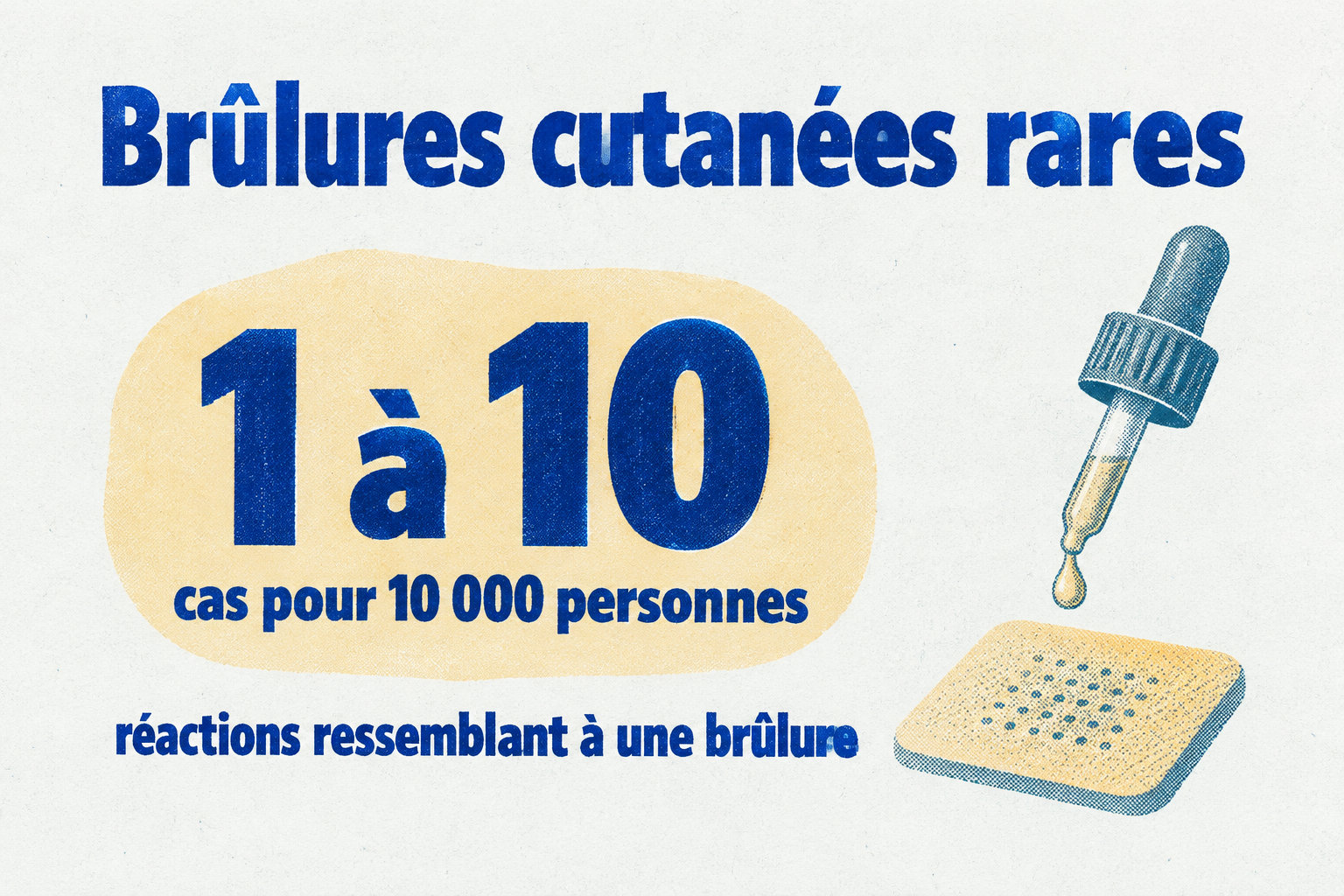
The most common side effects of tea tree oil affect the skin: itching, stinging, redness. Burns are rare: 1 to 10 cases per 10,000 people.
In a trial on fungal nail infections, 6 to 10% of users had dermatitis or mild inflammation. At home, one drop of neat oil made the skin sting: dilute it.
Skin reaction
What works
Start with one diluted drop on a small area, and watch the skin. For day-to-day use of another oil, see ravintsara essential oil.
What to avoid
Applying the oil neat, or an old oil that has been exposed to air, which irritates more.
What works
If redness or itching lasts, stop and see your GP.
What to avoid
Carrying on and hoping it will pass.
The essentials: tea tree oil goes on the skin, always diluted, and must never be swallowed. Keep the bottle out of children’s reach.
Before your first use, do the inner elbow patch test and wait 24 to 48 hours. If the skin stings or turns red, do not use the blend, and see a health professional if symptoms last.
Frequently asked questions
Can you apply neat tea tree essential oil to the skin?
No, not as a general rule. Neat tea tree oil is not an everyday skin care product. A few specific uses exist, but they are medicinal preparations, not a self-medication instruction.
How many drops of tea tree essential oil should you use per day?
There is no number of drops of tea tree oil that holds for every use: it all depends on the preparation and on the concern in question.
For the skin, think in dilution percentages rather than in drops, and ask your pharmacist before going any further.
Can you swallow tea tree oil?
No, tea tree oil must never be swallowed. Swallowing it can cause drowsiness, confusion and loss of balance. If someone has swallowed some, get urgent medical advice straight away: in the UK, call NHS 111, or 999 in an emergency (in France, the poison control centre or 15).
Is tea tree oil advised against during pregnancy?
Yes, tea tree oil is advised against during pregnancy. Avoid it during pregnancy and breastfeeding, like essential oils in general, unless a health professional advises otherwise.
Before any use, ask your GP, midwife or pharmacist.