

Organic cold pressed black seed oil: how to choose the right one
On a shelf, two bottles of organic black seed oil can look alike and yet have been made in very different ways. Organic, cold pressed, virgin: each claim has a precise meaning, and knowing how to read them is all it takes to choose well.
Here is what cold extraction changes, how to recognise a pure, organic black seed oil, and how to enjoy it on your skin, your hair and at the table.
What is organic black seed oil?
Organic black seed oil comes from Nigella sativa seeds grown through organic farming, checked and certified by an independent body. The seeds are grown without synthetic pesticides or fertilisers, and the certification follows the product all the way to the bottle.
At Bon Sens, our organic carrier oils are certified organic by Ecocert. The organic claim therefore describes how the seeds were grown: the way the oil is obtained falls under another claim, cold pressing.
What does cold pressing mean, in practice?
For cold pressing, a mechanical press crushes the black seeds without heating them and without any solvent. The temperature stays low throughout the extraction, which spares the compounds that are sensitive to heat.
The oil comes out mixed with small pieces of seed. Filtering separates it from this residue, leaving a clear oil. Among the extraction methods compared in the research, cold pressing is the one that best preserves the fatty acids in black seed.
"Cold pressed" describes the process, the way the oil is obtained. "Organic" describes the farming, the way the seeds were grown. An organic cold pressed black seed oil brings the two together.
A refined oil goes through refining steps after extraction. On the label, the word "virgin" tells you it has not.
How do you recognise a pure, organic black seed oil?
You recognise a pure, organic black seed oil by its organic certification and by an ingredient list that comes down to a single line. Three checks are enough when you buy.
- The certification: the organic logo and the name or code of the certifying body. The French AB logo, which is optional, can appear alongside the EU logo.
- A single ingredient: the INCI name Nigella sativa seed oil, with no other oil added.
- Carrier oil, not essential oil: the carrier oil comes from pressing the seeds, while the essential oil is a different form, obtained by distillation and highly concentrated.
These criteria apply to every carrier oil: our guide to choosing jojoba oil uses the same way of reading the label.
Where black seed comes from, and why origin matters
Black seed is Nigella sativa, also known as black cumin. Its small black seeds give the oil. The plant is grown in several regions of the world, from the Mediterranean basin to Asia, and the origin stated varies from one bottle to the next.
Grown or bottled?
Country of cultivation
The country where the seeds grow. This is what gives the origin of the raw material.
Country of bottling
The country where the oil is put into bottles. A brand can bottle oil in France from seeds grown elsewhere.
For origin, look at the country of cultivation shown near the organic logo.
How do you store organic black seed oil?
Organic black seed oil keeps best with the cap tightly closed, away from light and heat. Rich in linoleic acid, it then keeps its original smell and colour for as long as you use it.
Storage matters
What works
Closing the bottle after every use.
Avoid
Leaving the bottle open near a window.
What works
Storing the oil away from light and heat.
Avoid
Keeping it next to the hob or in the sun.
What works
Smelling the oil before use: a rancid smell or a change of colour signals an oxidised oil.
Avoid
Using an oil that smells rancid, even before the date shown.
The period of use after opening appears on the packaging, under the open-jar symbol.
How to use it on your face, your hair and in the kitchen
On the face and skin
Before the first application on your face, test a drop in the crook of the elbow and wait 48 hours: if the skin stays calm, you can start.
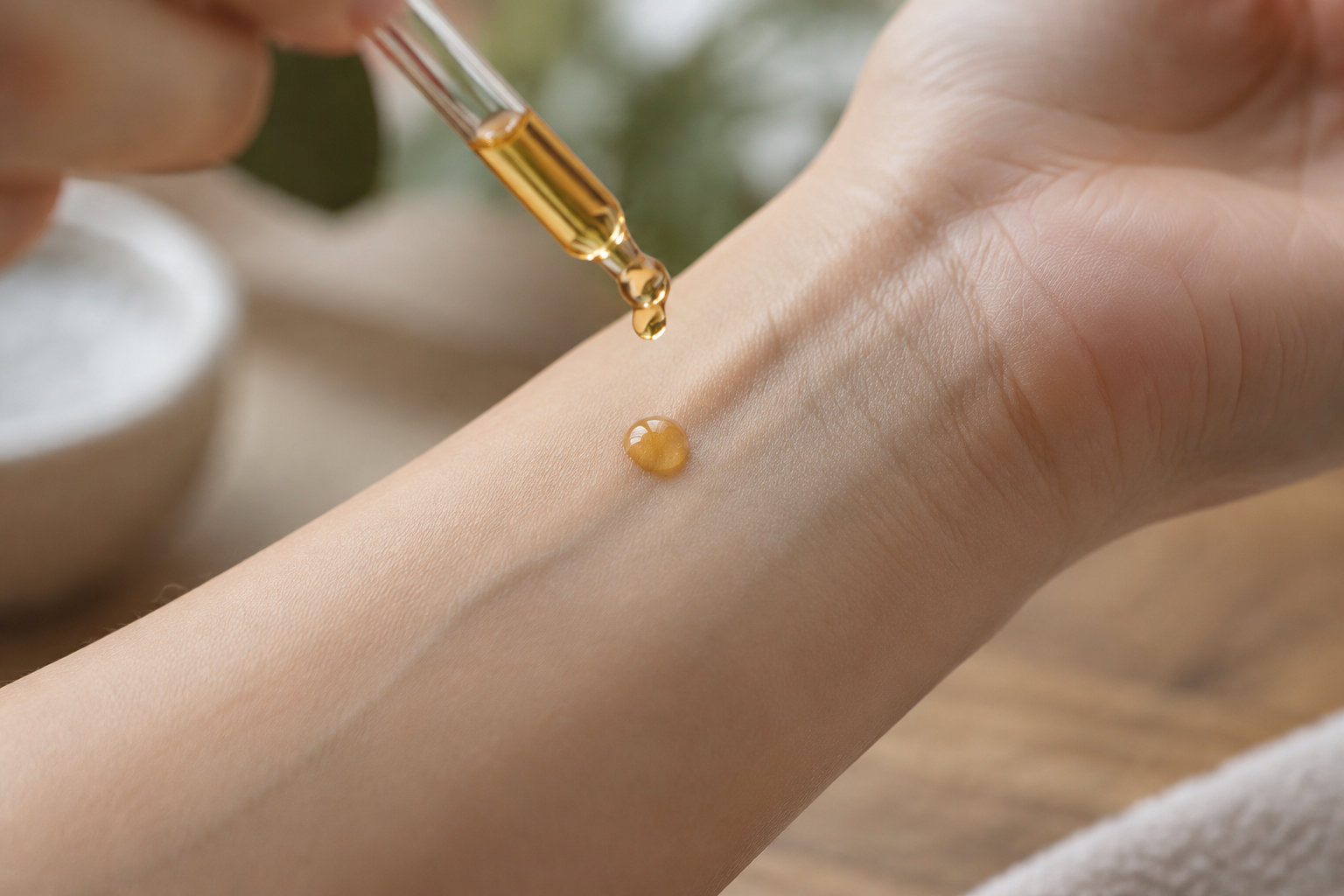
- Wash your face and dry it well: the skin should be clean and dry.
- Put 2 to 3 drops of Bon Sens black seed oil in the palm of your hand, then spread them with your fingertips.
- Repeat in the morning, in the evening, or both, whichever suits you.
- Avoid the eye area and mucous membranes; if you notice redness, rinse and stop.
To go further, see how to apply it to your face and the skin benefits of black seed oil.
On the hair
On the hair, a few drops massaged into the scalp or an oil soak on the lengths before shampooing nourish the fibre and add shine. Amounts and frequency are set out in our how-to guide for hair.
In the kitchen
Bon Sens Organic Black Seed Oil is food grade: a few drops on a cold dish, a salad or a yoghurt are enough to add its peppery note. It is eaten raw, never heated.
If you are pregnant, breastfeeding or taking medication, ask a health professional for advice before regular use as a food.
Bon Sens Organic Black Seed Oil
Bon Sens Organic Black Seed Oil is a carrier oil certified organic by Ecocert, food grade, priced at €9.99. One bottle covers your skin, face, hair and cooking.

Free delivery from €19, free returns within 30 days.
Frequently asked questions
What is the difference between organic and cold pressed black seed oil?
The organic claim covers how the seeds are grown, checked by a certifying body; cold pressing covers the extraction, which is mechanical and unheated. A good black seed oil brings the two together.
How do you use black seed oil on your face?
On clean, dry skin, spread 2 to 3 drops of black seed oil with your fingertips, morning or evening, avoiding the eye area. Do a patch test in the crook of the elbow 48 hours before the first application.
Can you eat organic black seed oil?
Yes, if it is food grade, like Bon Sens Organic Black Seed Oil: a few drops on a cold dish are enough, without heating it.
How can you tell if black seed oil has gone rancid?
Rancid black seed oil gives off an acrid smell, different from its usual peppery note, and its colour changes. In that case, stop using it.