

How to use castor oil for hair: dilute, apply, rinse
- Dilute castor oil with a lighter oil, such as jojoba, so it spreads and rinses out easily.
- Once a week is enough, with a light massage over the scalp and lengths.
- To wash it out, put shampoo on dry hair, before any water.
- There is no strong evidence that it makes hair grow: its benefits are mainly cosmetic (coating and shine).
- Patch test before first use, and never in the eyes.
Castor oil for hair is used diluted, as an oil treatment or a scalp massage, then washed out with shampoo applied to dry hair. Its very thick texture is its main drawback: use too much and it feels sticky and is hard to rinse.
This guide covers dilution, application, rinsing and precautions, with an honest look at what castor oil does, and does not do, for your hair.
- What can castor oil do for hair?
- How should you dilute castor oil for hair?
- How do you apply castor oil and rinse it out?
- How should you adapt it to your hair, and what precautions apply?
What can castor oil do for hair?
Castor oil for hair mainly has a cosmetic effect: it coats the hair fibre, makes it feel softer and adds shine. Used diluted once a week, it fits easily into a hair care routine.
- Up to 90% ricinoleic acid.
- Once a week.
What the composition tells you
Castor oil is made of fatty acids, up to 90% ricinoleic acid, a very different profile from other plant oils. That composition goes hand in hand with a thick, sticky texture, far more viscous than jojoba oil.
On the hair, the oil stays on the surface and forms a film.
Castor oil coats the hair fibre, makes the cuticle feel smoother and adds shine to the lengths.

Hair looks smoother and shinier after the treatment, an effect you can see as soon as it is rinsed.
What about hair growth?
Castor oil has no proven effect on hair growth. A systematic review published in 2022 found no strong evidence for it, and only weaker evidence for shine.
The scalp massage is mainly a way to spread the oil over the scalp, and a pleasant moment of self-care.
If you notice unusual hair loss, speak to your GP or a dermatologist: a plant oil is not a treatment.
How should you dilute castor oil for hair?
You should dilute castor oil for hair with a lighter oil, because on its own it spreads poorly and is hard to rinse out. The blend takes a few seconds to make, in a small bowl or straight in your palm.
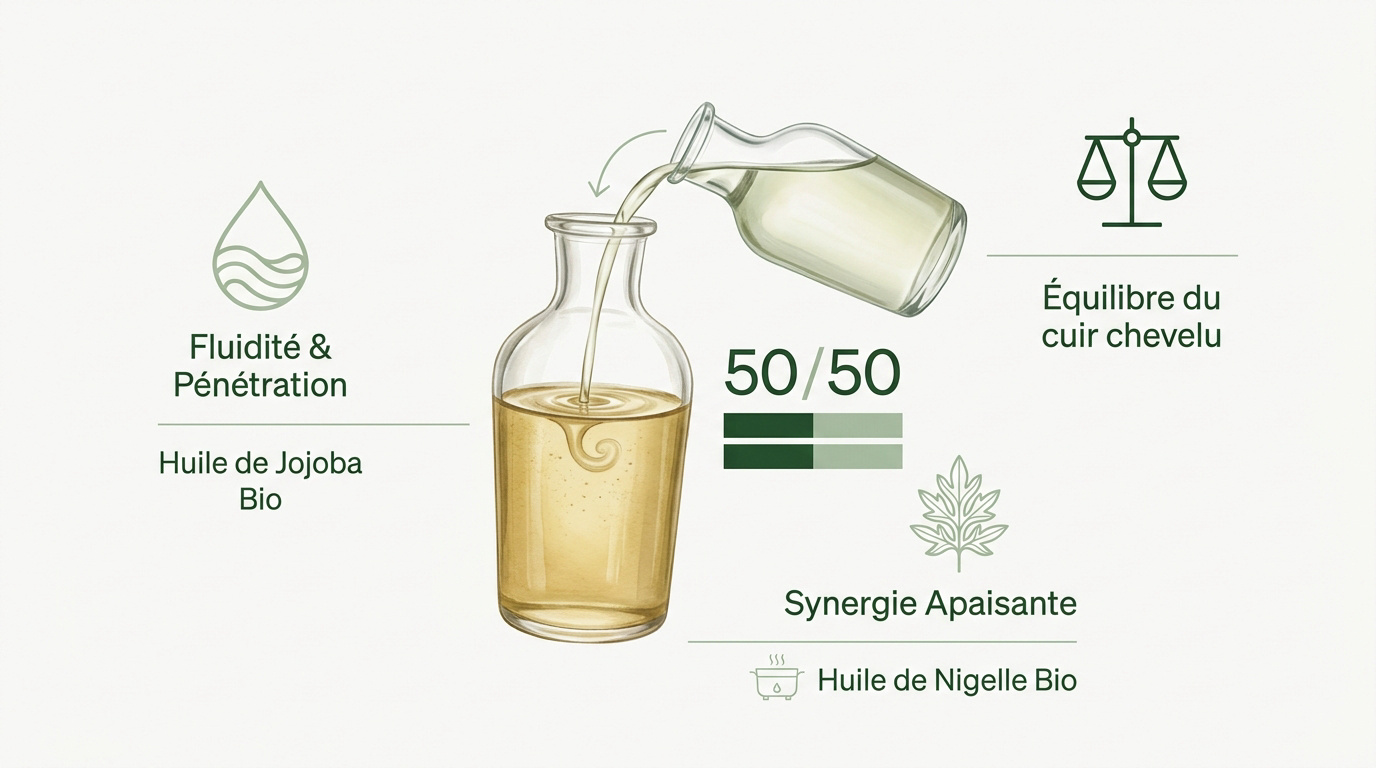
Pairing it with organic jojoba oil for a lighter texture
Castor oil is so viscous that it drags through the lengths. Jojoba oil turns that treacle-like texture into an easy-to-use treatment that is simpler to spread.
Adjust the proportion to your hair: more jojoba for fine hair or a scalp that gets oily quickly, more castor oil for thick, dry lengths. Start with a small amount: it is easier to add more than to take some away.
Jojoba is a light oil that does not feel greasy. Here is what the blend changes in practice:
- A lighter texture
- Easier application
- Easier rinsing
Blending it with organic black seed oil for the scalp
Black seed oil, pressed from Nigella sativa seeds, is traditionally used in scalp care. Mixed with castor oil, it makes a more fluid blend and a comfortable feel during the massage.
If you have persistent dandruff, itching or redness, this blend is no substitute for medical advice: see a pharmacist or a dermatologist.
Stand the bottle in a bowl of warm water for a few minutes before use to loosen the texture and make blending easier.
Check the temperature on your wrist before applying: the blend should be lukewarm, never hot. Lukewarm, it spreads more easily.
How do you apply castor oil and rinse it out?
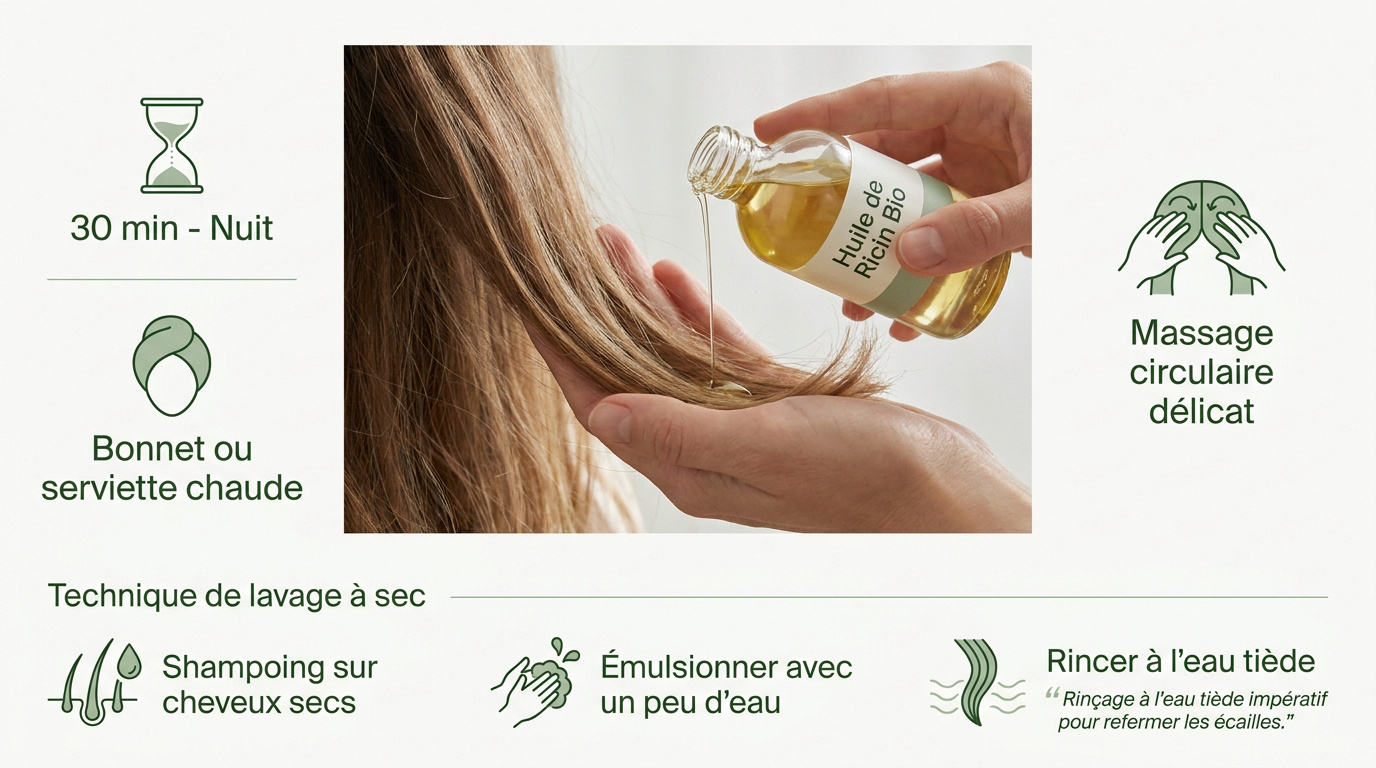
You apply castor oil section by section on dry hair, leave it on for at least 30 minutes, then wash it out by putting shampoo on before any water. Each step keeps the sticky feel to a minimum.
Massage technique and how long to leave it on
Work your blend through dry hair one section at a time, focusing on the lengths and ends. A small amount of organic castor oil is enough for shoulder-length hair.
Leave it on for at least 30 minutes. You can also leave it in overnight.
Wrap your hair in a warm towel or a satin bonnet. The blend stays supple and your pillowcase stays clean.
Massage your scalp in small circles with your fingertips, without rubbing the lengths together.
Shampoo before water: how to wash castor oil out
The trick is to apply shampoo directly to dry hair, before it touches any water. The shampoo mixes with the oil and carries it away more easily when you rinse.
Then add a very small amount of lukewarm water. Massage gently so the shampoo emulsifies the oil, until you get a light lather through the lengths.
Follow with a second, gentle wash to remove any remaining residue.
Rinse with lukewarm water using gentle movements, without rubbing or piling the lengths on top of your head.
- Apply shampoo to dry hair
- Massage to lift the oil
- Emulsify with a little water
- Finish with a second, gentle wash
How should you adapt castor oil to your hair, and what precautions apply?
Castor oil can be adapted to every hair type by changing how much you use and how you apply it, with a few safety habits that apply to everyone.
The LOC method for textured and curly hair
The LOC method layers three products in order: Liquid, Oil, Cream. Diluted castor oil works as the oil step and helps keep moisture in for longer. For a sleek, neat style, see our guide to sleeking afro hair as well.
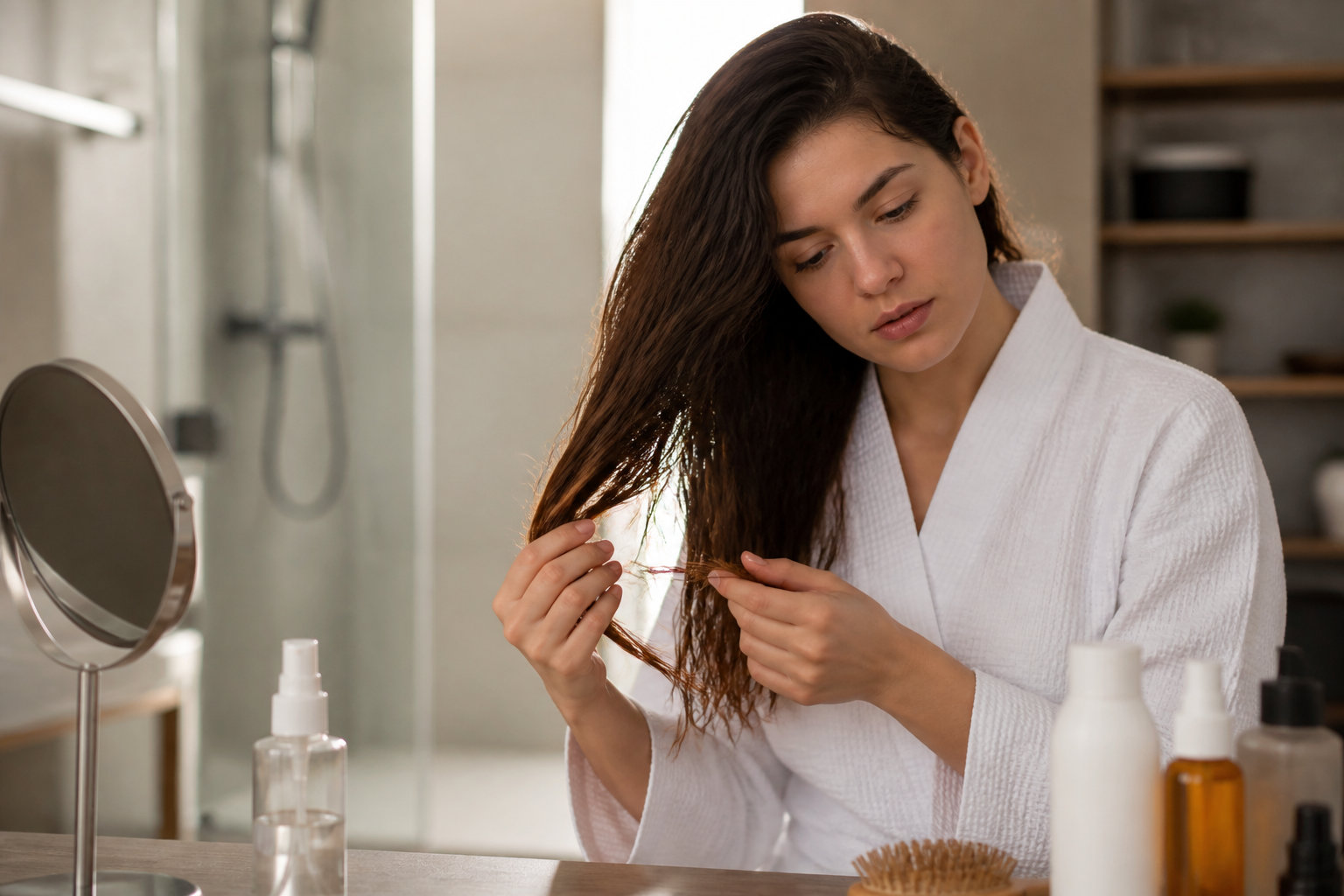
Go easy on long hair. One case report describes long hair suddenly matting into a dense mass after castor oil was applied and then washed. The risk is rare, but it is a good reason to dilute the oil and handle your hair gently.
Use the blend as a finishing serum on the ends, in a very small amount. Here is how you can use it for each hair type:
| Hair type | How to use it | How often |
|---|---|---|
| Straight | Oil treatment on the lengths | Occasionally |
| Curly | Serum on the ends | Once a week |
| Afro and coily | Sealing (LOC) | Once a week |
| Dry or damaged | Mask on the lengths | Once a week |
Precautions, and using it on your beard or lashes
Do a patch test in the crease of your elbow before first use. If you are pregnant or breastfeeding, ask a health professional before use. Like any plant oil, castor oil can irritate sensitive skin: stop if you notice redness or itching.
You can also use castor oil on your beard, eyebrows and lashes to coat the hairs and add shine. Apply it precisely and sparingly:
- Apply to lashes with the wand, on the hairs only, keeping the oil out of your eyes
- Massage it into the skin under your beard
- A light touch of the wand on your eyebrows
Patch test in the crease of the elbow before first use. Never in the eyes: if it gets in, rinse thoroughly with clean water.
Keep to a weekly routine for hair, beard and lashes. To make other blends, browse our organic plant oils.
In short: dilute castor oil with a lighter oil, apply it once a week with a light massage, then wash it out by putting shampoo on before water. You get shinier, softer hair with no sticky feel, as long as you use it sparingly.
Castor oil for hair: FAQ
How does castor oil actually work on hair?
Castor oil works on the surface of the hair: it forms a film that coats the fibre, makes the cuticle feel smoother and adds shine. Its composition, rich in ricinoleic acid, gives it its thick texture.
The effect is cosmetic and temporary: it lasts until your next few washes. That is why a regular application, once a week, keeps hair looking well cared for.
Does castor oil make hair grow?
Castor oil has no proven effect on hair growth or density: the available studies provide no strong evidence for it. Its benefits remain cosmetic.
By coating each strand, it can make the lengths look fuller and shinier. If you notice unusual hair loss, see your GP or a dermatologist.
Why should you dilute castor oil before applying it?
You should dilute castor oil because its very high viscosity makes it hard to spread and rinse out. A lighter oil, such as jojoba, makes the blend easier to apply and rinse.
Adjust the proportion to your hair: more of the lighter oil for fine hair or an oily scalp, more castor oil for thick, dry lengths.
How do you rinse out castor oil without a greasy finish?
The best way to rinse out castor oil is to apply shampoo to dry hair, before any water. Massage to mix the shampoo with the oil, then add water gradually to lift away the greasy residue.
Finish with a second gentle shampoo and a lukewarm rinse, using gentle movements and without rubbing the lengths, for light, clean hair with no sticky feel.
Are there any precautions or contraindications for castor oil?
Yes: do a patch test first in the crease of the elbow before first use, and stop if you notice redness or itching. If you are pregnant or breastfeeding, ask a health professional before use.
Keep the oil out of your eyes, do not swallow it, and use it sparingly on long hair so it does not tangle. Once a week is enough.
Can you use castor oil on your beard or eyelashes?
Yes, castor oil can be used on the beard, eyebrows and eyelashes to coat the hairs and add shine. For lashes, apply a thin layer with a clean wand, on the hairs only and keeping it out of your eyes, once a week.
For the beard, massaging the skin underneath softens coarse hairs and adds a natural shine. Do a patch test before the first application on your face.