

Black seed oil benefits for hair and scalp
Dry ends, dull lengths, a scalp that feels tight: black seed oil benefits for hair explain why it features in so many hair care routines. Rich in fatty acids, this carrier oil pressed from the seeds of Nigella sativa nourishes the hair fibre and makes it nicer to the touch.
Here is what it brings to your lengths and scalp, which hair types it suits best, and how to fit it into your week.
Black seed oil benefits for hair: what does it actually do?
Black seed oil nourishes the lengths, coats the hair fibre and gives hair suppleness and shine. Traditionally used to strengthen the hair, it leaves strands that glide through the comb and detangle more easily.
Like other plant oils, it leaves a lubricating film on the cuticle, the outer layer of the hair: the surface reflects light better, friction drops and breakage when brushing becomes less noticeable.
- Nourishment: dry ends feel soft again.
- Shine: a smoother fibre reflects light better.
- Suppleness: the lengths style without pulling.
- Protection: less friction, so fewer broken hairs on the brush.

What is in black seed oil, and why it matters
Black seed carrier oil is made up mostly of unsaturated fatty acids, with 50 to 60 per cent linoleic acid, an omega 6 valued in cosmetics for its nourishing feel. Its small aromatic fraction, which includes thymoquinone, gives it its distinctive spicy scent.
On the label, the ingredient to look for is "NIGELLA SATIVA SEED OIL", the INCI name of the fixed oil from the seeds. Do not confuse it with black seed essential oil, a separate and highly concentrated product that is never applied neat.
| Benefit you want | What explains it | Where to apply it |
|---|---|---|
| Soft ends | Fatty acids that nourish the fibre | Ends, on dry or barely damp hair |
| Shine | A lubricating film that smooths the cuticle | Mid-lengths and ends |
| Easy detangling | Less friction between strands | Lengths, before shampooing |
| Scalp comfort | Massage and a nourishing texture | Scalp partings, a few drops |
Black seed oil for the scalp: what are the benefits?
On the scalp, black seed oil brings comfort to dry skin that feels tight, and the massage that goes with it is a genuinely relaxing moment. A few drops are enough, placed parting by parting and then massaged in with your fingertips.
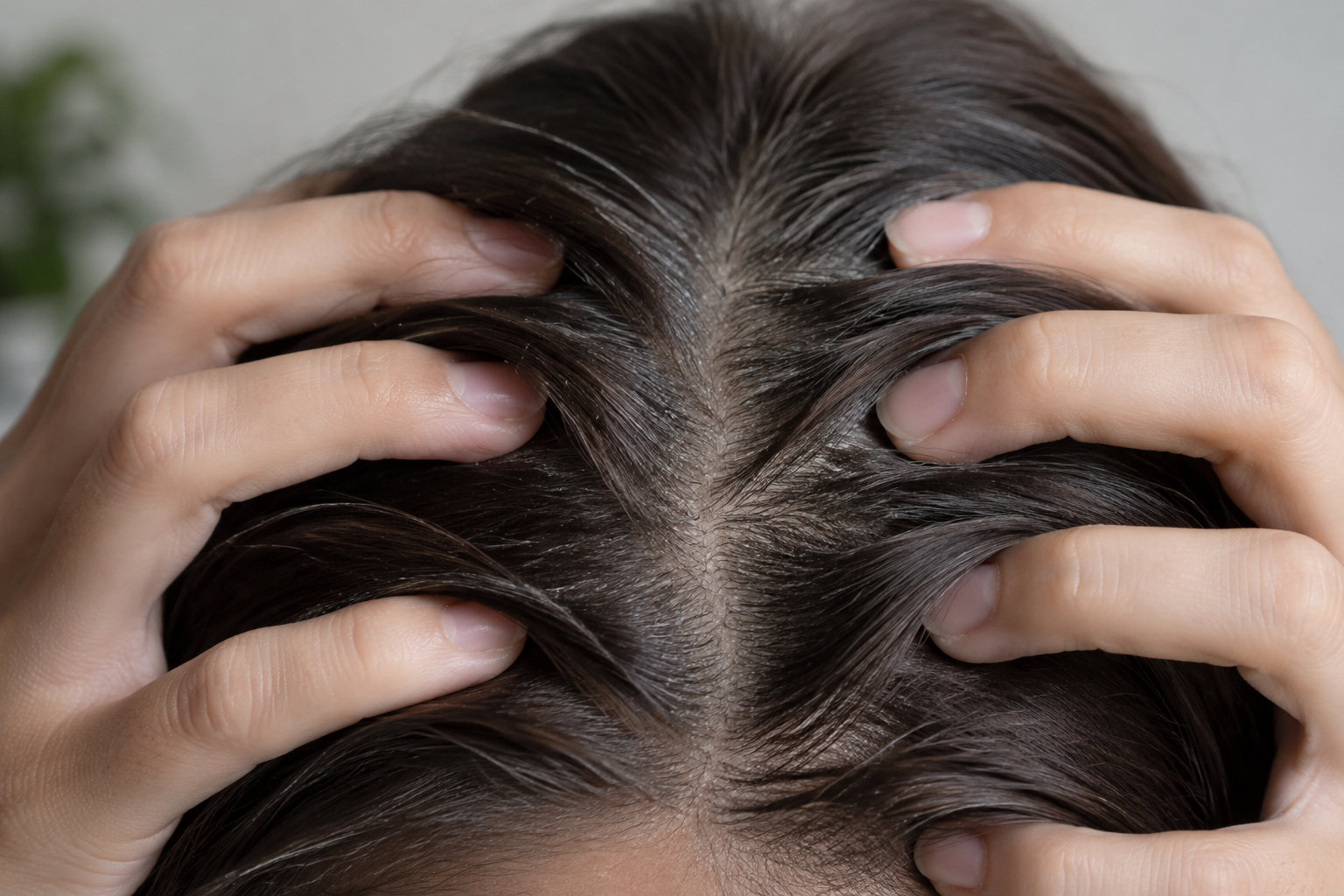
Massage in small circles, without scratching or pulling the hair, for two to three minutes. If your scalp gets greasy quickly, concentrate the oil on the lengths and ends, or mix it half and half with jojoba oil, which is lighter: the benefits of jojoba for the scalp complement those of black seed oil well.
An itchy scalp or dandruff that will not go away is worth showing to your GP: in that case, keep the oil for your lengths.
Apply the oil to dry hair: it spreads better than through water, and a few drops cover the whole scalp.
Which hair types does black seed oil suit?
Black seed oil suits most hair types: it is especially popular on dry, curly, afro-textured or coloured hair, and works in small amounts on fine hair. Only the amount changes from one head of hair to another.
| Hair type | Main benefit | How much to use |
|---|---|---|
| Dry, damaged ends | Nourished, softer ends | Oil soak on the lengths before shampooing |
| Curly or afro-textured | Suppleness and curl definition | Section by section, focusing on the ends |
| Coloured | Shine on the lengths | One or two drops on the ends |
| Fine | Detangling without weighing it down | A few drops, mixed with jojoba |
| Oily roots | Nourished lengths, light roots | Lengths and ends only |
For very dry lengths, black seed oil pairs well with castor oil, which is thicker and coats the fibre: our guide to castor oil explains this blend.
How do you get the black seed oil benefits for hair? The routine in brief
The simplest way to get the black seed oil benefits for hair is a weekly oil soak: apply black seed oil to the lengths and scalp, leave it on for at least 30 minutes, then wash it out with your usual shampoo.
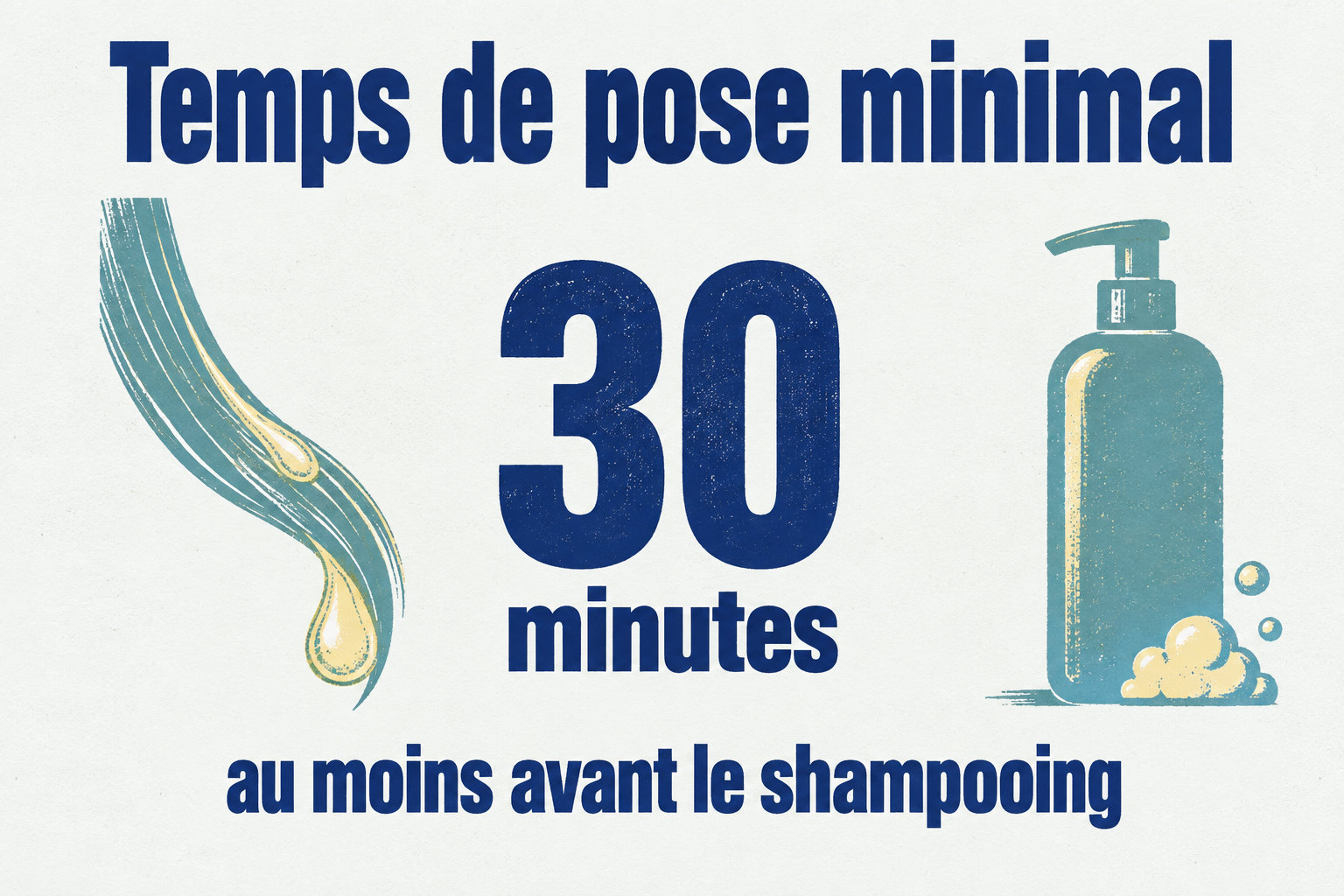
Amounts for each hair length, how often to use it and when to expect the first results are set out in our how-to guide. For a quick detangler between washes, a single drop warmed between your palms and smoothed over the ends is enough, with no rinsing.
Jojoba is applied in the same way: our jojoba usage tips help you put together a blend that suits you.
What to know before you start
Like any plant oil, black seed oil may not suit every skin: a patch test in the crook of the elbow or behind the ear, 48 hours before the first use, means you can use it with peace of mind.
- If you notice redness or itching, rinse and stop.
- Use the carrier oil, never neat black seed essential oil.
- Avoid the eye area and an irritated scalp.
- Pregnancy, breastfeeding, children: ask a healthcare professional for advice before use.
- Keep the bottle closed, away from light and heat.
Frequently asked questions
Can you use black seed oil on a dry scalp?
Yes, black seed oil works well on a dry scalp: a few drops massaged in parting by parting, 30 minutes before shampooing, bring comfort to skin that feels tight.
Is black seed oil suitable for coloured hair?
Yes, black seed oil can be used on coloured hair: one or two drops on the lengths and ends bring back shine. Simply avoid applying it straight after colouring.
What do users think of black seed oil for hair?
Black seed oil is appreciated for the softness and shine it gives the lengths and dry ends, and for being practical: one bottle covers hair, face and body.
Is black seed oil suitable for oily hair?
Yes, as long as you keep it to the lengths and ends. On roots that get greasy quickly, mix it half and half with jojoba oil for a lighter feel.